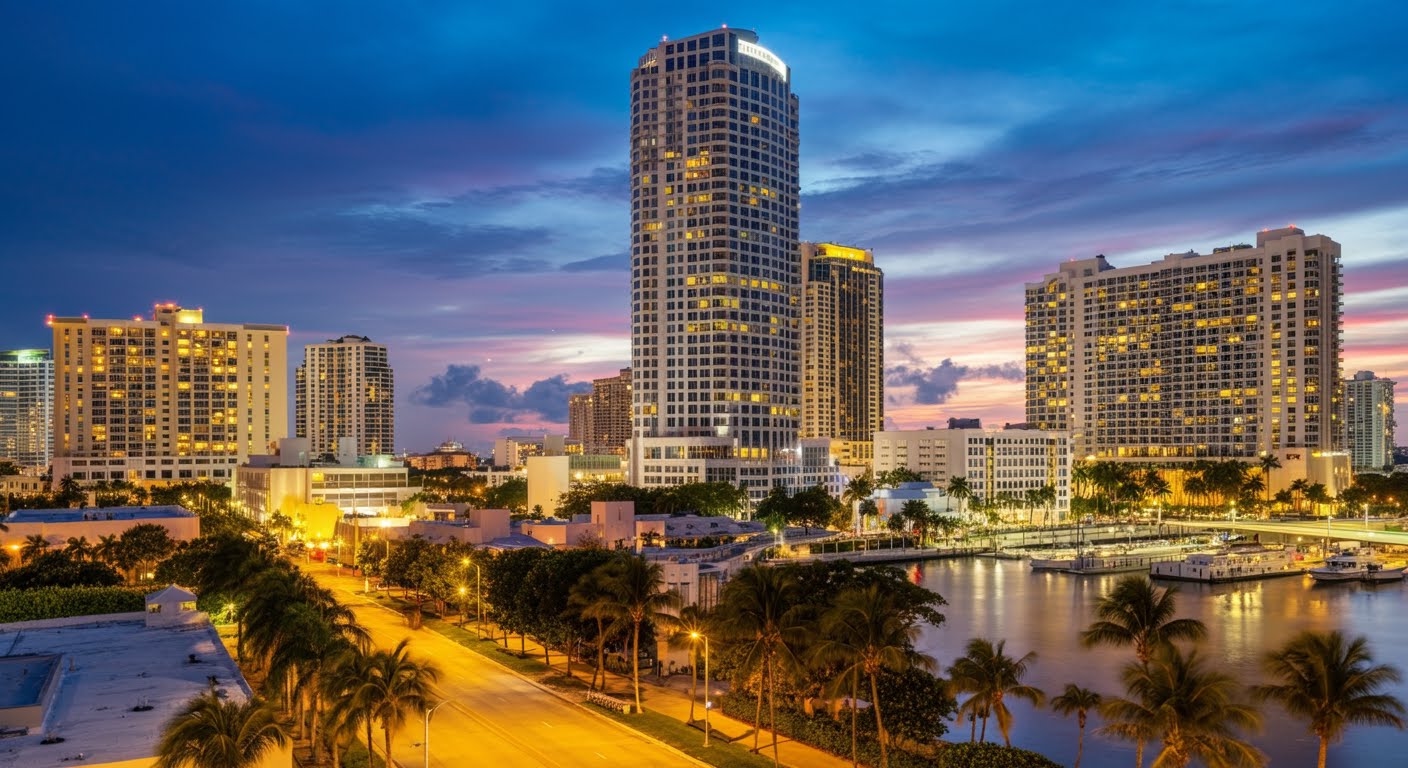
Florida Cities
Fort Lauderdale Real Estate: Market Overview and What to Know
A clear-eyed overview of the Fort Lauderdale real estate market.
7 min readMarch 25, 2026
Florida Cities
Venice took direct hits from Helene and Milton in 2024. Two years on, the inventory, insurance market, and buyer pool have reshuffled in ways worth understanding before you expand your SWFL search north.
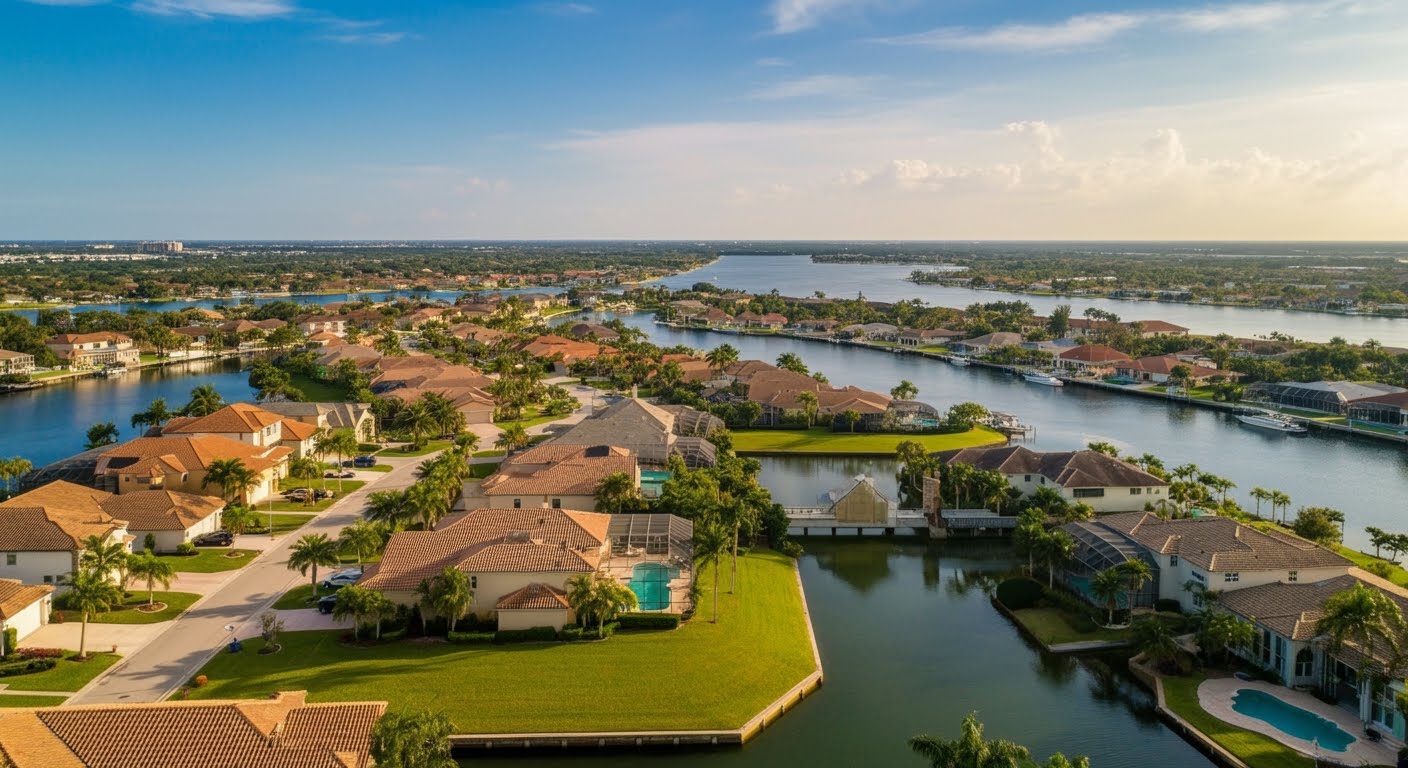
Aerial view of Venice, Florida coastline with the jetty and intracoastal waterway
If you've been searching Southwest Florida for a year or more, Venice has probably drifted in and out of your map. It sits at the northern edge of what most people call SWFL — technically Sarasota County, geographically closer to Sarasota proper than to Fort Myers — and for a stretch after Hurricanes Helene and Milton came through in the fall of 2024, a lot of buyers quietly took it off their list.
Two years later, Venice is back in the conversation. Not because the storms didn't happen, and not because recovery is complete, but because the market has repriced, the insurance picture has settled into something you can at least underwrite, and the buyer pool has sorted itself out. Here is what that actually looks like on the ground in late 2026.
Venice is really three different markets stacked under one city name, and buyers who treat it as a single place end up frustrated.
Venice Island is the barrier island — a compact grid of streets between the Gulf of Mexico and the Intracoastal, connected to the mainland by three bridges. It's walkable, dense with 1950s and 1960s cottages mixed with newer builds, and home to the historic downtown. Most of the island sits in Zone AE or VE, and most of it took water during Helene's surge in September 2024 and wind damage from Milton two weeks later.
The mainland near the island — neighborhoods like South Venice, Venice Gardens, and the areas just east of the bridges — is where a lot of year-round Venice residents actually live. Some of it is on canals with Gulf access through the Venice Inlet, some is freshwater or non-navigable, and flood exposure varies block by block.
East Venice and the newer master-planned corridor — Wellen Park, Grand Palm, the growing area along US-41 and south of River Road — is a different market altogether. Higher elevation, newer construction built to current codes, and far less storm damage in 2024. This is where a lot of post-storm demand has concentrated.
If someone tells you "Venice held up well" or "Venice got crushed," they're probably right about one of those three submarkets and wrong about the others.
Venice has always traded at a discount to both Naples to the south and Sarasota proper to the north, and that gap is part of why buyers push into it.
In rough terms, as of fall 2026:
The Wellen Park corridor and other newer east-side developments price closer to Sarasota-area new construction because they're competing for the same buyer: someone who wants a code-current home with manageable insurance and no storm history on the property.
None of these numbers are gospel — pulling current comps for your specific target neighborhood is the only way to know what you'd actually pay. If you want a real valuation for a specific address or a target price band, the home value tool is a reasonable starting point before we dig into comps together.
This is where the Venice conversation gets honest. Helene brought surge; Milton brought wind. Together they produced one of the costliest insurance events in Florida history, and the market responded accordingly.
By submarket, in late 2026:
Venice Island (Zone AE and VE): Expect a multi-policy structure — a wind/HO policy plus separate flood coverage. Private wind carriers have returned selectively, but many island homes are being written by Citizens Property Insurance or surplus lines. Annual premiums for a modest island home commonly run in a wide range depending on elevation certificate, roof age, year built, and construction type. Elevated post-FIRM homes insure meaningfully better than older ground-level cottages. Get real quotes on specific addresses before you fall in love with a listing — this is not a market where you estimate.
Mainland canal and low-lying areas: Flood coverage is nearly always required and premiums vary significantly based on elevation certificate and distance to the water body. Wind premiums have come down slightly from their 2024-2025 peak as the private market has stabilized, but they remain well above 2019 levels.
Wellen Park and newer east-side neighborhoods: Many of these homes are in Zone X (minimal flood risk) or on elevated pads, built to post-2010 wind codes with hip roofs and reinforced construction. Insurance here is still more expensive than it was five years ago, but it's often half or less of what the same square footage costs to insure on the island.
One underappreciated point: Florida's post-storm reforms around assignment of benefits and litigation have had time to settle in, and some private wind carriers have cautiously re-entered the Sarasota County market. That has created modest downward pressure on premiums in 2026 compared to the peak. Modest. Not dramatic.
The buyer pool in Venice looks different than it did in 2022.
Who came back or stayed: Full-time Florida residents who already understood the risk and the lifestyle. Snowbirds from the Midwest and Northeast who had been Venice regulars for a decade or more and viewed the storms as a cycle, not a verdict. Buyers specifically shopping for newer construction in Wellen Park and similar developments, many of whom cross-shop with Lakewood Ranch to the north.
Who thinned out: First-time Florida buyers who had been considering Venice as an affordable alternative to Naples. A chunk of that demand moved either further inland (east Sarasota County, parts of Lee County away from the water) or down to Punta Gorda and the Charlotte County market, which recovered faster from its own Ian experience and has become a legitimate value play. If you're comparing Venice to other SWFL options, the Punta Gorda market is worth a side-by-side look, particularly if waterfront access matters to you.
Who is new: A specific profile of buyer has emerged — someone who looked at Venice Island specifically because the price dislocation on storm-impacted properties created an opportunity to buy, remediate or rebuild, and end up with a modern home in a location they couldn't have afforded in 2021. This is not a casual purchase. It requires construction knowledge, a realistic timeline, a contractor you trust, and tolerance for the fact that the next storm season is always a year away.
Two years is enough time to see which parts of the Venice market have found their footing and which are still working through overhang.
Holding value well:
Still trading at a discount:
For buyers who have been shopping Lee and Collier counties — Cape Coral, Fort Myers, Naples, Bonita Springs — Venice feels different in a few specific ways. The downtown is more walkable than most of SWFL. The beach access on the island is easier than Naples and less crowded than Siesta Key. Property taxes are assessed through Sarasota County, which has its own millage structure, and the Save Our Homes cap works the same way it does in Lee or Collier if you make Venice your primary residence and apply for homestead by the March 1 deadline.
The storm history is real and should be part of the conversation, not glossed over. But the storm history is also real in Fort Myers Beach, Sanibel, Pine Island, and much of coastal Lee County — Ian in 2022 did to those markets what Helene and Milton did to Venice. The question isn't whether coastal SWFL has risk. The question is how you underwrite that risk into your purchase price, your insurance budget, and your long-term plan.
If your situation looks like "we love the walkable downtown and the beach access, but we want to understand what we're actually buying" — the next step is a specific conversation about which Venice submarket fits what you're trying to do. Island living with eyes open is one answer. Wellen Park or east-side new construction is a very different answer. Mainland canal with a seawall and a dock is a third.
I can pull current inventory for a target price band, pull actual insurance quotes on specific addresses before you make an offer, and walk through what remediation documentation to ask for on any island property that saw storm damage. If that would be useful, you can reach us through the contact page and we'll set up a call. No pressure, no obligation — just a clearer picture before you commit to a direction.
Equal Housing Opportunity. Freddy Baez · Florida Broker BK3274734 · The Baez Collective at eXp Realty. Information here is general guidance, not legal, tax, or investment advice — please consult a qualified professional for your specific situation.
— Freddy & Josey
Frequently Asked
Explore These Cities
The SWFL Market Letter
Market notes and neighborhood reads from Freddy & Josey — written for SWFL homeowners, buyers, and the curious. No spam, no pressure.
Florida Cities
A clear-eyed overview of the Fort Lauderdale real estate market.
Florida Cities
A clear-eyed overview of the Jacksonville real estate market.
Florida Cities
A clear-eyed overview of the Lakeland real estate market.
Local team. Licensed in Florida. En español también.