Market Analysis
Collier County Real Estate Market Snapshot: 2026
Data-driven analysis of the Southwest Florida real estate market.
8 min readMarch 25, 2026
Market Analysis
Data-driven analysis of the Southwest Florida real estate market.
Cape Coral Real Estate Trends: Where the Market Is Heading in 2026 — The Baez Collective
Cape Coral's price story over the past four years is one of the most dramatic in Florida. The city entered 2020 with a median single-family home price around $280,000 — affordable relative to Naples, accessible for investors seeking cash flow, and increasingly attractive to remote workers discovering they could live anywhere. By mid-2022, that median had surged past $500,000 on the strength of migration demand, pandemic-era low rates, and investor competition.
Then Ian hit in September 2022. The storm caused over $100 billion in damage across Lee County and fundamentally disrupted the market. Prices pulled back — not because demand disappeared, but because insurance costs spiked, damaged inventory flooded the market, and buyers grew uncertain about carrying costs. By 2024, the median single-family price in Cape Coral had settled in the $390,000–$430,000 range, where it has largely held into early 2026.
That stabilization is not weakness — it's normalization. The froth of 2022 has been absorbed, and the market is now pricing on fundamentals: actual demand, actual carrying costs, actual insurance realities. The buyers shopping today understand what they're getting into, which makes for cleaner transactions and more durable sales.
Looking ahead, several forces support modest appreciation: continued in-migration from higher-cost states, limited land availability in established East Cape neighborhoods, and the infrastructure improvements being completed in the western sections. The headwinds — elevated insurance, stretched affordability at entry level, and some investor pullback — are real but manageable at current price levels.
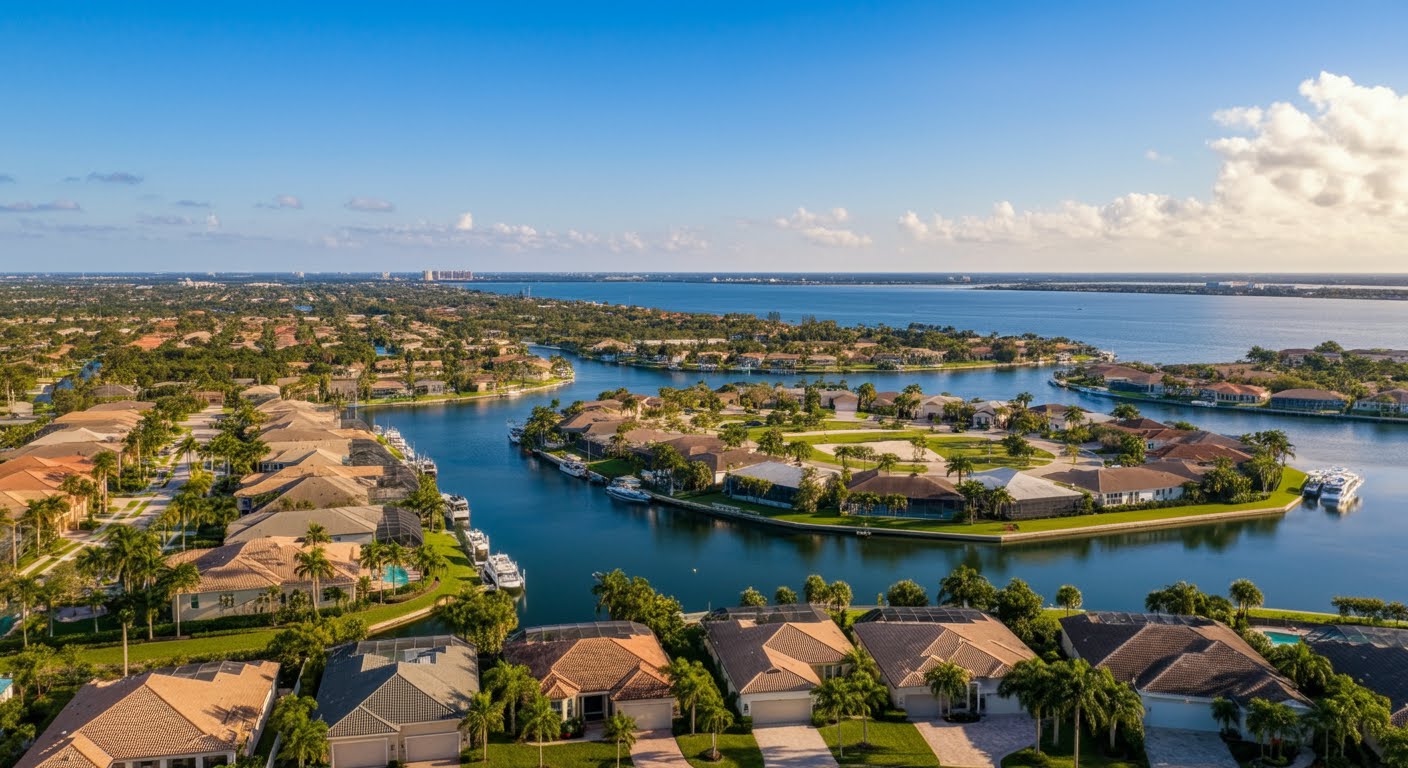
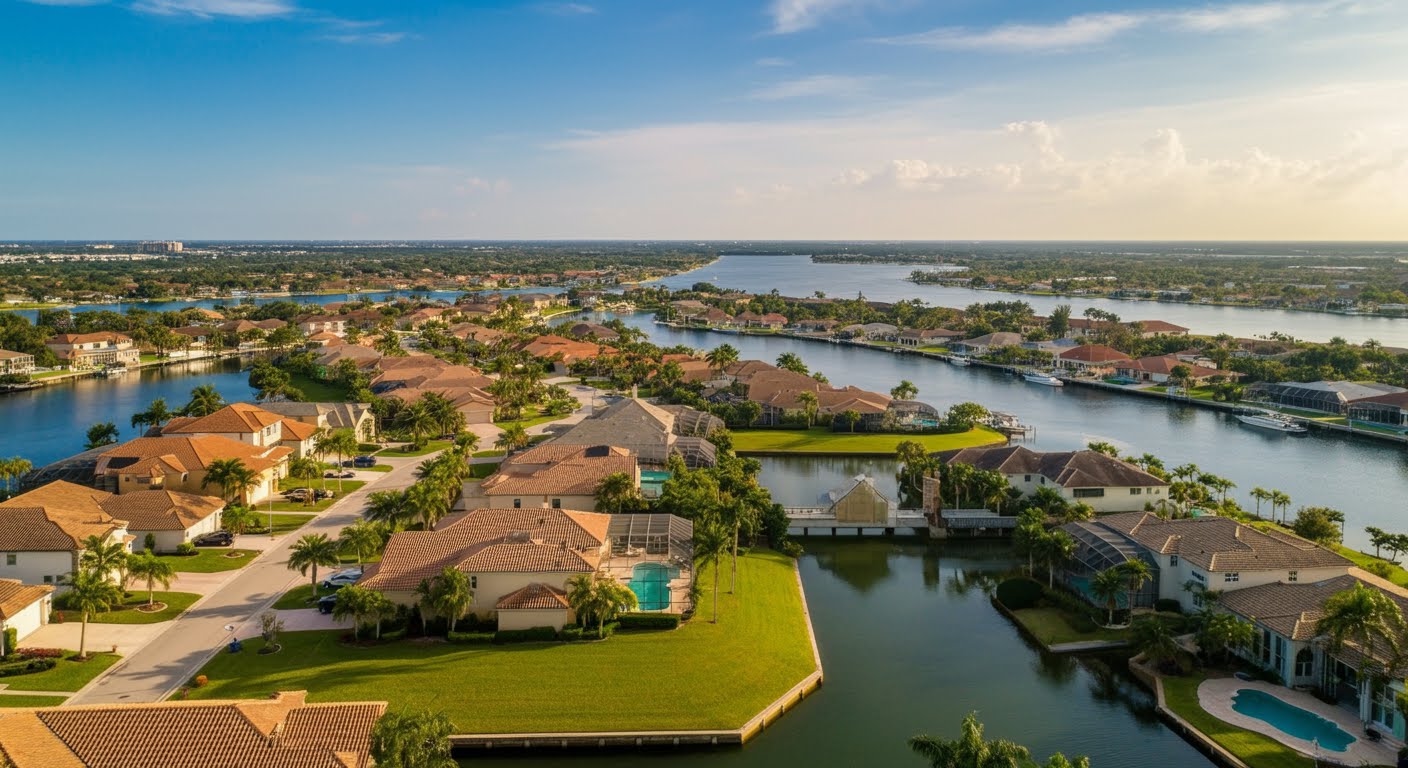
Cape Coral's defining geographic feature is its canal system — over 400 miles of waterways that give the city more canal frontage than Venice, Italy. But not all canals are created equal, and the premium you'll pay depends heavily on what type of water access you're getting.
Gulf-access saltwater canals command the highest premiums in the Cape Coral market. These properties connect to the Caloosahatchee River and ultimately to the Gulf of Mexico, often with a lock system or bridge clearance involved. A Gulf-access home on a saltwater canal can sell for 30–50% more than a comparable dry-lot home in the same general neighborhood. At current prices, that typically means $500,000–$900,000+ for a well-maintained single-family home, depending on size, condition, and specific canal location.
Freshwater canal homes — which represent the majority of Cape Coral's canal inventory — carry more modest premiums, typically 10–20% over dry lots. These canals don't provide boating access to the Gulf, but they offer waterfront lifestyle at a lower price point. Many buyers prioritize these for the view, the kayaking, and the general aesthetic of waterfront living without the navigation requirements or dock/lift costs of saltwater properties.
Buyers evaluating canal homes need to factor in seawall condition, which is a major variable. A seawall replacement in Cape Coral currently runs $500–$1,000+ per linear foot — easily a $50,000–$150,000 exposure on a standard lot. Sellers are not always forthcoming about seawall age or condition. A professional seawall inspection before closing is essential, not optional.
Cape Coral's western sections — roughly west of Chiquita Boulevard — have seen substantial new construction activity over the past five years. Builders including Lennar, DR Horton, and regional custom builders have been active with communities offering modern floor plans, energy-efficient construction, and amenities packages that resale homes often can't match at comparable prices.
This new construction supply creates a competitive dynamic for resale sellers, particularly in the $350,000–$550,000 range. A buyer choosing between a 15-year-old home and a new build at a similar price will often choose the new construction — especially with builder incentives like rate buydowns, closing cost contributions, and warranty coverage. Resale sellers in this price range need to be honest about condition and competitive on price to win against new inventory.
The new construction concentration in western Cape Coral is also creating an infrastructure story worth watching. These neighborhoods are built with city utilities and new roads, which is a positive. But they lack the mature landscaping, established neighborhoods, and in some cases the proximity to amenities that eastern Cape Coral offers. Different buyers weight these factors differently.
One important note for buyers considering new construction in Cape Coral: Community Development Districts (CDDs) are common in master-planned communities here. A CDD is an additional tax assessment on top of your property taxes — often $1,500–$3,000 per year — that funds infrastructure the builder put in. It's not hidden, but it's not always prominently disclosed in the listing price conversation. Factor it into your all-in cost analysis.
Cape Coral became a significant short-term rental and investment destination between 2020 and 2022. The combination of Gulf-access waterfront properties, warm weather, and vacation rental demand made it a target for out-of-state investors, many of whom bought sight unseen at the peak.
That cohort is now adjusting. Some are holding and absorbing the higher insurance and carrying costs. Others are selling — and they represent a meaningful portion of the current resale inventory, particularly in the $450,000–$750,000 Gulf-access segment. These seller-investors often have less emotional attachment to a price point and can be more negotiable than primary homeowners.
Long-term rental investors remain active in Cape Coral's more affordable dry-lot and freshwater canal segments. Rental demand from workforce housing is real — healthcare workers, construction trades, and service industry employees who support the region's growth need housing too. But cash flow math has tightened: a home that produced 8% gross rental yield in 2020 on a $280,000 purchase is very different from one producing 5% on a $420,000 purchase with triple the insurance cost.
Cape Coral is often discussed as a single market, but it's more accurate to think of it as several distinct submarkets that move at different speeds.
Southeast Cape — the area south of Pine Island Road and east of Del Prado — is the established, built-out peninsula. Homes here have mature landscaping, smaller lot sizes, and a mix of ages. Proximity to downtown Cape Coral, Cape Coral Hospital, and the bridge to Fort Myers makes this area popular with year-round residents and retirees. Prices are generally competitive with the city median.
Southwest Cape — Surfside, Yacht Club, Pelican, and similar neighborhoods near the Cape Coral Yacht Club — is the waterfront premium market. Gulf-access homes here command the city's highest prices and attract a mix of vacation home buyers, retirees, and boating-lifestyle buyers. Days on market have stretched here as pricing adjusts from 2022 highs.
Northwest and West Cape — the growth corridors west of Burnt Store Road — is where new construction is concentrated. Land is more available, prices are more competitive, but the neighborhood infrastructure is still maturing.
For buyers in Cape Coral in 2026, the most important thing is understanding carrying costs before falling in love with a property. Purchase price is only part of the equation. Insurance, flood zone designation, seawall condition, CDD fees if applicable, and HOA fees all affect what you'll actually pay each month. Run those numbers first.
For sellers, condition and pricing accuracy matter more than ever. The days when a property in any condition would attract multiple offers are over in most segments. Buyers are informed, inspectors are thorough, and insurance underwriters are scrutinizing roof age and construction type. Preparing your home — roof documentation, seawall inspection, impact window certification — before listing shortens your time on market and reduces renegotiation risk after inspection.
Ready to learn more about Cape Coral and Southwest Florida? Check out these resources:
— Freddy & Josey
Frequently Asked
Explore These Cities
The SWFL Market Letter
Market notes and neighborhood reads from Freddy & Josey — written for SWFL homeowners, buyers, and the curious. No spam, no pressure.
Market Analysis
Data-driven analysis of the Southwest Florida real estate market.
Market Analysis
Data-driven analysis of the Southwest Florida real estate market.
Market Analysis
Data-driven analysis of the Southwest Florida real estate market.
Local team. Licensed in Florida. En español también.