Price Is the Variable You Control Most
Location, condition, timing, market conditions — sellers have varying degrees of control over most factors that affect a sale. Price is the one you fully control, and it's the single biggest determinant of how quickly your home sells and what you net at closing.
Pricing too high doesn't mean you'll eventually negotiate down to the right number. In practice, it means your home sits, accumulates days on market, and ultimately sells for less than it would have if priced correctly from day one. This is documented in the data, consistently, across markets. Southwest Florida is no exception.
What Is a Comparative Market Analysis (CMA)?
A Comparative Market Analysis is the primary tool experienced agents use to establish a defensible price range for a listing. It's not a guarantee or an appraisal — it's a data-driven analysis of what the market has recently paid for comparable properties.
A well-constructed CMA examines:
- Recent sold comparables (comps): Homes similar to yours that have closed in the last 90 to 180 days in your immediate area. The key word is "sold" — active listings show you competition, but sold listings show you what buyers actually paid.
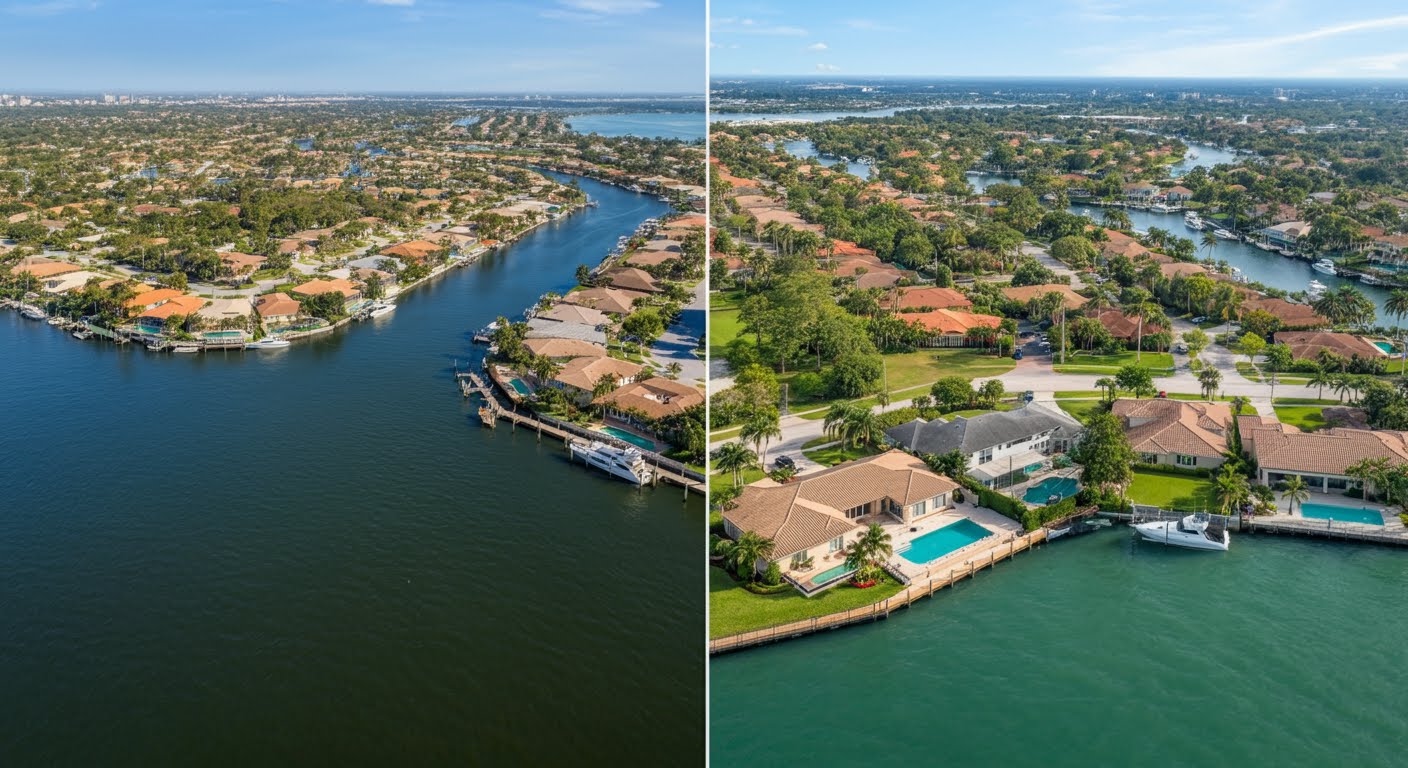
- Location adjustments: In Southwest Florida, the difference between a gulf access waterfront lot, a freshwater canal lot, and a dry lot can be $100,000 to $300,000 on the same street. Location within the property — rear exposure (preserve, water, or neighbor's fence) — matters too. Comps need to be adjusted for these differences.
- Size and condition adjustments: Square footage, bedroom/bathroom count, pool presence, garage configuration, and overall condition all require adjustment. A 1,800 SF home with a newer roof and updated kitchen isn't directly comparable to a 2,100 SF home with a 20-year-old roof — even if they're on the same street.
- Days on market and price history: Comps where the home sat for 120+ days and took two price reductions tell a different story than a comp that went under contract in 10 days at list price. Context matters.
Why Days on Market Changes Everything
This is the dynamic most sellers underestimate. Buyers and their agents track days on market as a signal of property quality and pricing accuracy. A home that has been on the market for 90 days without going under contract sends a message — "this home is overpriced, has issues, or there's something buyers aren't responding to" — even if none of those things are actually true.
The data on final sales prices tells the story clearly. Homes that go under contract in the first 0 to 14 days after listing typically sell closest to asking price — often at 97% to 100% of list. Homes that sit 30 to 60 days typically close at 94% to 97% of the original list price after reductions. Homes that sit beyond 90 days frequently close at 90% or less.
The math: if you overprice a $500,000 home at $540,000 and it sits for 90 days before eventually selling at $480,000, you didn't get to test the market — you just lost $20,000 in unnecessary DOM stigma, plus the carrying costs of three extra months of insurance, taxes, HOA fees, and utilities.
The Price Reduction Trap
Price reductions are visible in the MLS. Buyers can see every price change, when it happened, and how much. A home that has gone through two reductions signals price negotiation room — buyers will offer below the reduced price because they've watched the seller show flexibility.
A home that was priced correctly from day one and held that price while going under contract signals strength. Buyers have less leverage; they know others are looking.
The psychological dynamic is documented and consistent: a seller who lists at $550,000, reduces to $525,000 after 30 days, then to $499,000 after 60 more days will almost always get a lower final price than a seller who listed at $499,000 from day one and created a competitive showing environment in the first two weeks.
The instinct to "leave room to negotiate" by pricing high is one of the most expensive mistakes in real estate. Pricing at market creates more activity, which creates more competition, which produces better final prices and better terms.
Southwest Florida-Specific Pricing Factors
A few factors that require specific attention in SWFL pricing:
Water access classification: Gulf access saltwater properties command premiums of 20% to 40% or more over otherwise equivalent non-water homes. Within gulf access, the premium varies by navigational ease (direct access vs. lock access vs. fixed bridge clearance). Freshwater canal and lake properties have their own premium tier, distinct from both gulf access and dry lots. These distinctions require careful comp selection — you can't compare a direct gulf access home to a freshwater lake home and adjust a couple thousand dollars.
Insurance costs and wind mitigation: A home with documented wind mitigation features (hip roof, impact glass, current construction) has a lower effective carrying cost than an equivalent home with a flat roof and single-pane windows. In today's insurance environment, buyers factor this in — sometimes explicitly in their offer, sometimes in their decision to show up at all. Providing wind mitigation documentation proactively supports pricing.
Post-Ian considerations: Properties with documented Ian damage history — even if fully repaired — may face perception discount from some buyers. This needs to be factored into the pricing analysis, particularly in areas of Fort Myers and Cape Coral that experienced significant storm surge.
Community and HOA factors: Two identical homes in two different communities with $200/month fee differential will have materially different effective costs. Buyers compare total monthly payment, not just mortgage. Communities with high HOA fees or CDD fees may require pricing slightly below otherwise equivalent homes in lower-fee communities.
Seasonal Adjustments to Pricing Strategy
The strongest seller's market in Southwest Florida runs January through early April. This is when pricing can be most aggressive — buyer demand is highest, competition is most active, and the highest concentration of motivated out-of-state buyers are in the market.
Summer pricing (June through August) typically needs to be more conservative. The buyer pool is smaller, and days on market will be longer regardless of quality. Setting a summer price that drives activity is better than setting an ambitious price that produces silence — the carrying costs of a summer-long listing add up, and summer price cuts are watched.
If you list in late September or October, you're ahead of the peak season curve. Motivated buyers who are arriving back for season and want to be settled before January are often highly motivated and willing to pay for the right property — but there are fewer of them than in February.
What Happens If the Appraisal Comes In Below Your Price
If a buyer is using a mortgage, their lender requires an appraisal. If the appraisal comes in below your contract price, you have a problem. The buyer's lender won't lend above appraised value, which means either the buyer covers the gap in cash, you reduce the price to the appraised value, or the deal falls apart.
The way to prevent this: price within the range that comparable sales can support. A skilled listing agent knows whether comparable sales can sustain your target price — and whether the appraisal is likely to come in clean. If comparable sales don't support the price, neither will the appraisal. This is another reason accurate initial pricing is so important.
Want a Pricing Analysis for Your Home?
Pricing correctly requires knowledge of active comps, pending sales, recently expired listings, and local market nuances that aren't visible from a Zillow estimate. If you want to understand what your home is actually worth in the current market — with specific comparable data and a frank assessment of where you'd need to be to move it quickly — I'm happy to put that together for you. No obligation, just real numbers.