City Spotlights
Living in Punta Gorda: Everything You Need to Know in 2026
Everything you need to know about living in Punta Gorda — from a team that knows the area inside and out.
7 min readMarch 25, 2026
City Spotlights
Punta Gorda gets talked about as one market, but Punta Gorda Isles, Burnt Store Isles, and the historic downtown each have different housing stock, different insurance realities, and different buyers.
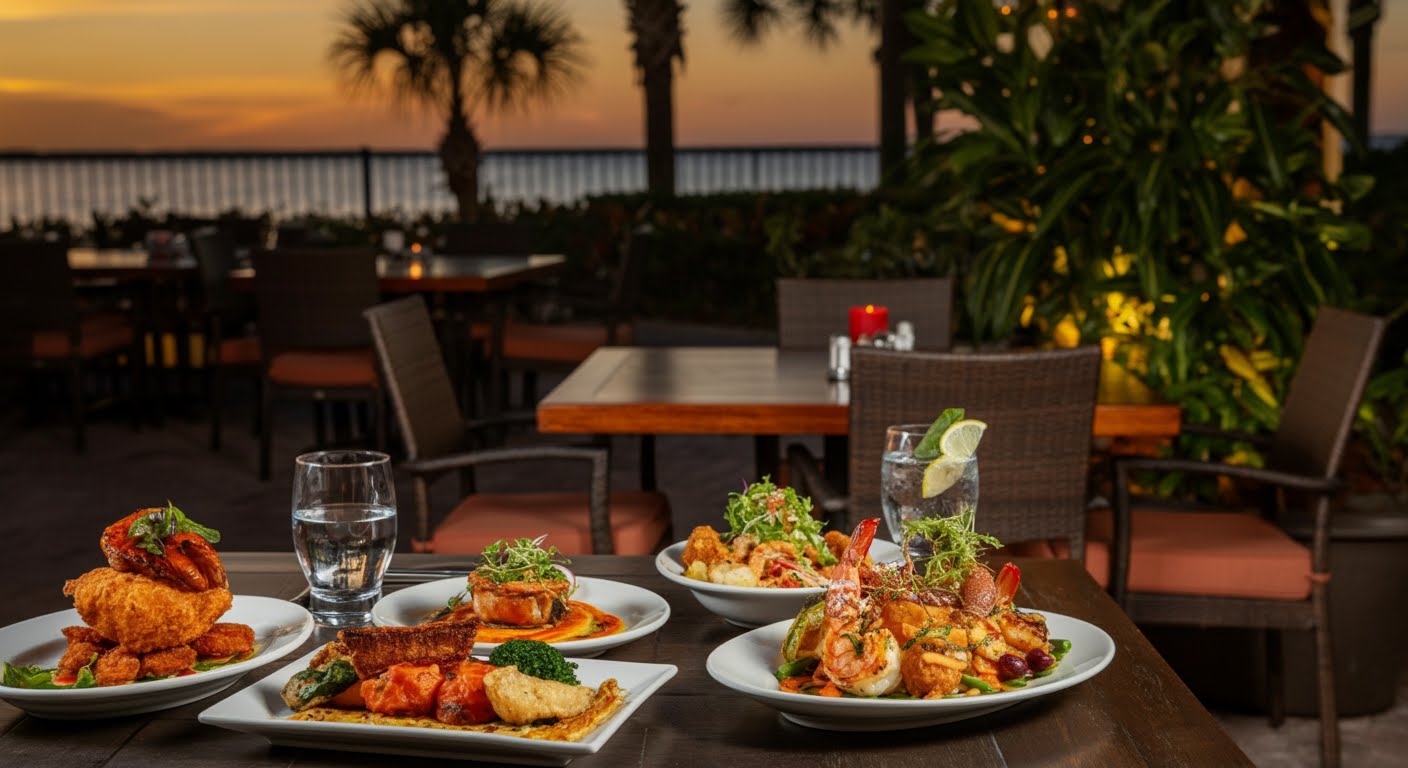
Punta Gorda, Florida: Three Submarkets Under One Zip Code — illustrative photo
If you're comparing Punta Gorda to Cape Coral or Naples, you've probably noticed the pricing looks appealing but the picture is muddy. One listing on the water is $650,000, another with the same square footage is $1.1 million, and a third downtown is $475,000 with no water at all. On paper they're all "Punta Gorda." In practice they're three different markets that happen to share a zip code.
Punta Gorda Isles, Burnt Store Isles, and the historic downtown grid are each their own submarket with their own housing stock, their own insurance bill, and their own buyer. If you don't sort them out before you start touring, you'll spend weeks confused about why the prices don't line up. Here's how I'd think through it.
Punta Gorda Isles (PGI) is the large canal-front community on the west side of town, roughly between US-41 and Charlotte Harbor. Most of the homes were built between the 1970s and the early 2000s, then a significant chunk were either rebuilt or newly constructed after Hurricane Charley in 2004. It's a mix of ranch-style canal homes, newer two-story Mediterranean builds, and everything in between. Deed restrictions but no HOA in most sections.
Burnt Store Isles (BSI) sits south of downtown, off Burnt Store Road, and is smaller and more contained than PGI. Similar canal-front concept, similar era, but the buyer skews slightly more toward golf-oriented residents because of the adjacent Twin Isles Country Club. Not to be confused with Burnt Store Marina further south in Lee County — that's a different community entirely, gated, with its own HOA structure.
Historic downtown Punta Gorda is the walkable grid east of US-41 — bungalows, Old Florida cottages, some newer infill, and a growing stock of townhomes and condos near Fishermen's Village and the Harborwalk. No canal access from most of these lots. The appeal is walkability, restaurants, the farmers market, and the lifestyle of being able to leave the car parked.
Same zip code (34950 or 34952 depending), same city government, wildly different housing decisions.
The pitch for both PGI and BSI is Charlotte Harbor access — and Charlotte Harbor is a genuinely serious body of water. It's the second-largest estuary in Florida, opens directly into the Gulf, and is well-regarded for sailing, fishing, and cruising. If you're a boater, this is a real differentiator versus a lot of the Cape Coral canal system, where you're managing more bridges and locks to reach open water.
The practical reality:
If your primary reason for moving here is a boat behind the house that can reach the Gulf without a trailer, PGI and BSI are your list. If the boat is a nice-to-have and the walkable-town lifestyle is the real draw, downtown does something PGI can't.
This is the single most important thing to understand about Punta Gorda that most out-of-area buyers don't know when they arrive.
Hurricane Charley made landfall almost directly on Punta Gorda in August 2004 as a Category 4. It destroyed or seriously damaged a large percentage of the housing stock. What followed was a rebuild cycle from roughly 2005 through 2010, and those rebuilt homes were constructed under the updated Florida Building Code that had been strengthened in 2002 after Hurricane Andrew. Post-Charley construction in Punta Gorda is, on average, some of the more storm-resilient residential stock in Southwest Florida — impact windows, hip roofs, tighter roof-to-wall connections, elevated slabs.
What this means when you're shopping:
Ask for the four-point inspection and wind mitigation report on any home you're seriously considering. The year-built number on the listing doesn't tell you whether the roof was replaced in 2019 or whether the windows are impact-rated. The inspection reports do.
The insurance bill is where these three submarkets separate hardest. Rough ranges for a roughly $600,000 single-family home, assuming standard coverage and a 2% hurricane deductible:
These are ranges, not quotes. Get actual bind-able quotes from an independent agent for the specific address before you write an offer. The insurance market in Southwest Florida has moved enough in the past three years that even homes a few blocks apart can quote very differently.
Punta Gorda has historically traded at a discount to both Cape Coral (gulf-access equivalents) and Naples (anything). Some of that gap has compressed since 2020 as buyers discovered the area, but the discount is still real.
Rough directional comparison for canal-front, gulf-access single-family homes in the 2,000 to 2,500 square foot range in a similar era of construction: a PGI or BSI home often prices 10% to 25% below an equivalent southwest or southeast Cape Coral home, and 40% to 60% below an equivalent Naples canal home in Aqualane Shores or Royal Harbor. Downtown Punta Gorda bungalows and townhomes generally price below equivalent walkable downtown Naples stock by a wider margin still.
Is it value or is it compression? Both, partially. Punta Gorda gets you Charlotte Harbor access, a genuinely charming downtown, and lower price per square foot than the more well-known SWFL markets. What you give up: proximity to major airports (RSW in Fort Myers is about 45 minutes, PGD in Punta Gorda is small and mostly Allegiant), the deeper restaurant and retail scene of Naples or Fort Myers, and the sheer volume of comparable sales that makes valuation cleaner in bigger markets. If you'd like to see how Punta Gorda comps against neighboring metros in your specific price range, the Punta Gorda area overview is a reasonable starting point.
Rough sorting, from twenty years of watching buyers land where they should have started:
There's overlap, obviously — plenty of PGI residents love walking downtown for the farmers market, and plenty of downtown residents keep a boat at Fishermen's Village. But when you're prioritizing your search, picking the lifestyle first and the submarket second usually produces a cleaner outcome than trying to see everything.
If your situation looks like "we're considering Punta Gorda versus Cape Coral and we've never spent real time in either," the conversation I'd want to have is: what does your week actually look like? Are you on the water three days a week or three days a year? Do you want to walk to coffee or drive to it? What's your insurance tolerance if the older canal home you love quotes at $11,000?
Those questions do more to narrow the search than any listing filter. Once we've sorted that out, the tour list gets short quickly. If you'd like to walk through it — including a realistic net cost comparison against Cape Coral or Naples for the same lifestyle — you can reach me through the contact page and we'll set something up. No rush and no pressure.
Equal Housing Opportunity. Freddy Baez · Florida Broker BK3274734 · The Baez Collective at eXp Realty. Information here is general guidance, not legal, tax, or investment advice — please consult a qualified professional for your specific situation.
— Freddy & Josey
Frequently Asked
Explore These Cities
The SWFL Market Letter
Market notes and neighborhood reads from Freddy & Josey — written for SWFL homeowners, buyers, and the curious. No spam, no pressure.
City Spotlights
Everything you need to know about living in Punta Gorda — from a team that knows the area inside and out.
City Spotlights
Estero gets described as the place between Naples and Fort Myers with a mall. That shorthand misses most of what actually defines this community and where you'd want to live in it.
City Spotlights
Marco Island's market has its own rhythm, and mid-summer is when the real picture shows. Here's how inventory, pricing, and buyer behavior look heading into fall 2026.
Local team. Licensed in Florida. En español también.