City Spotlights
Living in Marco Island: Everything You Need to Know in 2026
Everything you need to know about living in Marco Island — from a team that knows the area inside and out.
7 min readMarch 25, 2026
City Spotlights
Marco Island's market has its own rhythm, and mid-summer is when the real picture shows. Here's how inventory, pricing, and buyer behavior look heading into fall 2026.
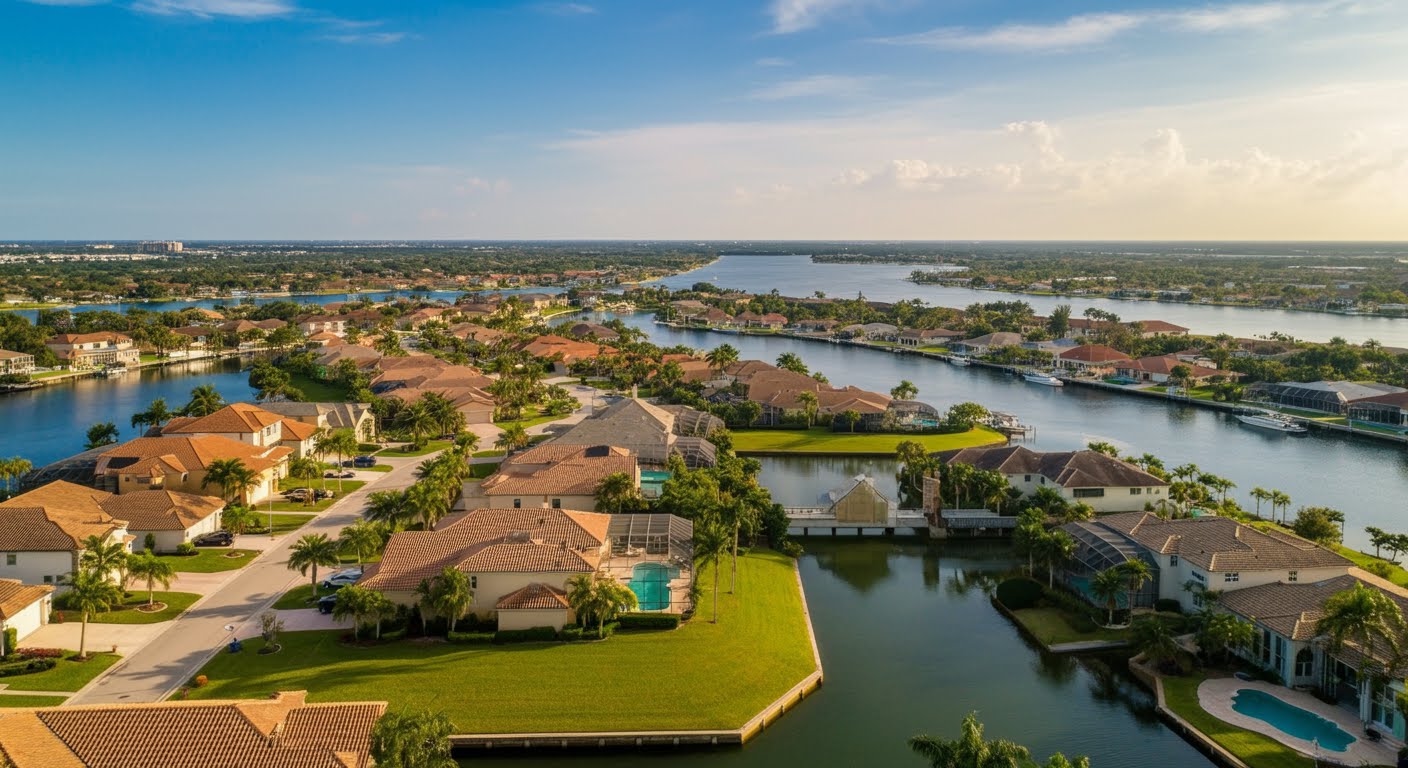
Marco Island Real Estate at Mid-2026: A Practical Off-Season Read — illustrative photo
If you've been watching Marco Island through the spring season and trying to make sense of what you're seeing, you're not alone. Season inflates everything on Marco — showings, offers, list prices, and expectations — and by the time July arrives, most of that noise is gone. What's left is a much clearer picture of what's actually selling, what's sitting, and where sellers are willing to negotiate.
This is a practical read for buyers and sellers watching Marco right now. Not predictions. Just what the market looks like at mid-2026 and how I'd think about it heading into fall.
Marco Island has one of the most seasonal real estate markets in Southwest Florida — arguably more seasonal than Naples proper. From January through April, showings run hot, out-of-state buyers are physically on the island, and sellers price with confidence. From May through October, the buyer pool thins out considerably. What you see in July and August is the market stripped of its seasonal cushion.
That matters because the properties that trade in the off-season tell you which listings were actually priced correctly and which sellers were willing to meet the market. Anything still sitting from March or April at the same list price is telling you something too — usually that the seller is testing rather than transacting.
Marco Island's inventory picture at mid-2026 looks different depending on which price band you're shopping. Broadly, here's how the tiers are behaving:
Sub-$1M: This is the tightest and most competitive band on the island. It's largely older single-family homes on interior lots, non-waterfront or freshwater-canal properties, and some smaller condos in mid-rise buildings away from the beach. Well-priced listings in this band continue to move through the summer, though not with the multiple-offer intensity of peak season. Days on market are longer than season but still reasonable for what's priced correctly.
$1M to $3M: This is the deepest part of the Marco inventory and where most negotiation is happening. It includes a mix of gulf-access canal homes, direct bay-front condos, and updated interior properties. Inventory in this band is elevated compared to 2021-2022 levels, buyers have real choice, and sellers who priced for spring are increasingly willing to entertain offers meaningfully below list. If you're a buyer here, this is where patience is rewarded.
$3M and above: The luxury tier — direct Gulf-front homes, premium Estates properties, and top-floor beachfront condos. This band has the longest marketing periods and the widest gap between list prices and closing prices. Some sellers hold firm and wait for the right buyer, which can mean 12+ months on market. Others have made meaningful price adjustments. The buyer pool here is small, out-of-state or international, and largely absent in July.
The takeaway: the middle of the market is where the most real activity happens year-round, and the top of the market is where off-season silence is most pronounced.
Marco is one of the few SWFL markets where you have to seriously choose between two very different waterfront experiences, both at premium prices.
Beach-front and direct Gulf-front properties — mostly condos along Collier Boulevard and South Beach, plus a limited number of single-family homes on Hideaway Beach and along the Gulf — trade on view, walkability to the sand, and rental potential. The premium over interior units in the same building can be substantial, sometimes 30% to 50%. Insurance costs are also substantially higher, and post-Ian building assessments in some beach-front condo associations have added carrying costs that buyers need to model in.
Gulf-access canal-front homes — concentrated in the Estates and throughout the residential canal system — trade on boat access, dock quality, and lot orientation. A canal home with a deep-water dock, no fixed bridges to open water, and southern exposure commands a real premium over a similar interior lot. Seawalls are a specific due-diligence item on Marco, as they are throughout Cape Coral and coastal Collier County. Replacement costs run in the same $500 to $1,000 per linear foot range, and lots with deteriorating seawalls should be priced accordingly.
Both waterfront types have their audiences. Boaters gravitate to canal-front; snowbirds who want turnkey lock-and-leave gravitate to beach condos. Neither is a better investment in the abstract — it depends on how you'll use the property. If you'd like to see how Marco compares to other coastal options in the area, our Marco Island area page lays out the neighborhoods in more detail.
Insurance on Marco Island — particularly for direct Gulf-front and beach-front properties — is the single biggest carrying-cost variable buyers underestimate. Post-Hurricane Ian, the SWFL insurance market restructured meaningfully. Standard carriers pulled back from high-exposure coastal properties. Citizens Property Insurance grew to become the default option for many Marco homes, though the state has been actively working to depopulate Citizens by moving policies to private carriers, which affects renewals.
For a direct Gulf-front condo or beach-side single-family home on Marco, expect a multi-policy stack: homeowner's or condo owner's coverage, flood (either NFIP or a private carrier), and often wind as a separate line depending on the carrier. Actual quotes at mid-2026 vary widely by construction year, elevation, roof condition, and building-level factors for condos. What I tell buyers: get real quotes on the specific address during due diligence, not estimates. A $2,000/year difference in insurance is a $60,000 difference over the life of a typical hold — that number belongs in your underwriting.
For beach-front condo buyers specifically, there's an additional layer: the association's master policy, reserve funding, and any pending or completed post-Ian assessments. Florida's condo law changes following Surfside — the milestone inspection and structural integrity reserve study requirements — have surfaced deferred maintenance in some older buildings. Reviewing the association's financials, reserve study, and recent board minutes is not optional on Marco right now. It's part of a competent purchase.
The buyer pool in Marco's off-season looks different from the season pool, and understanding who's shopping in July helps sellers set realistic expectations.
Serious relocators and second-home buyers who couldn't find what they wanted in season and are still looking. These are patient, informed buyers who have already toured multiple properties and are ready to move when they see the right one at the right price.
Investors and 1031 exchange buyers operating on their own timelines rather than the seasonal calendar. Marco's rental economics — particularly for beach-adjacent condos with rental programs — attract this buyer type year-round.
Locally motivated buyers — often people already familiar with the island, sometimes moving from Naples or Bonita Springs, sometimes upsizing or downsizing within Marco itself. These buyers know the market well and don't overpay.
What you don't see much of in July: casual browsers, first-time SWFL visitors, and impulse buyers. Which means sellers in the off-season are typically negotiating with people who know what things are worth. If you're a seller expecting the same behavior you saw in February, the off-season will feel harder. If you're a buyer, this is the environment where clean, well-priced offers get taken seriously.
Marco isn't one market — it's several submarkets, each with its own character and buyer profile.
Tigertail Beach area: The north end of the island, more residential and quieter than South Beach. A mix of single-family homes, low- and mid-rise condos, and access to Tigertail Beach and the lagoon. This area tends to attract buyers who want beach proximity without the density and traffic of the South Beach corridor. Prices vary widely depending on whether you're direct Gulf, walking distance, or a few blocks inland.
South Beach and Collier Boulevard corridor: The higher-density part of the island — most of the mid-rise and high-rise beach-front condo buildings, walkable to restaurants, shops, and the Marco Beach area. This is where rental programs are most active and where the highest per-square-foot beach-front pricing sits. It's also where post-Ian condo dynamics have been most visible, with several buildings navigating milestone inspections and reserve funding decisions.
Marco Island Estates: The residential canal-home part of the island. Larger lots, mostly single-family, with gulf-access canals and private docks. This is where boaters and buyers who want a house rather than a condo concentrate. The Estates has its own pricing rhythm, driven by canal quality (width, depth, bridge clearance), lot orientation, and dock/seawall condition. Off-season is when the best Estates deals typically happen — sellers who missed season and want to move before the next one.
Each of these submarkets deserves its own analysis, and the wrong assumption I see buyers make most often is treating Marco as a single market. It isn't.
If you're a buyer at mid-2026, here's the honest framing. The off-season is a reasonable time to shop Marco. Sellers who are still listed in July have generally accepted that season didn't produce their number, and there's room to negotiate on properties that have been on market 60+ days. Due diligence — insurance quotes on the specific address, seawall inspection, condo document review — takes real time and is easier to do at a normal pace in the summer than during a competitive spring situation.
If you're a seller, the question is whether your motivation matches the market. If you need to sell and haven't yet, revisiting price with fresh comps and a realistic view of the summer buyer pool is worth doing. If you don't need to sell, holding for the January-through-April window historically produces stronger outcomes on Marco than a summer relist. A current valuation with real market feedback is a starting point — you can request one through our home value page or reach out directly through contact if you'd rather talk it through.
Marco rewards specificity. Every property here has its own micro-story — the canal, the seawall, the flood zone, the association, the elevation, the exposure. Averages are useful for orientation, but decisions get made property by property.
Equal Housing Opportunity. Freddy Baez · Florida Broker BK3274734 · The Baez Collective at eXp Realty. Information here is general guidance, not legal, tax, or investment advice — please consult a qualified professional for your specific situation.
— Freddy & Josey
Frequently Asked
Explore These Cities
The SWFL Market Letter
Market notes and neighborhood reads from Freddy & Josey — written for SWFL homeowners, buyers, and the curious. No spam, no pressure.
City Spotlights
Everything you need to know about living in Marco Island — from a team that knows the area inside and out.
City Spotlights
Punta Gorda gets talked about as one market, but Punta Gorda Isles, Burnt Store Isles, and the historic downtown each have different housing stock, different insurance realities, and different buyers.
City Spotlights
Estero gets described as the place between Naples and Fort Myers with a mall. That shorthand misses most of what actually defines this community and where you'd want to live in it.
Local team. Licensed in Florida. En español también.