Waterfront Is Not One Thing
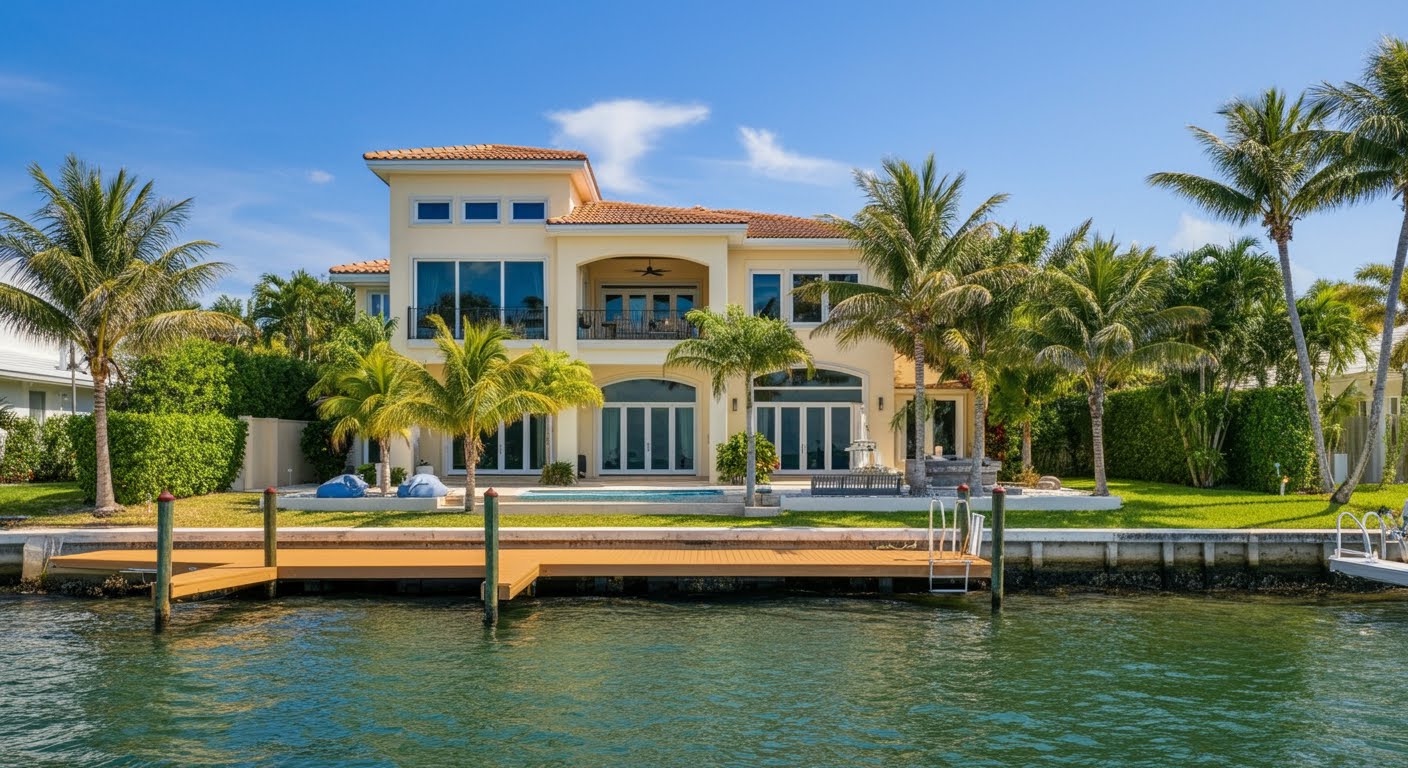
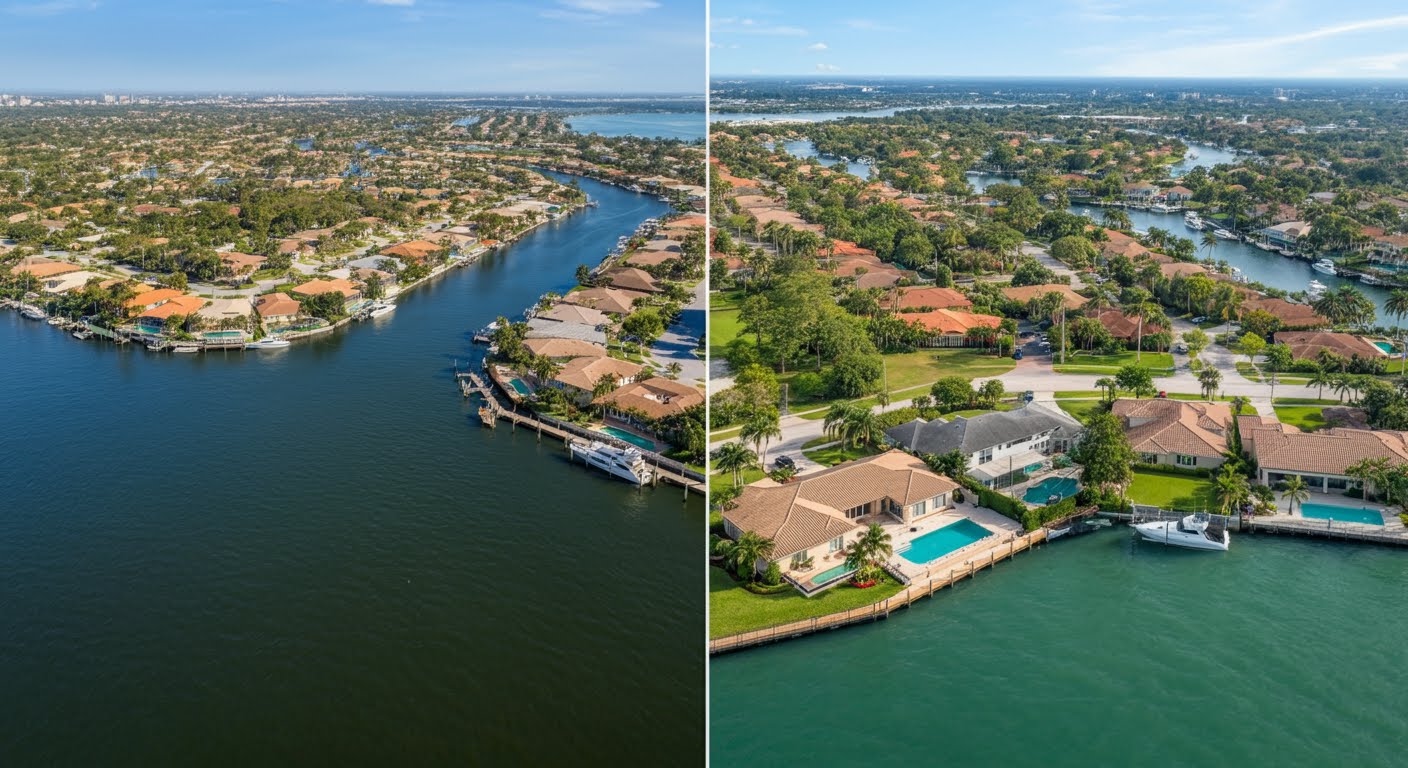
People say "waterfront" like it's a single category. In Southwest Florida, it's really four or five different property types, each with its own price premium, insurance implications, and due diligence requirements. A home on a saltwater gulf access canal is fundamentally different from a freshwater lake home, which is different from a direct Gulf-front property, which is different from an intersecting canal lot with no navigational access.
Getting clear on what kind of waterfront you're buying — and what that means for insurance, seawalls, docking rights, and flood classification — is the most important step before falling in love with a listing.
Gulf Access vs. Canal — Understanding the Water
In Cape Coral and much of Lee County, most "waterfront" properties sit on a canal system rather than open water. The key distinction is whether that canal provides navigational access to the Gulf of Mexico.
Gulf access (saltwater) properties command a significant price premium — often 20% to 40% more than equivalent freshwater canal homes. Gulf access means you can take a boat from your dock to the Gulf without being trailered. Lock-access properties (requiring passage through a navigational lock) are technically gulf access but involve more time and operational steps. "Sailboat access" properties have no fixed bridges between the home and the Gulf, which matters to boaters with taller vessels.
Freshwater canal homes typically connect to a freshwater lake system or drainage canal with no navigational outlet. These are great for kayaking, fishing, and enjoying a water view — but you can't take a powerboat to the Gulf from them. Buyers sometimes don't realize this until they're under contract. Always confirm the navigational classification before making an offer.
Direct waterfront (Gulf-front, bay-front, or river-front) properties are rarer and command top prices. They offer unobstructed water views and direct water access but also carry the highest flood insurance costs and require the most scrutiny of construction standards.
Seawall Inspections — The Due Diligence Most Buyers Skip
If the property has a seawall, it needs to be inspected. This is non-negotiable.
Seawalls are the concrete or block structures that separate the property from the water. They prevent erosion, protect the foundation of the home, and maintain the integrity of the lot. Seawalls in Southwest Florida typically have a useful life of 30 to 50 years, depending on construction materials, water salinity, boat wake, and storm exposure. A failed seawall isn't cosmetic — it can undermine the structural integrity of the property itself.
A standard home inspector is not qualified to evaluate a seawall. You need a marine contractor or a seawall-specific inspector to assess the condition. Look for: cracks, spalling (concrete flaking), voids behind the wall (where soil has eroded), bowing or tilting, and cap condition. Also check the seawall cap drainage — improper drainage accelerates deterioration.
Seawall replacement in Southwest Florida runs roughly $500 to $1,000 per linear foot depending on access and materials. A 100-foot seawall that needs full replacement is a $50,000 to $100,000 project. That context matters when you're negotiating price or repair credits.
Also ask about dock condition. Docks require their own permits from the Florida Department of Environmental Protection (FDEP) and the Army Corps of Engineers. Verify that any dock on the property has current, valid permits — unpermitted structures are the buyer's problem after closing.
Flood Zones and What They Cost You
Waterfront properties in Southwest Florida are almost universally in a FEMA Special Flood Hazard Area. Understanding which zone matters a great deal for insurance costs.
Zone AE: The most common high-risk zone in inland and canal-adjacent waterfront areas. Properties in Zone AE are in the 1% annual chance flood zone (100-year flood zone). Federally backed mortgages require flood insurance. Annual premiums under FEMA's Risk Rating 2.0 methodology vary widely based on foundation type, elevation, building characteristics, and proximity to the flood source. For a canal-front home in Cape Coral, annual flood insurance premiums commonly range from $1,500 to $4,000 or more.
Zone VE: Coastal high-hazard zone. These properties are subject to wave action in addition to inundation. Found in direct Gulf-front, beachfront, and some bay-front areas. Insurance costs are significantly higher — often $5,000 to $15,000+ annually. Construction standards are more stringent, and many standard insurers won't write coverage here. Surplus lines carriers and Citizens Property Insurance are common options.
Elevation certificates are critical for Zone AE properties. The elevation certificate documents the lowest floor elevation relative to the Base Flood Elevation (BFE). A home elevated above the BFE qualifies for lower insurance premiums. Sellers should have this document; if they don't, you can order one from a licensed surveyor for $200 to $400. A well-elevated home in Zone AE can have substantially lower flood insurance than a poorly elevated one.
Check the FEMA flood map for any property you're seriously considering. Maps do get updated — a home that was in Zone X (minimal risk) when it was built may now be in Zone AE. This can significantly affect insurance costs and the seller's disclosure obligations.
The Insurance Reality for Waterfront Buyers
Waterfront home insurance in Southwest Florida is a multi-policy situation. You're typically looking at:
- Homeowner's insurance: Covers the structure against wind, fire, and most perils. Flood is excluded. Rates have increased substantially in SWFL following Hurricane Ian. Expect $5,000 to $12,000+ annually for a waterfront home, depending on location, construction, and coverage limits.
- Flood insurance: Either through FEMA's National Flood Insurance Program (NFIP) or a private carrier. Private market options have grown and often provide better coverage at competitive rates for well-elevated properties.
- Wind mitigation discount: Get a wind mitigation inspection. If the roof has proper features (hip roof, reinforced sheathing, hurricane straps), you can get a significant premium discount on your homeowner's policy. On a waterfront home, this can save $1,000 to $3,000 annually.
Before you close on a waterfront property, get actual insurance quotes — not estimates. What insurance will cost on that specific address, at that specific elevation, with that specific construction is the number you need. Surprises at this stage have killed deals, and rightfully so.
Dock Permits and Riparian Rights
If a dock is already on the property, verify it's permitted. Request copies of the FDEP and Army Corps of Engineers permits from the seller, and confirm they're current and match what's actually built. Unpermitted modifications — even small ones — create title issues and potential liability for the buyer.
If there's no dock and you want to add one, understand what's permittable before you buy. Permitting in Florida can be complex, especially on canals with specific widths, protected seagrass, or environmental designations. A marine contractor can give you a preliminary assessment of what would be allowed.
Riparian rights — your rights as a waterfront property owner to use the adjacent water — are generally granted by Florida law but can be limited by easements, deed restrictions, HOA rules, or local ordinances. Ask specifically whether there are any restrictions on boat size, dock use, or water access.
Questions to Ask Before You Make an Offer
- What is the navigational classification of this waterway — gulf access, freshwater, or tidal? Are there fixed bridges with clearance limitations?
- How old is the seawall, and when was it last professionally inspected?
- Are all dock and boat lift structures fully permitted?
- What is the current flood zone designation, and when was it last updated?
- Is there an elevation certificate on file?
- What do actual insurance quotes look like for this specific address?
- Are there any HOA restrictions on boat type, dock appearance, or water use?
Buying Waterfront? Let's Look at It Together.
Waterfront due diligence is genuinely more complex than a standard purchase. The upside is real — waterfront property in Southwest Florida holds its value, offers a lifestyle most people only dream about, and can be a sound long-term investment. But the downside risks are also real if you don't know what you're looking at.
I've walked through hundreds of waterfront transactions in this market. If you're thinking about a canal home, gulf access property, or anything on the water in Cape Coral, Fort Myers, or Naples — I'd like to walk through it with you before you make any offers. That conversation won't cost you anything, and it might save you from a very expensive surprise.