Cape Coral's Canal Landscape: What Investors Need to Understand First
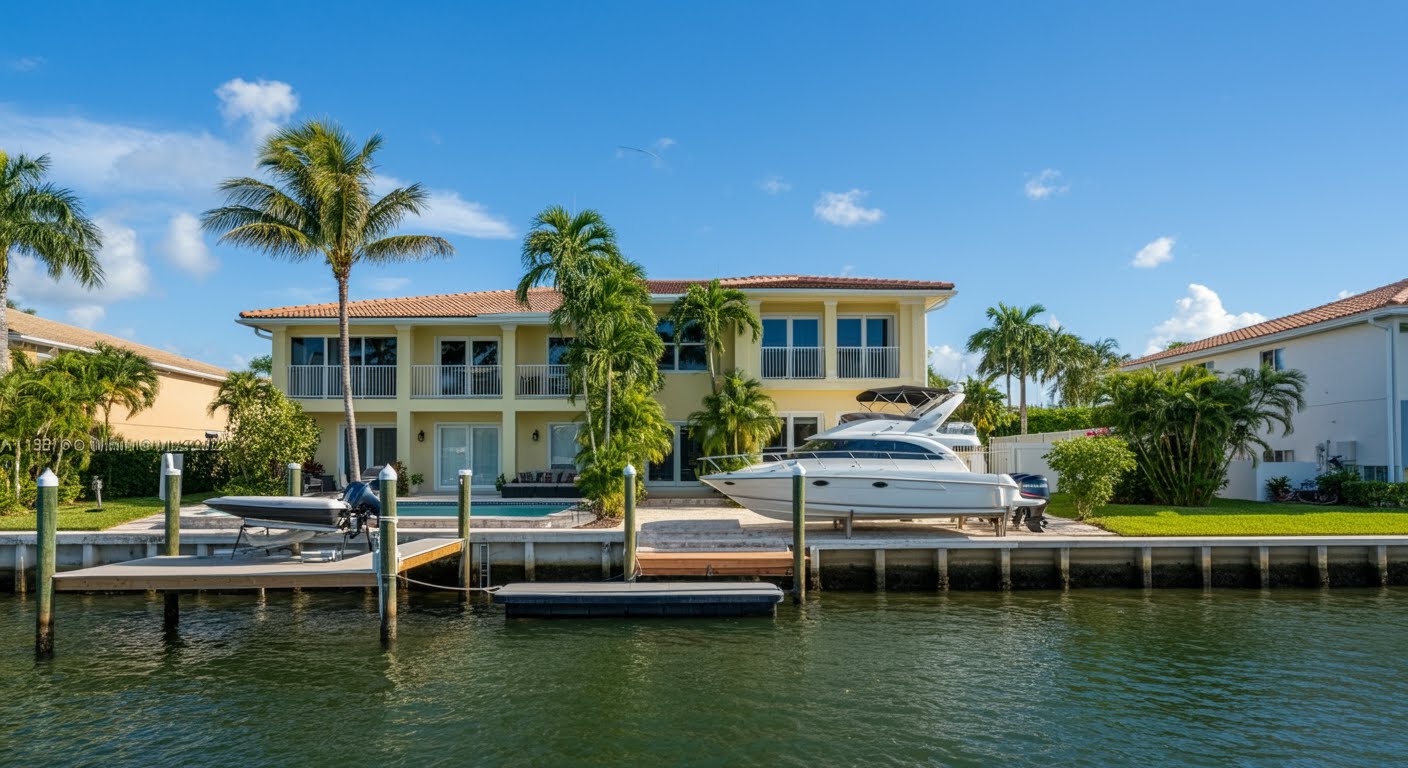
Cape Coral has 400+ miles of navigable canals — more than any other city in the world. But not all of those canals are equal from an investment standpoint, and understanding the distinction between canal types is fundamental to making sense of pricing, rental income, and long-term value.
The critical distinction is gulf access. A gulf-access canal home connects to the Caloosahatchee River and ultimately to the Gulf of Mexico by boat without passing under a fixed bridge. These homes carry a significant premium — typically 30–50% more per square foot than comparable freshwater canal homes — because boaters can take larger vessels directly to open water.
Freshwater canal homes connect to inland canals that may dead-end or only accommodate smaller boats. They're still desirable — the water views and outdoor lifestyle are real — but they don't command the same rental rates or appreciation trajectory as gulf-access properties.
The Gulf Access Premium in Rental Income
The gulf-access premium is real and measurable in the rental market. Here's how it breaks down for comparable 3BR/2BA pool homes in Cape Coral as of 2025–2026:
Gulf-access canal home:
- Peak season nightly rate: $350–$550
- Shoulder season: $225–$325
- Off-season: $150–$225
- Typical annual gross (well-managed): $62,000–$82,000
Freshwater canal home:
- Peak season nightly rate: $225–$350
- Shoulder season: $165–$225
- Off-season: $115–$175
- Typical annual gross (well-managed): $42,000–$58,000
The gross revenue gap between gulf-access and freshwater is roughly $20,000–$25,000 annually for comparable properties. But the acquisition price gap is often $150,000–$250,000. That math favors freshwater canal homes on a yield basis in most cases — gulf-access properties justify their premium more through appreciation potential than current income.
Seasonal vs. Annual Rental: The Tradeoff
Canal home investors in Cape Coral generally face a choice between three operating strategies:
Nightly vacation rental: Highest gross revenue potential, highest management burden and expense ratio. Works best for well-amenitized, professionally managed properties in active rental corridors. Requires DBPR license, local registration, and active hospitality-style management.
Seasonal furnished lease (1–6 months): An often-overlooked middle path. A furnished 3BR gulf-access home rented for 4 months to a snowbird at $5,500–$7,500/month generates $22,000–$30,000 with minimal management overhead and no nightly cleaning or guest communication. Many investors pair this with a summer long-term rental or personal use during the off-season.
Annual unfurnished lease: Most predictable income, lowest management burden. A comparable canal home rents for $2,400–$3,200/month annually. Gross annual revenue of $28,800–$38,400. Lower than vacation rental but with dramatically lower expenses and near-zero management time. Often the right choice for out-of-state investors who don't want to operate a hospitality business.
Property Management: What It Costs and What It Gets You
The management decision is one of the most consequential choices a canal home investor makes. Here's the honest breakdown of options:
Full-service vacation rental management (local company, 25–30% of gross): Handles all guest communication, check-ins, cleaning coordination, maintenance, and listing management. For a $65,000 gross property, this costs $16,250–$19,500/year. Worth it for out-of-state investors or those who want truly passive income. Quality varies — interview multiple companies and ask for occupancy data on comparable properties they manage.
Hybrid/co-hosting (15–20% of gross): You handle guest communication and strategy; a local co-host handles on-the-ground operations. Becoming more common in Cape Coral. Can reduce management cost while maintaining quality if you have time for the communication side.
Self-management: Keeps 100% of revenue but requires active involvement — 10–20 hours per month for an active property. Viable for local investors who enjoy the hospitality side. Challenging for anyone more than a few hours away.
Annual rental management (8–10% of gross monthly rent): Property manager handles tenant screening, lease execution, and maintenance coordination. For a $2,800/month property, this costs $2,688–$3,360/year — a fraction of vacation rental management costs.
Insurance: The Number That Changes Everything
Insurance costs for canal homes in Cape Coral have risen significantly since Hurricane Ian made landfall in September 2022. Lee County was the direct-hit zone for one of the costliest hurricanes in US history, and the insurance market responded accordingly.
For a non-homestead canal home used as a rental, expect:
- Wind/hazard insurance: $6,500–$12,000/year (higher for gulf-access, higher for older construction)
- Flood insurance: $2,500–$6,000/year (zone-dependent; gulf-access homes near saltwater tend toward higher rates)
- Liability coverage: Often bundled with the hazard policy; verify coverage limits are adequate for rental use
Combined insurance cost for a gulf-access canal home can reach $14,000–$18,000 annually in some zones. This is the single largest variable expense for many canal home investments, and it's the line most frequently underestimated in listing-provided pro formas. Get an actual insurance quote before you make an offer.
Net Yield Reality Check
Running a complete expense picture on a $550,000 gulf-access canal home (vacation rental, managed):
- Gross annual revenue: $65,000–$78,000
- Property management (27%): $17,550–$21,060
- Insurance (wind + flood): $12,000–$16,000
- Property taxes: $7,000–$9,000
- Pool + lawn: $4,200–$5,400
- Utilities: $5,500–$7,500
- Maintenance reserve: $5,500–$8,250
- Platform fees: $1,950–$2,340
- Total expenses: $53,700–$69,550
- Net operating income: $5,450–$24,300
- Cash-on-cash yield (20% down, 7% rate): 1.5%–5.5%
The same analysis on a $375,000 freshwater canal home run as an annual rental typically produces a more consistent 4.5%–6.5% cash-on-cash yield. That's why experienced investors often prefer freshwater canal homes for yield and save their gulf-access appetite for properties with strong personal use value.
Bottom Line for Canal Home Investors
Cape Coral canal homes are legitimate investment assets when purchased correctly. The key variables are: canal type (gulf vs freshwater), management strategy, insurance load, and acquisition price relative to actual rental income potential — not projected rental income from an optimistic listing sheet.
The investors who do best here treat it as a long game. They buy at a price that allows the property to cash flow even in a softer year, they choose their management strategy based on their actual bandwidth, and they hold through the seasonal cycle rather than panicking in August when bookings slow.
If you want to evaluate a specific canal home investment — compare strategies, stress-test the numbers, or understand what a fair acquisition price looks like — that's exactly the conversation I'm here to have.
Explore More