Neighborhood Comparisons
Cape Coral vs North Fort Myers vs Lehigh Acres: Which SW Florida Community Is Right for You?
A side-by-side look at Cape Coral vs North Fort Myers vs Lehigh Acres to help you find the right fit.
7 min readMarch 25, 2026
Neighborhood Comparisons
A side-by-side look at Cape Coral vs Fort Myers vs Lehigh Acres to help you find the right fit.
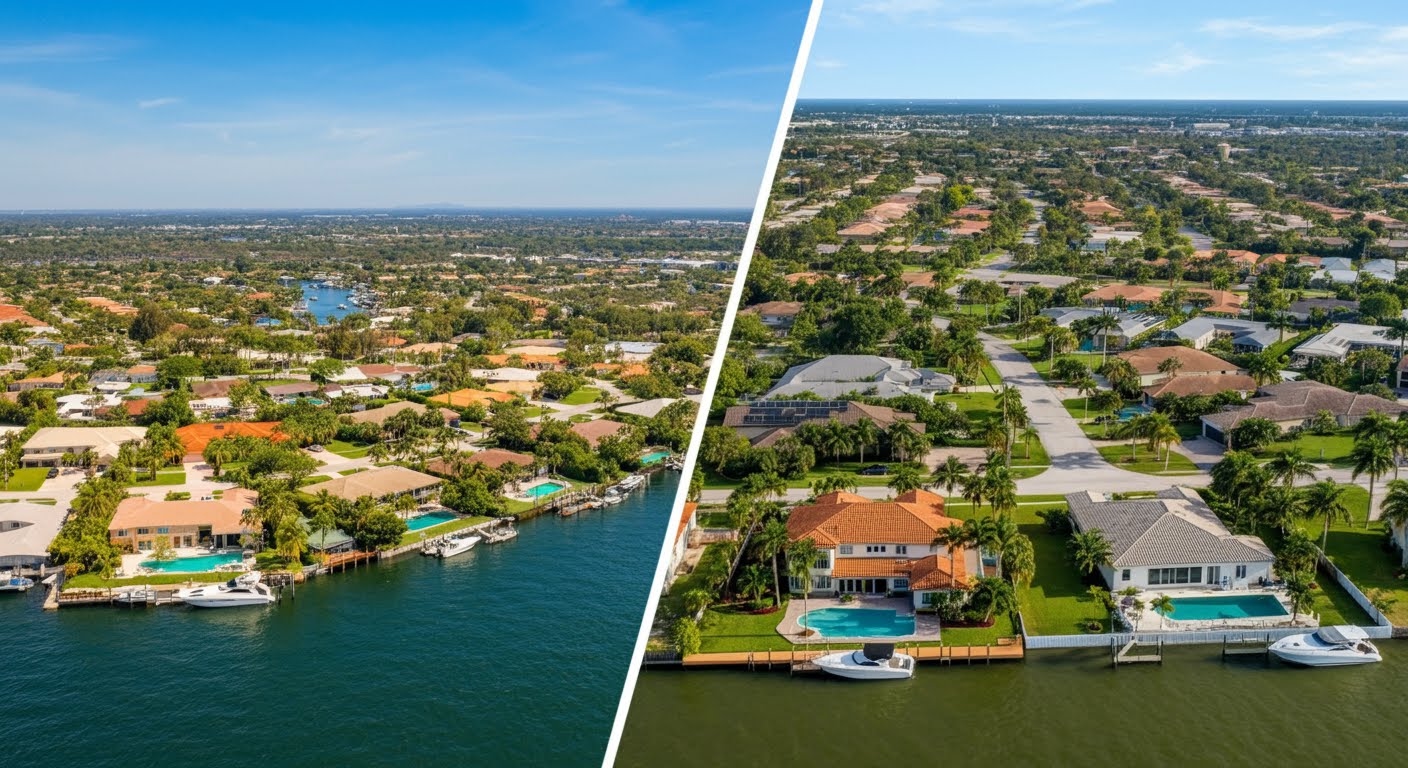
Cape Coral vs Fort Myers vs Lehigh Acres: Which SW Florida Community Is Right for You? — The Baez Collective
Cape Coral, Fort Myers, and Lehigh Acres are the three population anchors of Lee County — different in character, price point, and daily rhythm. They're close enough that commuting between them is routine, yet distinct enough that choosing the wrong one can mean living a lifestyle that doesn't quite fit. Here's an honest breakdown of each.
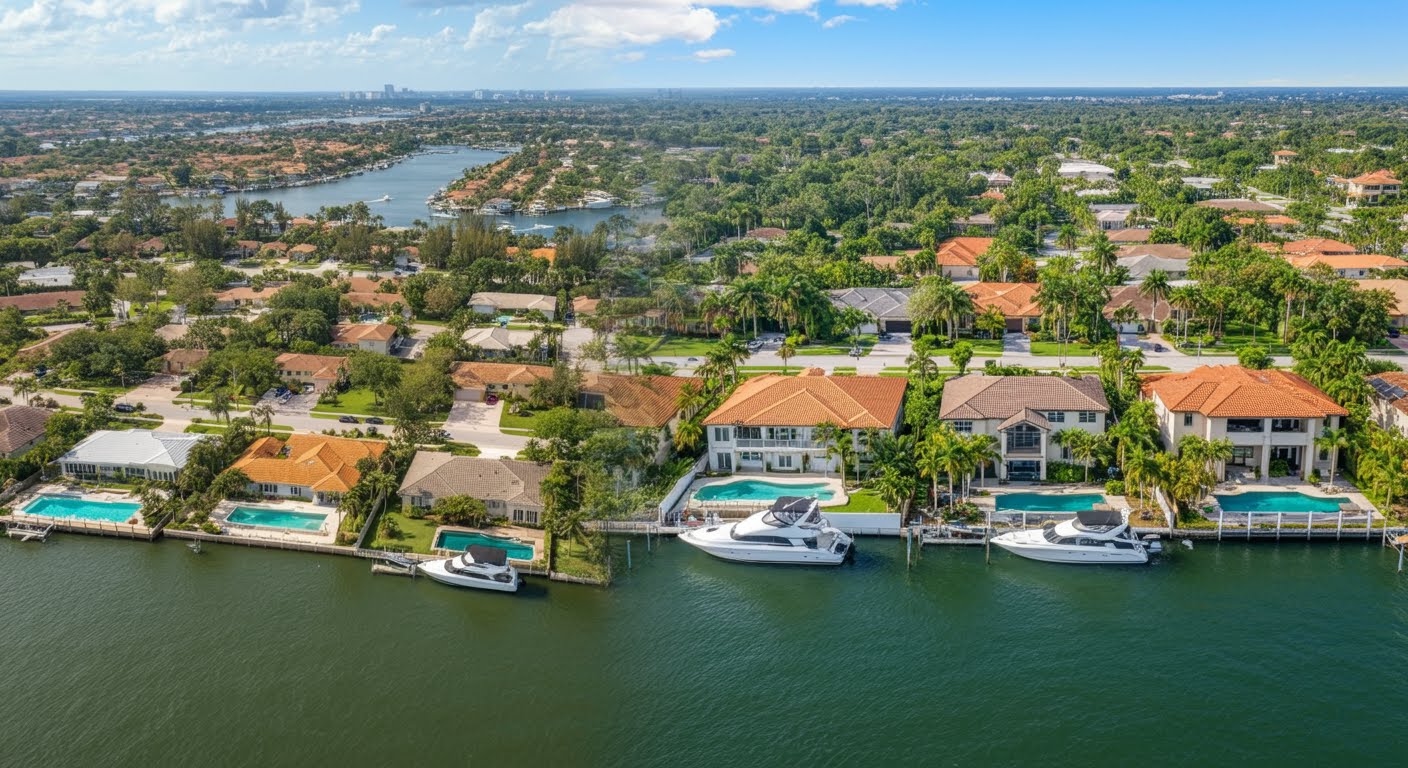
Cape Coral earned its incorporation in 1970 by growing too fast for anyone to ignore. What started as the Rosen brothers' waterfront experiment became the largest city between Tampa and Miami. The planned community DNA shows in every canal-cut neighborhood — 400 miles of canals that locals navigate like streets, with the Caloosahatchee River forming the eastern boundary and Matlacha Pass protecting the west.
This is a city built around water access as a baseline. Waterfront estates with gulf access command the headlines, but the real market lives in the middle — freshwater canal homes where you dock a kayak instead of a yacht, dry lots near good schools where families stretch their dollars, newer builds out west where tomorrow's neighborhoods take shape today. The restaurant scene reflects who lives here: Dixie Fish Co. anchors waterfront dining, Doc Ford's Rum Bar & Grille brings the Sanibel crowd over the bridge, and Backyard Social turns a food truck park into a genuine community gathering space.
The city's growth trajectory means construction cranes compete with pelicans for skyline space. Lakes Regional Park gives families 283 acres of trails, fishing, and that miniature train that somehow never gets old. Bowditch Point Park at the northern tip delivers the kind of shell beach that reminds people why they moved to Florida.
Cape Coral suits: Buyers prioritizing water access at various price points, families who want planned infrastructure and newer schools, and anyone who genuinely wants to own a piece of the waterfront lifestyle without the Naples premium.
Fort Myers wears its history openly. Founded in 1885, this isn't a city that sprouted from a developer's blueprint — it grew from river trade, winter estates, and organic expansion that creates real neighborhoods with genuine character. As the anchor of the Cape Coral–Fort Myers metropolitan area, it carries more weight than its palm-lined streets suggest.
The Edison and Ford Winter Estates aren't just tourist stops — they're active reminders that smart people have been choosing Fort Myers for over a century. Edison planted the royal palms along McGregor Boulevard himself. That kind of history gives the city bones. Today's Fort Myers balances preserved downtown blocks with modern momentum: the River District draws evening crowds to riverfront dining, Six Mile Cypress Slough Preserve protects native wetlands just minutes from the city center, and Octagon Wildlife Sanctuary manages to exist alongside suburban sprawl.
The housing market ranges from historic downtown lofts to established neighborhoods where mature trees shade ranch homes to newer master-planned communities on the eastern edge. Fort Myers services — hospitals, the airport, entertainment venues, professional services — anchor the metro. Buyers get urban convenience alongside neighborhood livability in ways that newer cities can't replicate.
Fort Myers suits: Buyers who want an established city with real neighborhoods, cultural institutions, and the convenience of a regional hub. History lovers, professionals seeking proximity to employment centers, and anyone who finds Cape Coral's grid slightly too uniform.
Lehigh Acres carries its history in its layout. When Lee Ratner transformed cattle ranch land into residential lots in 1954, he created something massive — not another Florida subdivision, but an entire geography. Those 152,000 lots and 1,400 miles of roads aren't statistics; they're why your neighbor might be a quarter-mile away and why you'll drive everywhere. The real estate boom of the 2000s brought growth, the downturn brought reality checks, and now it's finding its rhythm as one of Lee County's fastest-growing communities.
What residents understand that outsiders miss: this isn't failed urbanism, it's intentional space. The pride comes from having room — room for the boat, the workshop, the yard where kids actually play. The Latin community gives Lehigh real cultural depth, with taquerias and pupuserias anchoring commercial corridors that feel authentic rather than touristic. The housing market delivers more square footage per dollar than anywhere else in the Cape Coral–Fort Myers metro, with starter homes that make homeownership genuinely accessible.
Lehigh Acres suits: First-time buyers, families prioritizing space over urbanity, investors seeking value plays in a growing market, and anyone who wants Florida space without Florida prices.
In Cape Coral, the week revolves around water. Saturday morning paddleboard launches, weekday afternoons fishing the seawall behind your house, evenings at Lighthouse Restaurant & Bar watching the sun drop. The city has the infrastructure of a major municipality but the feel of waterfront community — enough people to support good restaurants and services, still small enough that you recognize faces.
Fort Myers moves faster. The River District has energy after 6 PM — restaurants, bars, events that draw people out of their neighborhoods into something more metropolitan. The Edison Festival of Light in February fills downtown streets. Sports fans follow the spring training crowds to Hammond Stadium. It's a city that does things, not just a place people live.
Lehigh Acres is quieter by design and by geography. The community has a strong DIY, self-sufficient character. Weekend farmers markets, local church communities, and neighborhood networks substitute for the urban amenities the other two offer. It's a tradeoff some people make deliberately.
Cape Coral: Wide range, from $250,000 dry-lot starter homes to multi-million dollar gulf-access estates. The sweet spot for families is $350,000–$600,000 for canal-front homes with workable square footage. Waterfront adds a premium that can be significant.
Fort Myers: Historic neighborhoods and downtown lofts start around $250,000; family homes in established zones run $350,000–$550,000. Proximity to the River District or McGregor Boulevard adds value. New construction on the eastern edge competes with Cape Coral's pricing.
Lehigh Acres: The most affordable entry point in the metro. Single-family homes in the $200,000–$350,000 range with genuine lot sizes. Investment properties show up below $200,000. Growth is pushing prices up, but the value differential from the other two remains significant.
If waterfront access and community infrastructure are your priorities, and you can absorb the premium — Cape Coral is hard to beat.
If you want an established city with real neighborhoods, cultural weight, and regional hub convenience — Fort Myers delivers what planned communities can't replicate.
If your priority is maximizing space and value, and the tradeoffs of a less-developed community work for your lifestyle — Lehigh Acres offers more house per dollar than anything else in Lee County.
The right choice depends on your priorities. Spend a day in each. Drive the neighborhoods, eat lunch locally, check the school zones. The feel of these three communities is distinct enough that you'll know.
Ready to learn more about Southwest Florida? Check out these resources:
— Freddy & Josey
Frequently Asked
Explore These Cities
The SWFL Market Letter
Market notes and neighborhood reads from Freddy & Josey — written for SWFL homeowners, buyers, and the curious. No spam, no pressure.
Neighborhood Comparisons
A side-by-side look at Cape Coral vs North Fort Myers vs Lehigh Acres to help you find the right fit.
Neighborhood Comparisons
A side-by-side look at Fort Myers vs Cape Coral vs Naples to help you find the right fit.
Buyer Guides
Most SWFL buying advice is written for relocators with cash or snowbirds buying a second home. If you actually live here and rent, you need a different playbook. Here it is.
Local team. Licensed in Florida. En español también.