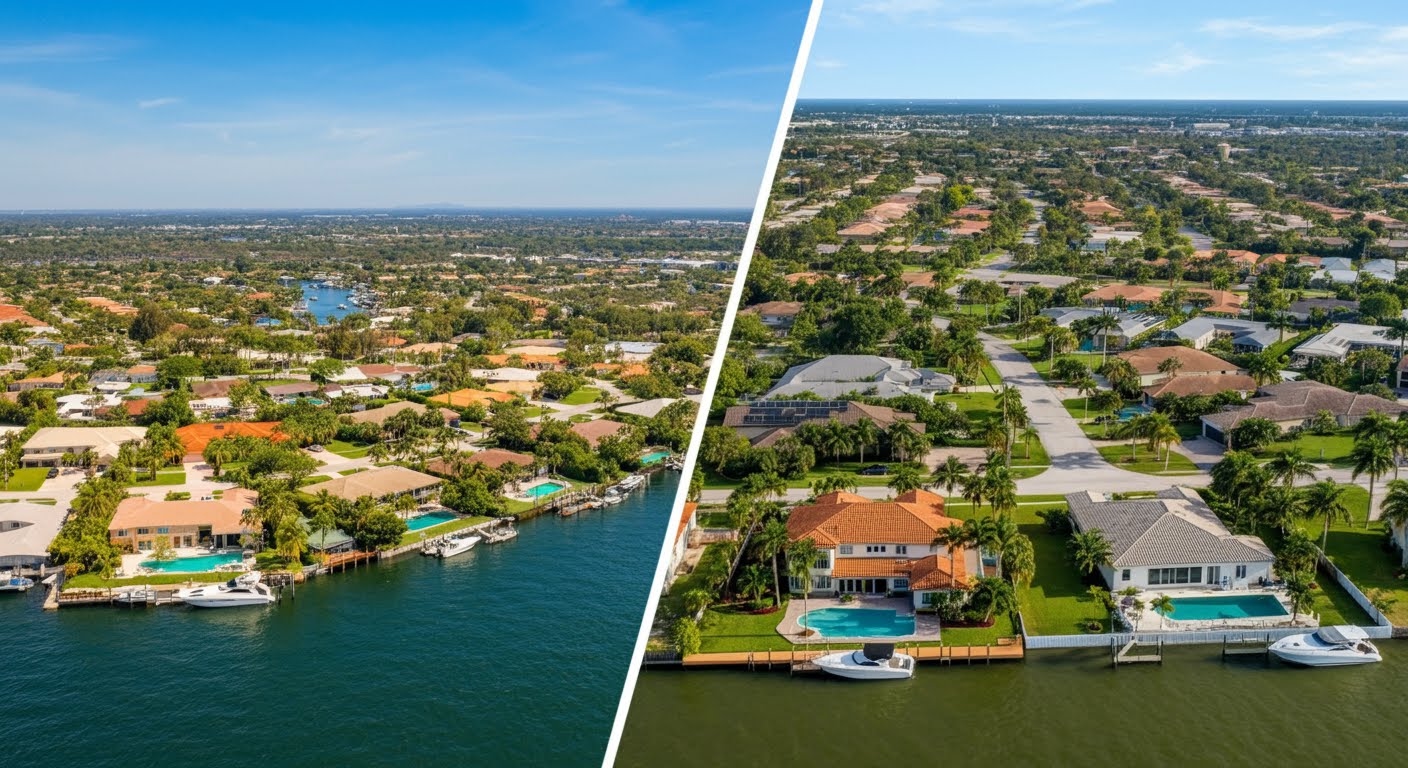
Neighborhood Comparisons
Cape Coral vs Fort Myers vs Lehigh Acres: Which SW Florida Community Is Right for You?
A side-by-side look at Cape Coral vs Fort Myers vs Lehigh Acres to help you find the right fit.
7 min readMarch 25, 2026
Neighborhood Comparisons
A side-by-side look at Fort Myers vs Cape Coral vs Naples to help you find the right fit.
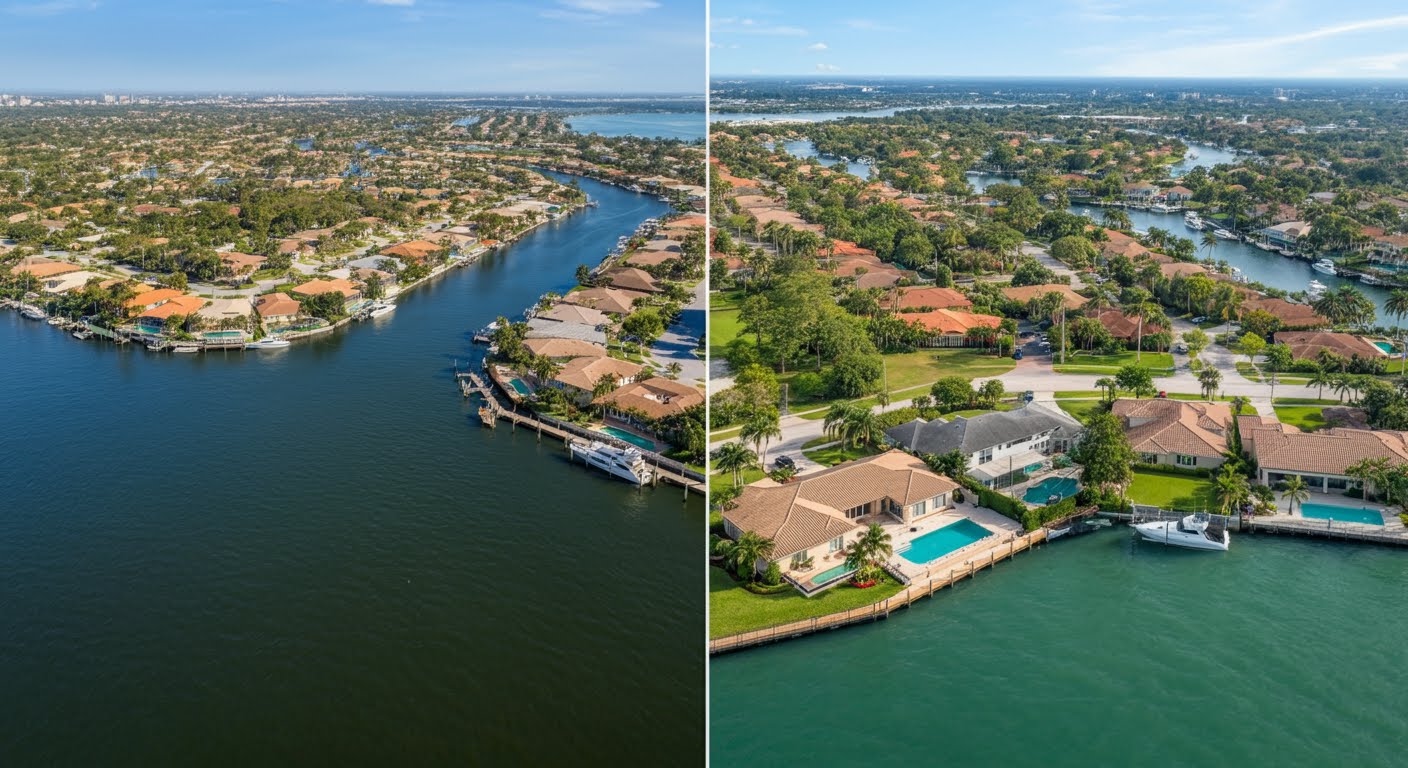
Fort Myers vs Cape Coral vs Naples: Which SW Florida Community Is Right for You? — The Baez Collective
Fort Myers, Cape Coral, and Naples form the three-city spine of Southwest Florida real estate. They're interconnected — sharing a metro area, an airport, and a regional economy — yet different enough that choosing among them is one of the most consequential decisions a Southwest Florida buyer makes. Here's an honest look at what each city actually delivers.
Fort Myers wears its history openly. Founded in 1885, incorporated as the anchor of the Cape Coral–Fort Myers metropolitan area, this is a city that grew organically from river trade and winter estates. The Edison and Ford Winter Estates aren't tourist stops — they're reminders that smart people have been choosing this latitude for over a century. The "City of Palms" got its nickname from actual royal palms Edison planted along McGregor Boulevard himself.
Today's Fort Myers balances preserved history with genuine modern momentum. The River District has legitimate evening energy — restaurants, galleries, events that pull people from their neighborhoods into something more metropolitan. Six Mile Cypress Slough Preserve manages to exist minutes from downtown. The cultural infrastructure — Barbara B. Mann Performing Arts Hall, the Art of the Olympians Museum, Edison Festival of Light — gives the city cultural weight that Cape Coral and even Naples can't quite replicate. The housing market rewards buyers who understand the city's geography: McGregor corridor homes carry a premium the statistics don't always capture; the River District's urban development attracts buyers who want loft living within the Southwest Florida context.
Fort Myers suits: Buyers who want an established city with genuine neighborhoods, cultural institutions, and the convenience of a regional hub. History matters here in a way that planned communities simply can't match.
Cape Coral's founding premise was simple and ambitious: give middle-class families waterfront access that had always been reserved for the wealthy. The Rosen brothers' canal grid delivered on that promise at scale. Four hundred miles of canals, the largest such system in the world, made waterfront-adjacent living genuinely achievable across a wide budget range. The city incorporated in 1970 and became the largest city between Tampa and Miami through relentless, deliberate growth.
The lifestyle that results is distinctive. This is a city where the weekend starts with a kayak launch from your own dock, where sunset from your seawall competes with any restaurant view in the metro, where the boat in the driveway is practical rather than aspirational. The infrastructure supports real urban life — Cape Coral has hospitals, strong schools, commercial corridors, entertainment venues, and a restaurant scene anchored by Dixie Fish Co., Doc Ford's, and Backyard Social. Lakes Regional Park gives families 283 acres. Bowditch Point Park at the northern tip delivers Gulf-proximity beach access.
Cape Coral suits: Buyers who want waterfront access across a range of price points, families who value the planned infrastructure and school investment, and anyone for whom Gulf access is a baseline requirement rather than a luxury upgrade.
Naples is the premium market of the three, and the premium is real. More golf holes per capita than any other Florida city. Beaches that stay pristine because the community insists on it. A dining scene — Caffè Milano, The Rooster Food+Drink, Tommy Bahama Restaurant & Bar — that would hold up in cities three times its size. The waterfront neighborhoods of Aqualane Shores and Port Royal set the top end of Gulf Coast luxury. The established neighborhoods of Park Shore and Old Naples deliver what no new development can: decades of character.
Naples is also the most complete city of the three for buyers who want city services alongside beach living. Fifth Avenue South functions as a genuine urban street. The healthcare infrastructure anchored by NCH Healthcare competes with what you'd find in much larger metros. The private school options, the arts and cultural organizations, the consistent investment in public infrastructure — Naples delivers all of it. The price tag is the honest counterbalance.
Naples suits: Buyers who want the full package — prestige, complete luxury market, best dining scene, and are prepared to pay the premium that comes with all of it.
Fort Myers feels most like a city. There's an organic character to its neighborhoods — the way McGregor Boulevard's canopy of palms shapes the drive home, the way the River District has energy that didn't have to be manufactured. It's the most historically grounded of the three.
Cape Coral feels most like a community built around a shared value — water. The canal-oriented lifestyle creates a consistent backdrop to daily life. New construction keeps adding energy; the waterfront restaurants and parks keep adding reasons to stay. It's a city that knows what it is.
Naples feels most like an achievement. The restaurants, the golf, the beaches, the neighborhoods — everything has been curated over decades into something that works. The pace is unhurried because there's no need to rush when Tuesday dinner at Caffè Milano is just a decision to make.
Fort Myers: Broadest range, from historic downtown lofts around $200,000 to estate homes exceeding $1M in established neighborhoods. The sweet spot for families is $350,000–$550,000 in solid zones. New construction on the eastern edge competes with Cape Coral pricing.
Cape Coral: Dry lots start around $200,000; freshwater canal homes in the $300,000–$500,000 range; gulf-access waterfront from $600,000 up to multi-millions. The price spread reflects the canal system's complexity.
Naples: Premium throughout. Single-family in established neighborhoods starts around $600,000 and climbs sharply toward the Gulf. Port Royal operates at a different altitude entirely. Value relative to other Florida luxury markets, but still premium relative to Fort Myers and Cape Coral.
Fort Myers if established city character, cultural infrastructure, and the organic neighborhood feel matter — and the price-to-quality ratio of an actual city with history appeals.
Cape Coral if waterfront access is non-negotiable, you want the broadest range of price points in the metro, and the planned community feel suits your preference.
Naples if the premium Gulf Coast experience with complete luxury infrastructure is what you're after, and you've decided the investment reflects the lifestyle you want.
No wrong answer exists here. These are three excellent cities serving three different buyer profiles. The right choice depends entirely on your priorities.
Ready to learn more about Southwest Florida? Check out these resources:
— Freddy & Josey
Frequently Asked
Explore These Cities
The SWFL Market Letter
Market notes and neighborhood reads from Freddy & Josey — written for SWFL homeowners, buyers, and the curious. No spam, no pressure.
Neighborhood Comparisons
A side-by-side look at Cape Coral vs Fort Myers vs Lehigh Acres to help you find the right fit.
Lifestyle & Relocation
If the boat is the reason you're moving to Southwest Florida, the right city is not always the one with the prettiest downtown. Here's how Cape Coral, Fort Myers, and Naples actually compare on the water.
Buyer Guides
Waiting for rates to drop feels like the safe move. It's also a strategy with a real dollar cost. Here's how to model that cost for your specific situation.
Local team. Licensed in Florida. En español también.