If you live in Toronto, Munich, São Paulo, or Mexico City and you are thinking about buying a home in Southwest Florida, you have probably already read a dozen articles telling you it is easy. Foreigners can buy property freely in the United States. No visa required. Sunny beaches, favorable exchange rates, strong rental demand. All of that is technically true, and all of it skips past the parts that actually slow deals down.
In practice, foreign-national buyers in Cape Coral, Naples, and Fort Myers tend to hit the same three walls in the same order: the 30-40% down payment requirement, the U.S. bank account that has to exist before a wire can clear, and the FIRPTA withholding bill that shows up on the eventual resale. This post walks through how that process actually runs, what it costs, and where the trade-offs sit.
What 'Foreign National' Actually Means to a U.S. Lender
The label 'foreign national' is a mortgage-industry term, not an immigration one. To a U.S. lender, you are a foreign national if you do not have a Social Security number, a U.S. credit history, and U.S.-sourced income that can be verified through the standard channels. A Canadian citizen with a snowbird condo in Naples for fifteen years is still, on paper, a foreign national to the underwriter.
What that means practically: you cannot walk into a conventional Fannie Mae or Freddie Mac loan. Those programs are built around U.S. credit files and U.S. tax returns. You need what is called a foreign-national loan program, which is a specialty product offered by a smaller subset of lenders — usually portfolio lenders, private lenders, and a handful of banks with international divisions.
The upside is that these programs exist and are functional. Deals close every week in Southwest Florida using them. The downside is that they cost more and require more cash than a domestic buyer needs. That is the first wall.
The First Wall: 30 to 40 Percent Down and a Premium Rate
Foreign-national mortgage programs in the current market generally require 30% to 40% down. Some programs go to 25% for very strong borrowers with substantial verified assets; some push to 50% for higher-risk profiles. Assume 30% as a floor for planning purposes.
On a $600,000 home in Cape Coral, that is $180,000 in down payment before you talk about closing costs, insurance escrow, and reserves. Most foreign-national programs also require six to twelve months of reserves — meaning liquid assets equal to six to twelve months of the full mortgage payment, taxes, insurance, and HOA, sitting in an accessible account. On that same $600,000 property, reserves can run another $25,000 to $50,000.
Rates on foreign-national loans typically run 1.5 to 3 percentage points above conventional rates for domestic buyers. If a U.S. buyer with strong credit is getting a 30-year fixed in the low 6% range, a foreign-national program on the same property might come in anywhere from 7.5% to 9%, depending on the lender, the down payment, and the property type. That gap is the price of underwriting without a U.S. credit file.
Documentation is the other cost. You will provide: a valid passport, a second form of ID, two years of tax returns from your home country (translated and sometimes notarized), two years of bank statements, an international credit reference letter from your primary bank, and proof of income. Everything gets converted, everything gets scrutinized. Plan for the mortgage process to take 45 to 75 days, not 30.
The Second Wall: U.S. Bank Account and Wire Logistics
You cannot wire funds directly from a Canadian, German, or Mexican bank into escrow and have the deal run smoothly. Title companies in Florida will accept international wires, but the compliance review, currency conversion, and Bank Secrecy Act reporting can delay closing by a week or more if the wire hits from an unfamiliar foreign institution.
The clean path is to open a U.S. bank account before you go under contract. Several U.S. banks offer international client services and can open an account for a non-resident with a passport, a second ID, and sometimes an in-person visit to a branch. A few offer remote onboarding for clients from specific countries. Your loan officer usually has a shortlist of institutions that work smoothly for their foreign-national borrowers.
Once the U.S. account exists, you wire from your home-country bank into your U.S. account, let the funds settle, and then wire from the U.S. account into escrow. That extra step feels redundant but it dramatically reduces the compliance friction at closing.
One practical note: currency conversion is where a surprising amount of money quietly disappears. Bank wire rates for currency exchange are usually 2% to 4% worse than the mid-market rate. On a $200,000 transfer, that spread is $4,000 to $8,000. Specialized foreign exchange services can cut that meaningfully. This is worth a conversation with your financial advisor before you move the money.
The Third Wall: FIRPTA When You Eventually Sell
This is the one most foreign buyers do not see coming, because it does not affect the purchase. It affects the resale.
FIRPTA — the Foreign Investment in Real Property Tax Act — requires that when a foreign person sells U.S. real estate, the buyer's closing agent withholds a portion of the gross sale price and sends it to the IRS. The standard withholding rate is 15% of the gross sale price. On a $700,000 resale, that is $105,000 held back at closing.
Read that again: 15% of the gross sale price, not 15% of the gain. If you bought at $600,000 and sell at $700,000, your actual taxable gain is $100,000, but the withholding is calculated on the full $700,000. You eventually reconcile the difference by filing a U.S. tax return the following year, and if the withholding exceeded your actual tax liability, you get a refund. That refund often takes 6 to 12 months to arrive.
There are reduced-withholding scenarios. If the sale price is $300,000 or less and the buyer intends to use it as a personal residence, withholding can drop to 0%. Between $300,001 and $1,000,000, with the same personal-use intent, withholding can drop to 10%. You can also apply for a withholding certificate from the IRS before closing to reduce the amount held back if your actual tax liability will be lower — but the application must be filed and processed before closing, which takes planning.
The takeaway is not that FIRPTA is a reason to avoid U.S. real estate. It is a reason to plan for it. Do not commit to a purchase where you might need every dollar of the eventual resale proceeds within 60 days of closing, because a meaningful chunk will be sitting with the IRS. And please talk to a CPA who handles cross-border tax before you buy — not after. This is not investment or tax advice; it is the shape of the issue, and the details depend entirely on your specific situation.
LLC and Trust Structures — When They Help and When They Complicate
A common question is whether to buy in your personal name, through a U.S. LLC, or through some form of trust. There is no single right answer, and this is the part of the process where competent legal and tax advice pays for itself many times over.
A U.S. LLC can offer liability protection, some estate-planning benefits, and privacy on the public record. It can also complicate financing — many foreign-national lenders will not lend to an LLC, or will only do so at worse terms. And an LLC introduces annual filing requirements, a registered agent, and potentially additional state and federal tax filings including Form 5472 for foreign-owned single-member LLCs. Miss those filings and the penalties are steep.
Land trusts and irrevocable trusts can be useful for estate-planning reasons, particularly for buyers concerned about U.S. estate tax exposure — non-resident foreign nationals have a much lower estate tax exemption ($60,000 as of the current code) than U.S. citizens, which can create real problems if a property owner passes away holding U.S. real estate in their personal name. But trusts add cost and complexity, and the wrong structure can create tax problems worse than the ones it was meant to solve.
The honest recommendation: talk to a cross-border attorney and a CPA before you decide on structure. If you are buying a single vacation property for personal use, personal name is often fine. If you are building a portfolio of rental properties, structure matters much more. This is a decision that deserves professional guidance, not a blog post.
Why Southwest Florida Draws Foreign Buyers — and What to Watch Locally
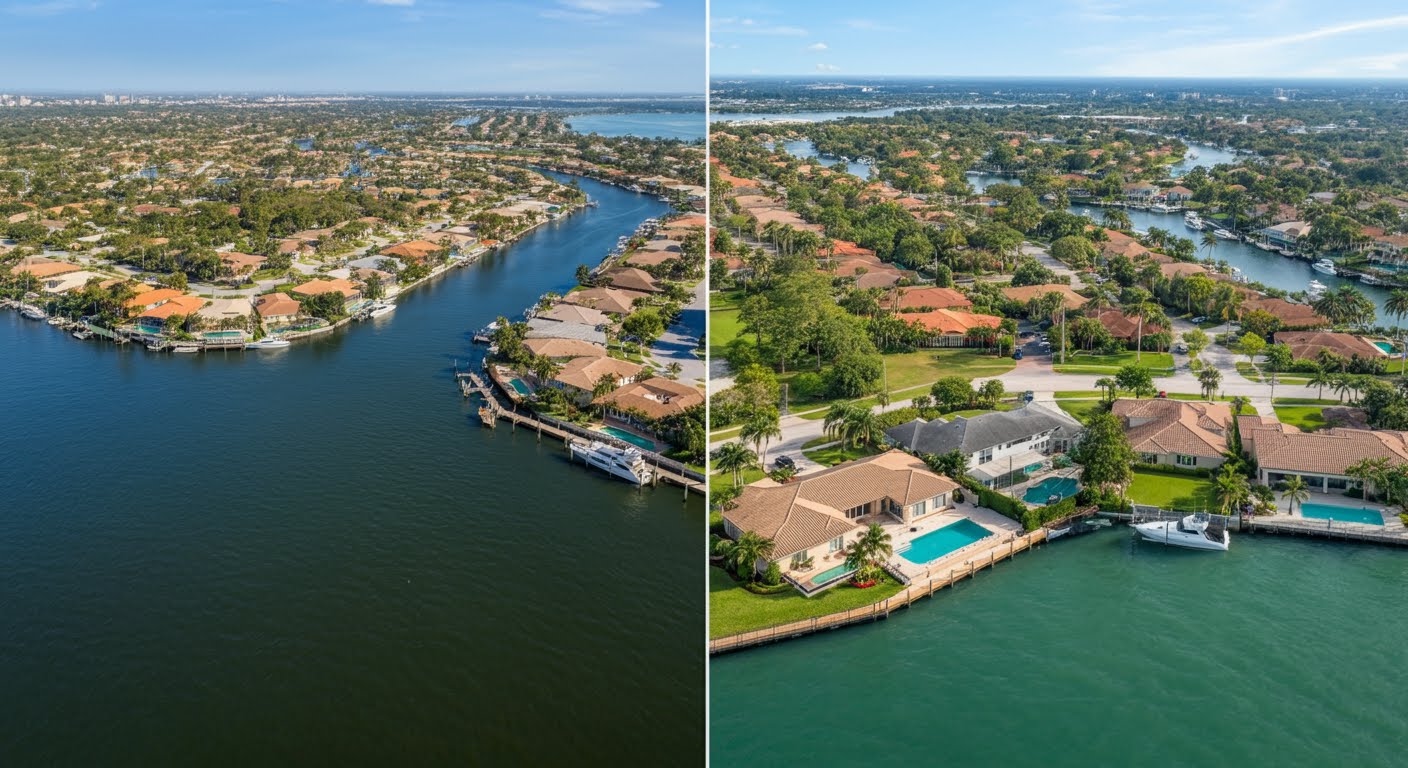
Southwest Florida has been a foreign-buyer market for decades, particularly for Canadians, Germans, and increasingly Latin American buyers. Cape Coral alone has one of the highest concentrations of German-speaking residents outside of Europe, and the Naples luxury market has long attracted international capital.
What is worth understanding about the local terrain: property insurance in coastal Lee and Collier counties has repriced significantly since Hurricane Ian in 2022. A canal-front home in Cape Coral or a Gulf-access property in Naples often carries wind, flood, and homeowners premiums that combined can run $8,000 to $15,000 or more annually, depending on elevation and construction. Foreign buyers underwriting a rental return calculation with domestic-market insurance assumptions are consistently surprised. Get real quotes on real addresses before you finalize a budget.
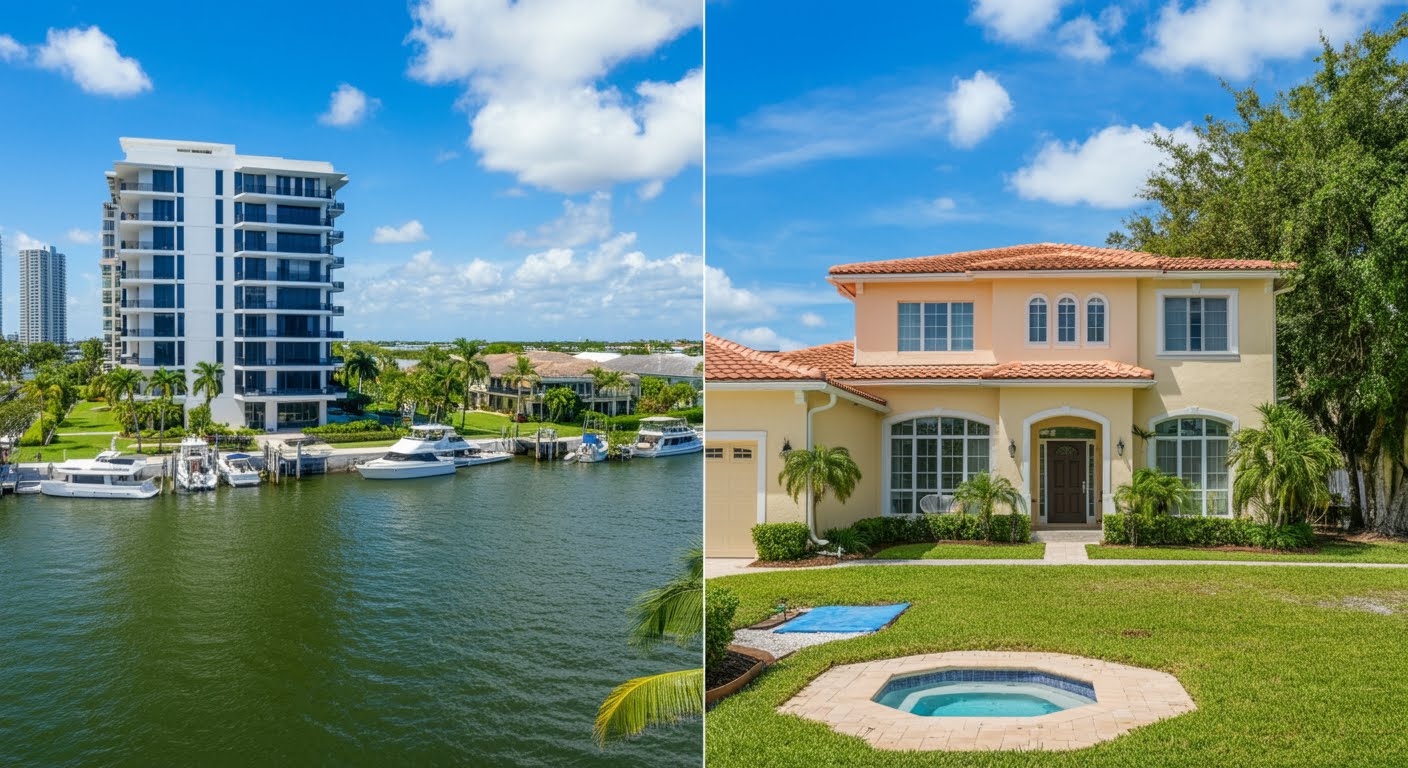
Condo purchases add another layer. Post-Surfside condo law reforms in Florida now require milestone structural inspections and reserve funding for buildings three stories and taller. Some SWFL condo associations have issued substantial special assessments in the last two years to comply. Reviewing HOA financials — reserves, recent assessments, upcoming assessments, and inspection status — matters more here than in most markets. And homestead exemption, along with the Save Our Homes assessment cap, is generally not available to foreign nationals who are not permanent U.S. residents, which affects long-term carrying costs compared to what your U.S.-citizen neighbors pay.
Property management is the other piece. If you are absentee for eight or ten months a year, you need trusted local vendors — a property manager for regular inspections, a landscaper, a pool company, an HVAC contractor, and someone you can call when a tropical storm is 72 hours out. The infrastructure for absentee ownership in Cape Coral, Fort Myers, and Naples is mature, but vendor quality varies enormously. Referrals from someone who works with foreign buyers regularly are worth more than online reviews.
If Your Situation Looks Like This, Here Is the Conversation to Have
If you are seriously considering a foreign-national purchase in Southwest Florida, the useful first conversations — before you tour properties — are with a cross-border CPA about tax structure, a foreign-national mortgage broker about actual rate and down payment terms for your profile, and a local agent who has closed these deals before and knows the vendor network.
The homework worth doing early: get pre-qualified with a foreign-national lender so you know your real budget, open the U.S. bank account, and have an initial FIRPTA and structure conversation so you are not making those decisions under contract pressure. Buying feels much calmer when the money mechanics are already solved.
If you want to walk through what your specific situation looks like — down payment scenarios, insurance realities on a specific street, rental income expectations in a specific submarket — that is a conversation I am happy to have. You can reach us through the contact page, or if you are still in the exploratory stage and want to see what a realistic property in your budget looks like, the home value tool is a starting point for the numbers side.
Equal Housing Opportunity. Freddy Baez · Florida Broker BK3274734 · The Baez Collective at eXp Realty. Information here is general guidance, not legal, tax, or investment advice — please consult a qualified professional for your specific situation.