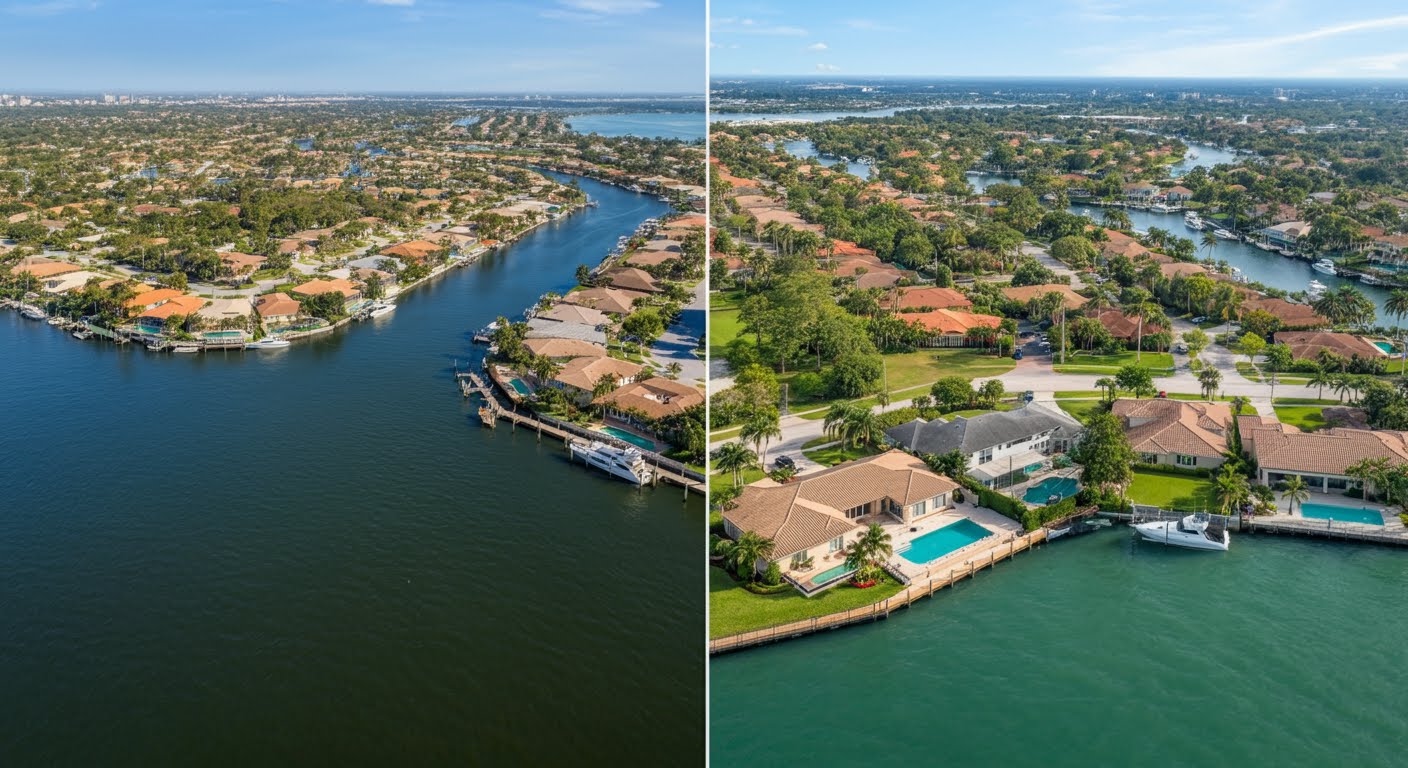
Most homeowners in Southwest Florida hear "snowbird season" and picture November — the first cold snap up north, the first wave of buyers walking through the door, the time to list. That instinct isn't wrong, but it's incomplete. The buyers do show up in November. The sellers who actually capture them tend to start working on their listings in May.
The May-to-July window in SWFL isn't dead time. It's the prep window. Pricing strategy, photography, deferred-maintenance cleanup, insurance binder review, pre-listing inspections — all of that is meant to be done while the market is quiet, so that when traffic returns in October and peaks in January through April, your home is the one that's ready. Here's how I'd think about the calendar if you're considering a sale during the next season.
The SWFL Seasonal Calendar — When Buyers Actually Show Up
Southwest Florida has one of the most pronounced seasonal real estate cycles in the country. The pattern is consistent enough that you can plan around it.
- January through April — peak season. Snowbirds are in residence, out-of-state buyers are visiting, showing volume is at its highest. This is when competitive offers happen, multiple-offer situations are most likely, and pricing power is strongest for well-prepared listings.
- May through July — the prep window. Buyer traffic drops noticeably as seasonal residents head north. Listings that hit the market now compete in a smaller pond. This is where prep work, not active marketing, pays off.
- August through September — the quietest stretch. Hurricane season is at its peak. Insurance binders are harder to obtain during named-storm watches. Showing volume is at its annual low.
- October through November — the rebuild. Traffic begins to return. Early snowbirds arrive. Listings that are ready by mid-October catch the first wave of demand before the holiday lull in late December.
The mistake I see most often is sellers who decide in October that they want to sell, then scramble through November with deferred maintenance, contractor schedules, and pre-listing surprises while the buyer pool is already growing. By the time the listing is actually live and photographed properly, it's mid-January — and they've lost their best window for fresh-listing momentum.
Why May Through July Is the Prep Window
The reason May through July works as prep time is mechanical, not philosophical. Contractors are more available. Roofers, painters, seawall inspectors, HVAC technicians — they're booked solid in fall and winter when seasonal residents return and decide to fix things before listing. In May, you can usually get on a schedule within two to three weeks instead of two to three months.
Here's what fits naturally into the May-to-July window:
- Pre-listing inspection. A general inspection before you list — paid for by you, not the buyer — surfaces the issues you'd rather know about now. Roof condition, HVAC age, water intrusion, electrical panel concerns. You can address them on your timeline and your budget instead of negotiating against an inspection report after a buyer is under contract.
- Insurance binder review. Pull your current homeowner's policy and your flood policy if applicable. Confirm the wind mitigation credits are current. If your 4-point inspection or wind mit is more than a few years old, get them updated. Buyers in 2026 are quoting insurance before they make offers, and a clean, current set of documents shortens that conversation.
- Photography planning. Late spring and early summer light in SWFL is genuinely beautiful for exterior photos — yards are green, pool water is clear, skies tend toward blue. Photos shot in June and held for a November or December listing still look fresh. Photos shot in October when the yard has been through a wet summer often need to be retaken.
- Pricing strategy. Comparable sales from January through April peak season are still fresh in May. By October, those comps are six to nine months stale and may be discounted by appraisers. Setting a pricing framework now — even if you don't list until November — gives you a defensible anchor when you do.
- Cosmetic and curb-appeal work. Paint, landscaping, pressure washing, minor repairs. None of this is urgent in May. All of it becomes urgent in October.
Hurricane Ian Disclosure and Pre-Listing Inspections
For homes sold in Lee, Collier, or Charlotte counties that were owned during Hurricane Ian in September 2022, disclosure is not optional and not casual. Florida requires sellers to disclose known material defects. If the property took on water, had roof damage, or underwent significant repair work after Ian, that history needs to be documented and disclosed accurately.
The May prep window is the right time to assemble your Ian-related paperwork: insurance claim documentation, contractor invoices, permits pulled and closed, any engineer's letters or moisture remediation reports. Buyers in 2026 are still asking specifically about Ian impact, and a seller who has the paperwork organized and ready inspires confidence. A seller who is searching emails for old contractor invoices the day before closing does not.
Pre-listing inspections matter more on post-Ian properties than on homes untouched by the storm. If repairs were done, you want a current inspection that confirms the work holds up — not a buyer's inspector being the first set of eyes on a 2023 roof repair. If something was missed during repair, better to know in May than in February when you're under contract.
Realistic Days on Market by Submarket
Days on market in SWFL vary widely by price point, location, and property type. Anyone who quotes you a single number for "the market" isn't being precise. Here's a more honest picture for early 2026 conditions, recognizing that these vary by neighborhood and should be confirmed against current MLS data when you list:
- Lee County, sub-$500,000: Well-priced single-family homes in established neighborhoods like northeast Cape Coral, central Fort Myers, and parts of Lehigh Acres typically transact within 30 to 60 days when prepped and priced correctly. Overpriced listings in this range can sit 90+ days and ultimately sell after one or two reductions.
- Lee County, $500,000 to $1 million: Gulf-access canal homes and newer construction in Fort Myers tend to run 45 to 90 days. Buyers at this price point are more selective and more sensitive to insurance and flood-zone details.
- Collier County, sub-$750,000: Inventory is tighter than Lee in this band. Homes in established Naples-area communities can move in 30 to 60 days when priced to current comps.
- Collier County, luxury ($1M+): Naples luxury and waterfront properties commonly take 90 to 180 days, sometimes longer. The buyer pool is smaller and more deliberate. This is where peak-season timing matters most — a luxury listing that goes live in July is fishing in a much smaller pond than one that goes live in January.
- Charlotte County: Punta Gorda and Port Charlotte tend to run similar timelines to comparable Lee County price points, with waterfront and Punta Gorda Isles properties commanding longer marketing periods at higher price points.
The pattern across all of these: prepped and correctly priced listings move in a normal range. Underprepped or overpriced listings sit, accumulate days on market, and ultimately sell at a discount that exceeds whatever the seller "saved" by skipping the prep work.
The Carrying-Cost Math of Waiting
The decision to list in November versus May or June isn't free either way. There's a real cost to holding a SWFL home through the summer, and it's worth putting numbers on it before you decide.
For a typical $600,000 home in Lee or Collier County, monthly carrying costs in 2026 commonly look like:
- Property taxes: roughly $400 to $700 per month depending on millage and assessed value
- Homeowner's insurance: $500 to $1,000 per month after recent SWFL premium increases
- Flood insurance (if applicable): $150 to $400 per month
- HOA or condo fees (if applicable): $200 to $1,000+ per month
- Utilities, lawn care, pool service: $300 to $600 per month
- Mortgage interest (if applicable): varies widely
For a typical mid-priced SWFL home, total carrying costs run $2,000 to $5,000 per month before mortgage. Holding from May through November adds up to $12,000 to $30,000 in pure carrying costs over six months. If you're paying a mortgage, add to that.
That doesn't automatically mean "list in May." It means the math has to be honest. If you list in May into a thinner buyer pool and accept a price that's $25,000 below what a peak-season sale might bring, you've roughly broken even on carrying costs — but you've removed uncertainty and freed up your capital. If you list in May at a peak-season price expecting the same outcome, you'll likely sit and end up reducing later, which is the worst of both worlds.
For sellers with flexibility, the strongest play is usually: prep in May through July, photograph in June, list in mid-October to catch the early snowbird wave, and price for the season you're actually entering. That captures most of the peak-season demand without missing the leading edge of it.
SWFL-Specific Considerations Before You List
A few things that matter here in a way they don't matter in most other markets:
Hurricane season disclosure timing. If a named storm hits between June and November while your home is listed or under contract, you'll be navigating insurance binder issues, possible re-inspection requirements, and buyer cold feet. Sellers who list in October are taking on the tail end of hurricane risk; sellers who list in January are largely past it. There's no perfect answer, but it should factor into your timing.
Save Our Homes portability. If you're a Florida resident with a homestead exemption and you're buying another Florida home after this sale, your accumulated SOH benefit is portable up to $500,000. The sale timing and your purchase timing matter for the three-year portability window. This is a tax-and-residency question worth running by a CPA before you commit to a listing date.
Condo and HOA financials. Post-Ian and post-Surfside reform, buyers and lenders are scrutinizing condo association reserves, structural integrity reserve studies (SIRS), and special assessments more aggressively than ever. If you're selling a condo, request a current estoppel letter and recent reserve study from your association before listing. Surprises here have killed deals.
Snowbird buyer patterns. Many SWFL buyers in the November-through-March window are seasonal residents themselves — making decisions on a compressed timeline because they want to be in by next season. They'll often pay closer to ask if the home is move-in ready and well-documented. A home that needs work, has unclear permit history, or has missing post-Ian paperwork loses this buyer faster than any other type. If your typical buyer is a snowbird, prep matters more, not less. Our snowbird resource page walks through what these buyers are looking for in more detail.
What to Do Next If You're Thinking About Selling
If your situation looks like "I'm planning to sell during the next season but I haven't started anything yet," the conversation to have right now is about prep and pricing strategy — not about whether to list this week. A current valuation gives you the anchor for everything else: what range of net proceeds you're working with, what carrying costs look like over the holding period, and which prep investments will actually move the price versus which are vanity spending.
You can start with a home valuation to get a current sense of where your property stands, then we can walk through a prep timeline and a listing strategy together. If you'd rather just talk through your specific situation, you can reach out directly and we'll set up a conversation. No obligation, no pressure — the goal is to get you a clear plan, whether you list in October or decide to wait another year.
Equal Housing Opportunity. Freddy Baez · Florida Broker BK3274734 · The Baez Collective at eXp Realty. Information here is general guidance, not legal, tax, or investment advice — please consult a qualified professional for your specific situation.