This Is a Real Choice in Southwest Florida
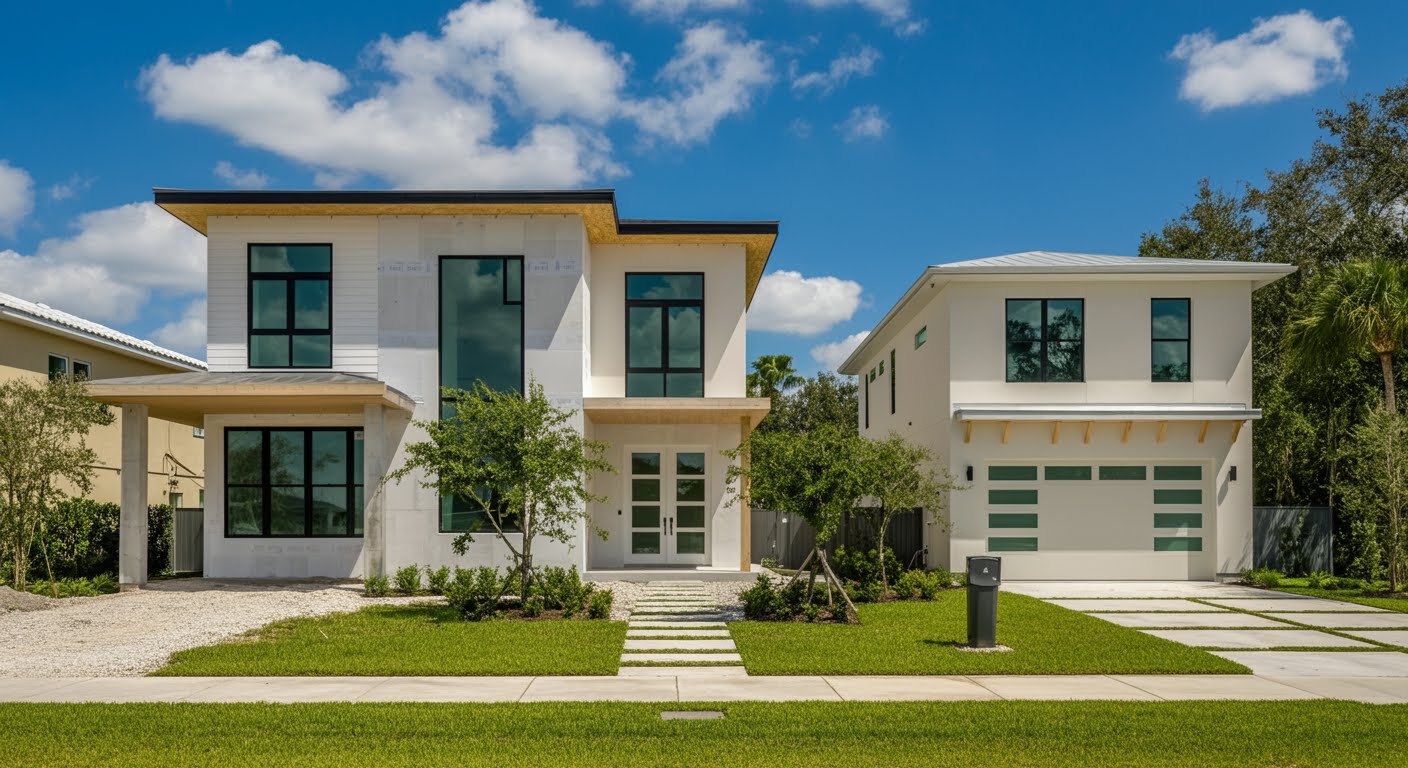
Southwest Florida is one of the few markets in the country where new construction and resale genuinely compete head-to-head at similar price points. Major builders — Lennar, DR Horton, Pulte, Neal Communities, Toll Brothers — have maintained active communities throughout Lee, Collier, and Charlotte counties, and construction continued through and after Hurricane Ian's recovery.
For many buyers, the comparison isn't "can I afford new construction?" — it's "which makes more sense for my priorities right now?" The honest answer is: it depends on what you value and how you weigh the trade-offs. This guide lays out those trade-offs without a sales agenda.
What New Construction Gets You
Builder warranty: New construction homes in Florida come with a structural warranty — typically 1 year on workmanship, 2 years on mechanical systems, and 10 years on the structural components. This coverage provides real protection in the early years of ownership and reduces the risk of major repair costs. Resale homes have no such warranty unless the seller purchases a home warranty at closing (typically $400 to $700/year, with significant coverage limitations).
Energy efficiency: New construction built to current Florida Building Code standards is significantly more energy-efficient than homes from the 1990s and early 2000s. Better insulation, high-efficiency HVAC systems, Low-E impact windows, and smart home systems reduce utility costs. In a climate where AC runs most of the year, this translates to real monthly savings.
Insurance advantages: New construction triggers favorable wind mitigation report results almost automatically — hip roofs, current nail spacing standards, impact glass, and current building code compliance all produce insurance discounts. In SWFL's elevated insurance market, this can be worth $1,500 to $3,000+ per year versus an equivalent older home. New homes also avoid the 4-point inspection issues (old HVAC, aging roof, questionable plumbing) that can complicate insuring older properties.
Customization: Depending on where you are in the builder's sales cycle, you may be able to select floor plans, finishes, cabinets, countertops, and upgrades. The design center experience can be exciting — but it's also a profit center for builders. Upgrades are typically marked up significantly over what the same finish would cost if you purchased the home and renovated independently.
Move-in condition: No prior owner, no deferred maintenance, no hidden history. You get a blank slate with everything functioning as it should from day one.
The Risks and Hidden Costs of New Construction
CDD fees: Community Development Districts are special taxing districts used to finance the infrastructure of new communities — roads, utilities, drainage, common amenities. CDD fees appear on your property tax bill as a separate line item, not as an HOA fee, so they're easy to miss in the initial comparison. Depending on the community and the bond amounts involved, CDD fees can run $1,000 to $5,000+ per year and typically last 20 to 30 years.
Always ask: does this community have a CDD? If yes, what is the current annual assessment, and when does it mature? Model this into your total monthly cost of ownership before comparing against resale alternatives.
Lot premiums: Builder base prices don't include lot premiums. Premium lots — water views, preserve-backing, cul-de-sac locations, larger square footages — are priced separately, often adding $15,000 to $100,000 or more to the base price. Builders present lot premiums as options, but in practice most desirable lots carry them. Get the full price for the specific lot you want before comparing to a resale.
Timeline risk: A new construction purchase made today may not deliver keys for 6 to 18 months depending on the building stage. Lot purchases in early-phase communities can extend to 24+ months. Rates aren't locked for the full construction period under most standard builder contracts — you may be exposed to rate movement. Some builders offer rate locks or rate buy-downs as incentives; understand exactly what they're offering and for how long.
Builder-favored contracts: Builder contracts are written by the builder's attorneys and heavily favor the builder. They typically allow the builder to extend the closing date multiple times, substitute materials, and limit your ability to cancel without losing your deposit. Don't sign a builder contract without having your own agent review it. Most buyers don't realize they should have their own representation when buying from a builder — the on-site sales agent works for the builder, not for you.
What Resale Gets You
Established landscaping and setting: Mature trees, established landscaping, and a neighborhood with roots. New construction communities can look bare and feel unfinished for the first several years as trees and plantings grow in. Resale homes in established neighborhoods often have character that takes decades to develop.
No waiting: Resale transactions close in 30 to 45 days. If your timeline requires occupancy within a few months, resale is almost always the only option.
Negotiation flexibility: Resale sellers are individuals with motivation and circumstance. You can negotiate price, closing date, seller concessions, included personal property, and repairs. Builders negotiate far less — they're managing margins across hundreds of units and will typically offer incentives (upgrades, mortgage rate buy-downs) rather than straight price reductions.
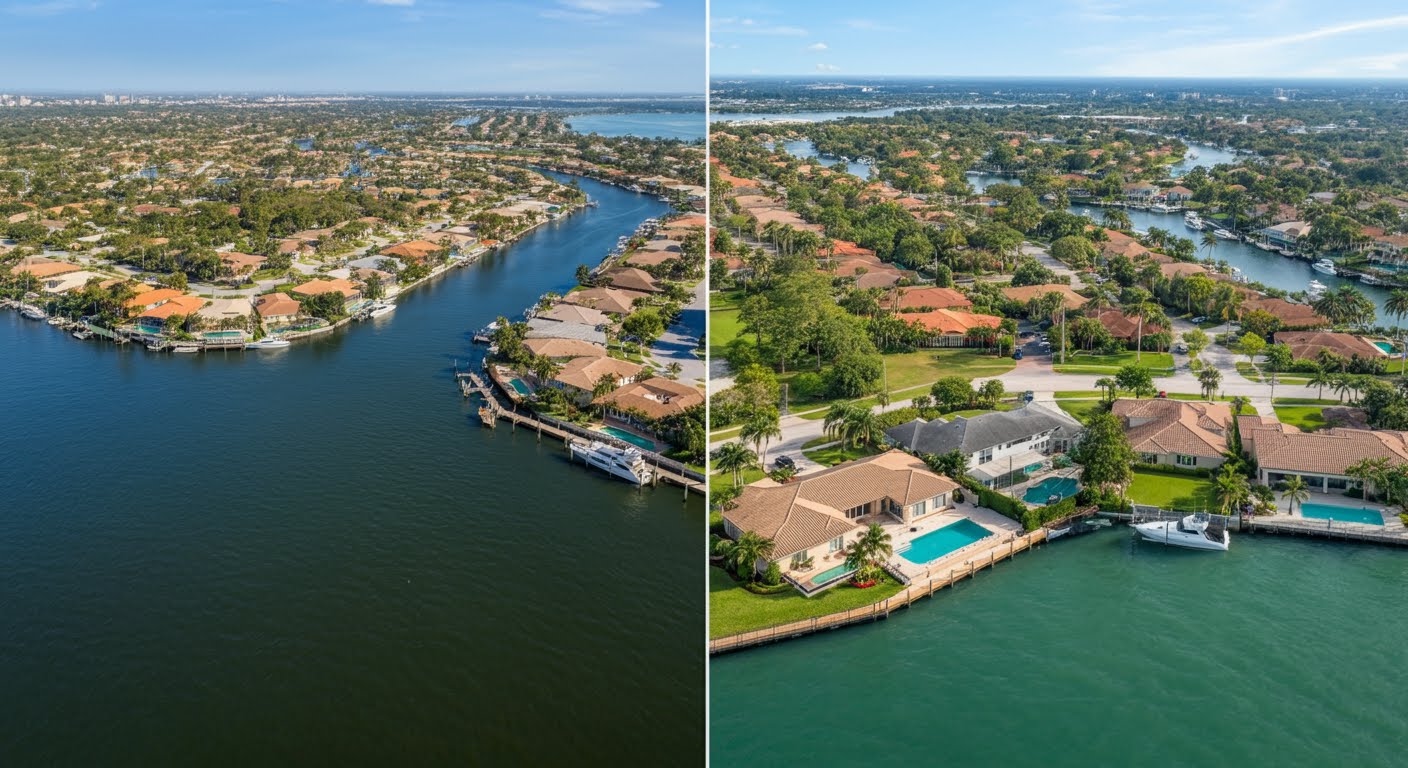
Location in core areas: Many of Southwest Florida's most desirable neighborhoods — established areas of Naples, Cape Coral's prime waterfront zones, Fort Myers's riverside communities — simply have no new construction available. If location is the priority, resale may be the only path.
Known quantity: An older home with a solid inspection history and a good seller disclosure is a known quantity. The neighborhood is established. The school district is proven. The insurance history is real, not speculative.
How to Actually Compare New Construction and Resale
When comparing a specific new construction offer to a resale option, build out the full monthly cost picture for both:
- Principal and interest at current rate (or builder-offered rate)
- Property taxes (new construction often taxes at land value initially — the full assessment hits in year two or three)
- Homeowner's insurance (get actual quotes for both addresses)
- Flood insurance (if applicable)
- HOA fees
- CDD fees (convert annual to monthly for comparison)
When you add all of this up, the new construction home that appeared to be the same price as a resale often carries meaningfully higher monthly costs — or meaningfully lower costs, depending on the insurance advantages and energy efficiency. Don't compare purchase prices. Compare fully-loaded monthly costs.
Using an Agent When Buying New Construction
Builder sales agents represent the builder. Period. They're professional salespeople with excellent product knowledge, but their fiduciary duty runs to their employer, not to you. Having your own buyer's agent costs you nothing — builders bake the co-op commission into their pricing regardless of whether you bring an agent — and provides you with someone who will review the contract, negotiate on your behalf, and flag issues the builder's agent won't mention.
Register your agent on your first visit to a new construction community. In most cases, if you walk into a community unrepresented and then bring an agent on your second visit, the builder will claim you're not entitled to representation. One visit, and you may lose the right to have your own advocate in the transaction.
Trying to Decide Between New and Resale?
This is genuinely one of the more nuanced decisions in Southwest Florida real estate right now. Builder incentives shift constantly, resale inventory levels change seasonally, and the right answer for a primary residence buyer is different from the right answer for a seasonal buyer or investor. If you want to work through a specific comparison — a builder community you're looking at versus resale alternatives — I'm happy to put the full picture in front of you.