Market Analysis
Cape Coral Real Estate Trends: Where the Market Is Heading in 2026
Data-driven analysis of the Southwest Florida real estate market.
8 min readMarch 25, 2026
Market Analysis
Spring buying seasons in Southwest Florida reward the people who did their homework in the quiet months. Here is what October through December 2026 should look like if you want to be ready.
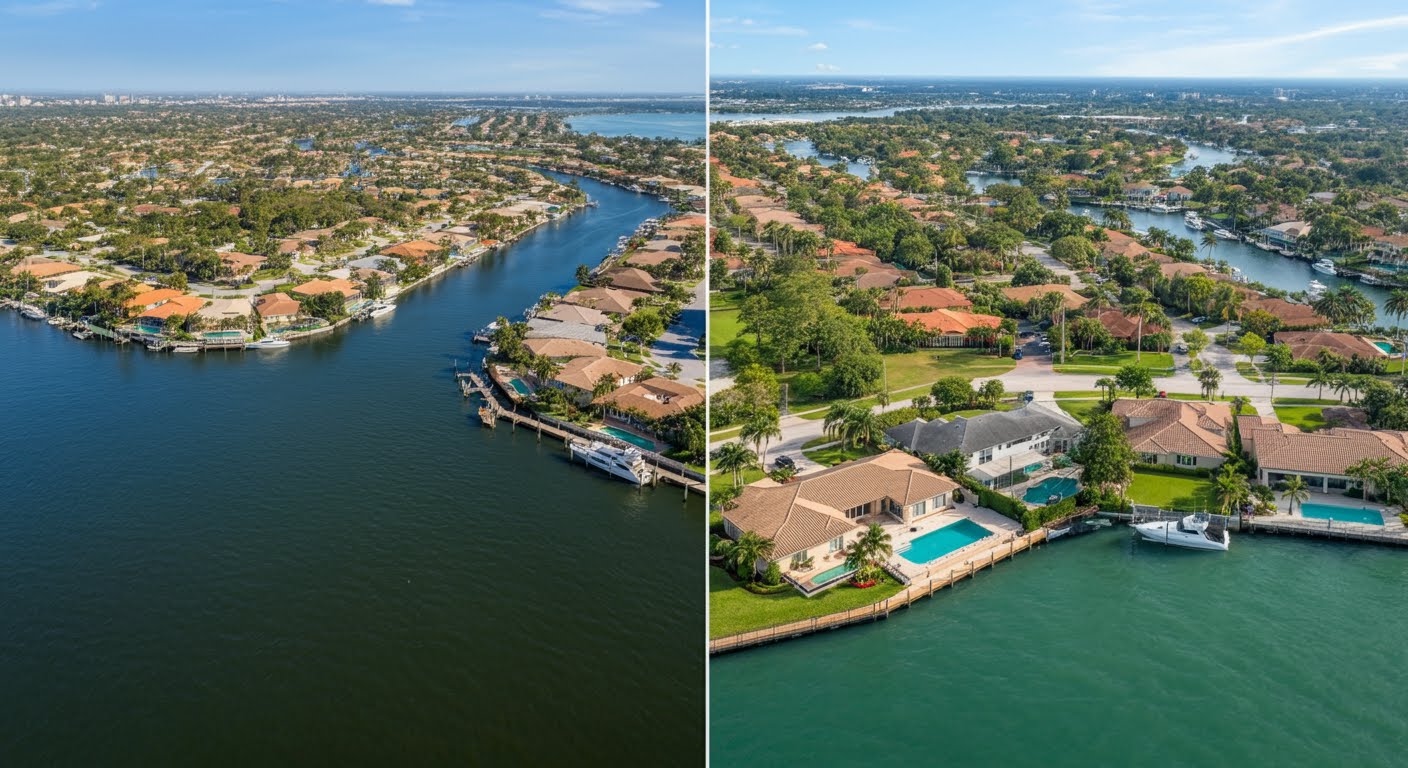
A quiet Southwest Florida neighborhood street in late fall, with for-sale signs and palm trees
Most people who end up buying a home in Southwest Florida during spring — January through April, when inventory is widest and the market is most alive — start seriously looking in January. By then, the better-priced homes in the better neighborhoods are already generating multiple offers, and the buyers who show up unprepared spend February and March losing to buyers who prepared in October.
If you have your sights set on a Q1 or Q2 2027 purchase in Cape Coral, Naples, Fort Myers, or anywhere else in the region, the work that actually matters is the work you do between now and the end of December. This post walks through what that looks like.
Southwest Florida has one of the most seasonal real estate markets in the country. January through April brings the biggest buyer pool, the most new listings, and the most competitive offers. November through early January is the opposite — showings slow down, new listings taper, and a lot of out-of-state buyers haven't arrived yet.
That quiet window is where prepared buyers get an edge. You have time to tour neighborhoods without crowds. You can meet lenders and inspectors who aren't buried in volume. You can watch how specific listings sit, drop in price, and eventually sell — which teaches you more about a submarket than any report will. And if the right house happens to come on the market in December, you're the buyer who can move on it while most of the competition is still unpacking Christmas boxes.
The thesis is simple: by late January, you want to be a buyer who already knows the neighborhood, already has financing lined up, and already understands what a reasonable offer looks like. Everything in this post is in service of that.
A mortgage pre-approval letter is generally good for 60 to 90 days. After that, the lender has to re-pull credit, re-verify income, and reissue the letter. Rate locks are a separate matter and typically run 30 to 60 days — some lenders offer longer locks for a fee.
If you get pre-approved in October 2026, that letter is likely stale by mid-January. So the sequencing matters. Here's how I'd think through it:
One trade-off worth naming: every time credit is pulled, there's a small hit to your score. Multiple mortgage inquiries within a 45-day window are generally treated as a single inquiry for scoring purposes, but spreading pre-approvals across several months means several separate pulls. Plan your lender shopping into a tight window rather than drifting through it.
Also worth knowing: rates between October 2026 and April 2027 will move. Nobody can tell you reliably in which direction. A pre-approval amount at a 6.75% rate looks different from the same income at 6.25% or 7.25%. Build a cushion into your target price range — if you're pre-approved at $550,000 today, I'd target homes in the $475,000 to $525,000 range so a rate shift doesn't push you out of your own plan.
Between Thanksgiving and mid-January, you get to watch the market with less noise. What you're looking for isn't just what's active — it's the pattern of what happens to listings.
A few signals worth tracking in your target neighborhoods:
This isn't a daily task. Thirty minutes a week spent reviewing your target neighborhoods will teach you more by February than most buyers learn in their entire search. If you want a hand setting up what to watch and how to read it, that's part of what a home value and market context conversation covers.
Most buyers set up their saved searches too narrowly and then wonder why nothing good shows up. The impulse is understandable — you don't want your inbox flooded. But over-filtering means you miss houses you'd have loved if you'd seen them.
Here's how I'd structure it:
Filter tightly on:
Leave wide open:
Review your saved searches every two to three weeks and adjust. If your inbox is empty, your filters are probably too narrow. If you're overwhelmed, tighten the geography before you tighten anything else.
This is where most out-of-state buyers trip themselves up. They arrive in February with a list of twelve houses pulled from online listings, and they realize after the first day of showings that half of them are in neighborhoods that don't fit their actual life. The showings become a process of elimination, not a process of discovery, and by the time they understand the areas, the window is closing.
A better approach: use October through December to pick three to five neighborhoods you'd genuinely be happy in. Then, once spring hits, you're reacting to any house that comes up in those neighborhoods — not trying to figure out the neighborhoods while also trying to pick a house.
What goes into a neighborhood short-list:
If you want help narrowing the field, our area pages for Cape Coral, Naples, and Fort Myers are a reasonable starting point for understanding how each city breaks down into sub-markets.
Sellers who have their homes on the market between November and mid-January in Southwest Florida are a specific population, and understanding who they are shapes how you negotiate.
A seller who lists in October and is still on the market in December is usually one of a few profiles. Some are post-Ian sellers who have finished repairs and want to be done with the property — this cohort still exists in parts of Lee and Charlotte counties, particularly in neighborhoods that took heavy damage in 2022. Some are estates or family relocations where there's a real deadline. Some are investors or snowbirds who have decided to exit and don't want to carry the property through another insurance renewal and tax cycle. And some are sellers who priced too high in summer and are now adjusting toward reality.
What these sellers have in common is that most of them are more negotiable than the sellers you'll meet in February. They've already watched the busy early-fall buyers come and go. They're staring down another insurance renewal, another quarterly HOA assessment, and another tax bill. In Collier County, where the Save Our Homes cap doesn't help a non-homesteaded owner, carrying costs on an unsold second home can be meaningful.
None of this means you'll steal a house in December. Well-priced homes in strong neighborhoods still sell at or near list, even in the quiet months. But if you've done the preparation above — pre-approval in hand, neighborhoods picked, saved searches tuned — you're positioned to recognize and act on the quiet-season opportunities that most spring buyers never see because they weren't paying attention yet.
If your situation looks like a Q1 or Q2 2027 purchase in Southwest Florida, here's a reasonable sequence for the next 90 days:
This is unglamorous work, but it's the work that separates buyers who close in spring from buyers who are still searching in June. If you want to walk through your specific situation — what neighborhoods make sense given your budget, what the carrying cost math looks like for the areas you're considering, or how to think about rate and insurance scenarios — a conversation is the easiest way to start. No obligation, no pressure.
Equal Housing Opportunity. Freddy Baez · Florida Broker BK3274734 · The Baez Collective at eXp Realty. Information here is general guidance, not legal, tax, or investment advice — please consult a qualified professional for your specific situation.
— Freddy & Josey
Frequently Asked
Explore These Cities
The SWFL Market Letter
Market notes and neighborhood reads from Freddy & Josey — written for SWFL homeowners, buyers, and the curious. No spam, no pressure.
Market Analysis
Data-driven analysis of the Southwest Florida real estate market.
Market Analysis
Data-driven analysis of the Southwest Florida real estate market.
Market Analysis
Data-driven analysis of the Southwest Florida real estate market.
Local team. Licensed in Florida. En español también.