Market Analysis
Cape Coral Real Estate Trends: Where the Market Is Heading in 2026
Data-driven analysis of the Southwest Florida real estate market.
8 min readMarch 25, 2026
Market Analysis
Data-driven analysis of the Southwest Florida real estate market.
Southwest Florida Housing Market 2026: What the Data Shows — The Baez Collective
Every few weeks, a national headline declares the housing market is cooling, or heating up, or at a turning point. Those stories are about averages across hundreds of markets. Southwest Florida is not average. It operates on its own supply-demand dynamics, driven by migration, weather, insurance, and a buyer pool that looks nothing like the national norm.
Here's what the data actually shows for our region as of early 2026: inventory has risen meaningfully from the post-Ian lows of 2023, but it remains below the historical balanced-market threshold of six months of supply in most price tiers. Lee County is running roughly 4.5 months of supply across all property types. Collier County, which includes Naples, sits closer to 5.2 months — approaching balance at the entry level but still tight in the luxury segment. That matters for how you negotiate.
The national conversation about rate-driven buyer paralysis is real, but SWFL has a significant cash buyer cushion that softens the rate impact. In Collier County, cash transactions consistently represent 50–60% of closed sales. Even in Lee County, which has more rate-sensitive buyers, cash accounts for 35–40%. When half the market isn't touching a mortgage, rate headlines tell an incomplete story.
Price trends are not uniform across the region. Each county has its own story:
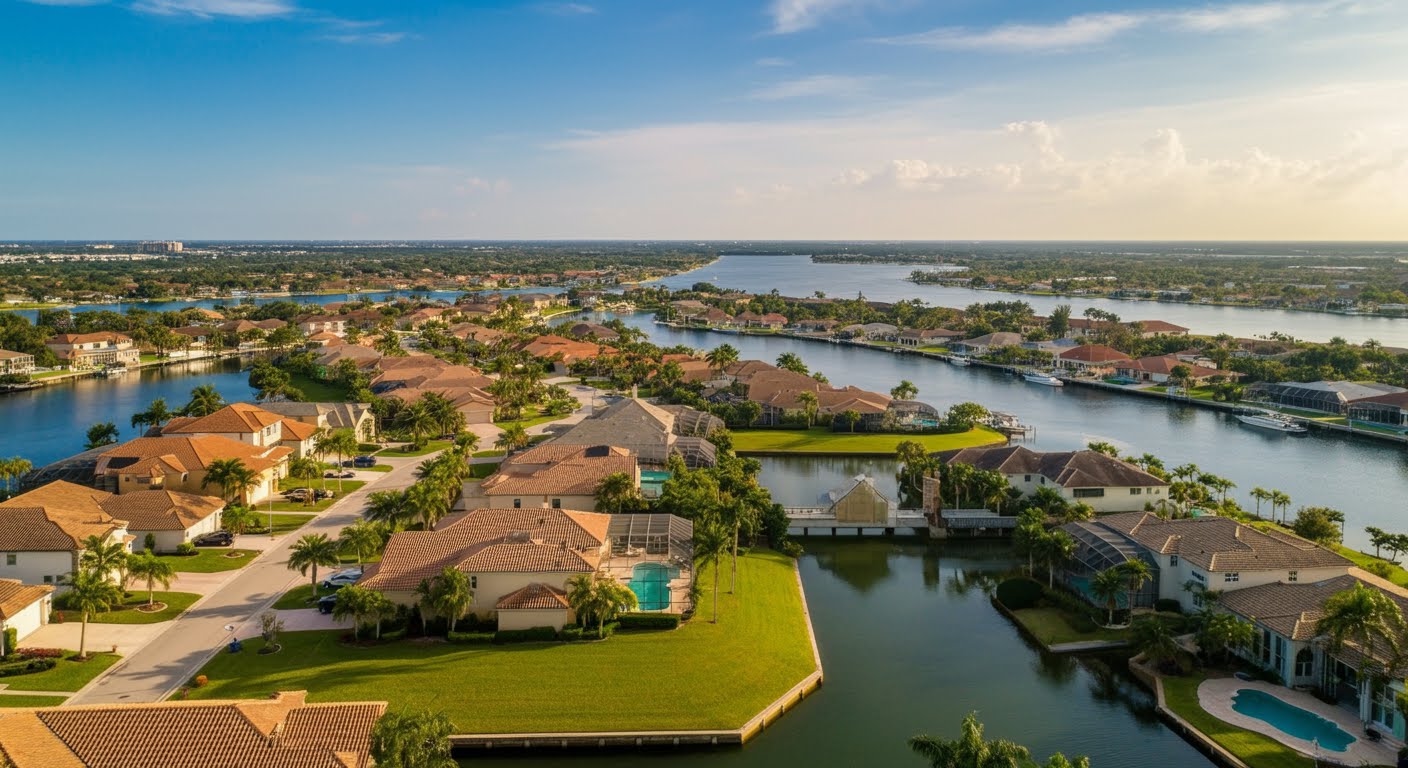
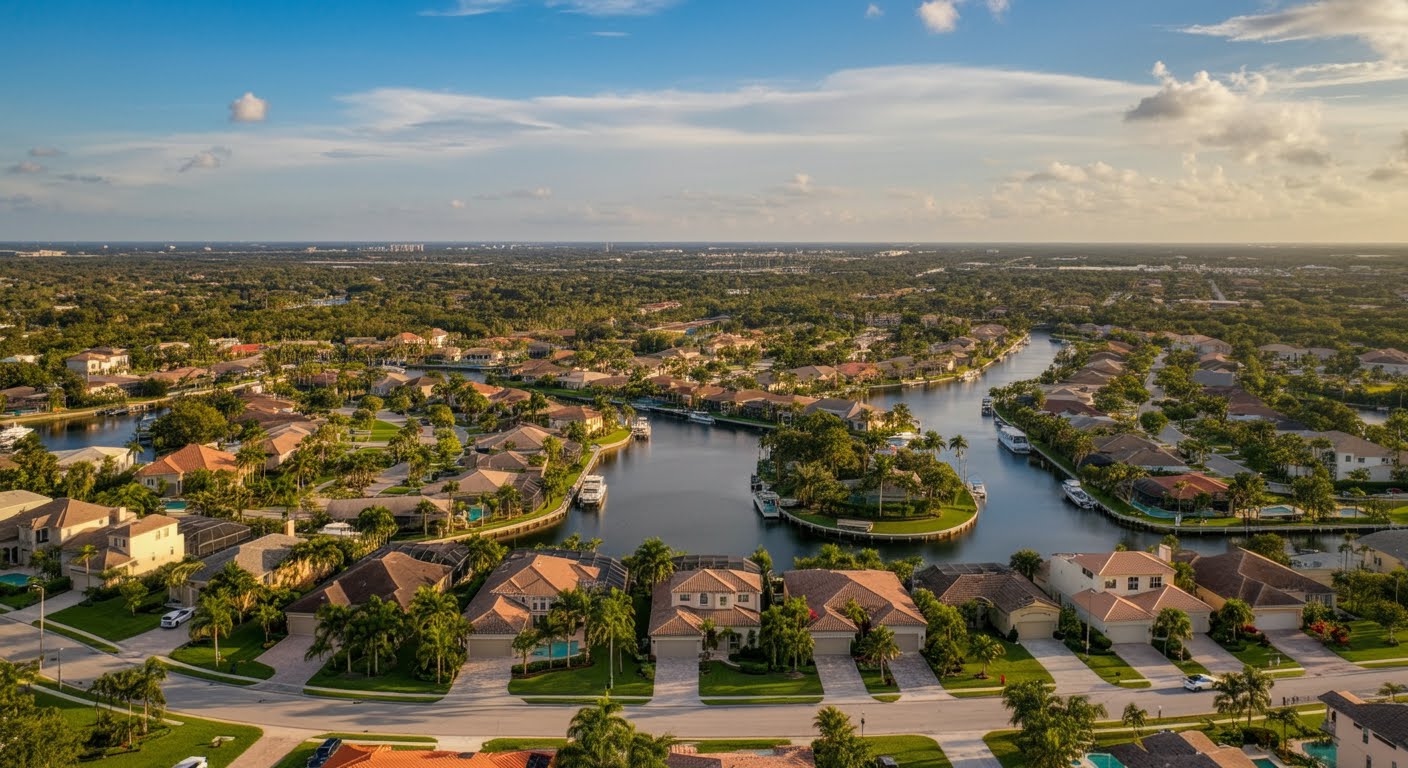
Lee County (Cape Coral, Fort Myers, Bonita Springs): The median single-family home price in Lee County entered 2026 in the $410,000–$430,000 range, roughly flat from the prior year after the post-Ian correction absorbed some of the 2022 peak. Canal properties in Cape Coral carry premiums of 15–40% over comparable dry lots depending on Gulf access. The market is moving, but sellers who anchor to 2022 peak pricing are sitting longer.
Collier County (Naples, Marco Island, Immokalee): Median single-family prices cluster around $675,000 countywide, but that number is heavily weighted by Park Shore, Pelican Bay, and Port Royal transactions. Entry-level Collier — East Naples, Golden Gate Estates — is more accessible, with inventory available in the $350,000–$500,000 range. The luxury segment above $2M continues to see strong demand with compressed days on market.
Charlotte County (Punta Gorda, Port Charlotte): The most affordable county in SWFL proper, with medians around $315,000. Growing migration from cost-burdened Lee County buyers is putting upward pressure on values here, particularly in waterfront communities along the Peace River and Charlotte Harbor.
The honest answer to "is it a buyer's market or seller's market?" in SWFL right now is: it depends on price point and property type.
Below $400,000 in Lee County, well-priced homes in good condition are still moving within 30 days and seeing multiple offers in desirable neighborhoods. The entry-level market remains competitive because first-time buyers, investors, and downsizers are all fishing in the same pond.
Between $500,000 and $800,000 — the mid-tier single-family market — conditions are more balanced. Days on market have stretched, and sellers are more frequently accepting concessions on price or closing costs. Buyers in this range have genuine negotiating room if they're working with current data.
Above $1M, the picture varies sharply by location. Waterfront Gulf-access properties with dock access in Cape Coral and Fort Myers continue to command premiums. Properties in the $1M–$2M range in non-waterfront or overimproved locations are seeing price reductions. In Naples, the $1M+ market has its own dynamics — covered in detail in our Naples luxury market analysis.
SWFL's inventory picture shifted significantly between 2023 and 2025. Post-Ian, there was an unusual absorption event: damaged properties came off market, insurance-burdened sellers held, and buyers who wanted certainty pulled back. That created a temporary inventory tightening that confused the price signal.
By mid-2025, new listings had normalized and active inventory recovered to pre-pandemic ranges in most categories. The recovery has not been uniform. Condo inventory has risen faster than single-family — driven partly by post-Surfside reserve assessment concerns, higher HOA fees, and the structural challenge of older buildings navigating new milestone inspection requirements. Buyers shopping condos have more leverage than at any point since 2020.
Single-family inventory has recovered more slowly. New construction is filling some of the gap — Cape Coral's western sections and the Babcock Ranch corridor are adding units — but permitted activity takes 12–18 months to reach the resale market as completed homes. For 2026, inventory will likely hold steady or increase modestly, which is a healthier environment than either 2021's frenzy or 2023's post-storm dislocation.
Southwest Florida has one of the most pronounced seasonal demand cycles in U.S. real estate. The pattern is consistent and worth understanding before you time a transaction.
Peak activity runs from roughly Thanksgiving through Easter — the period when seasonal residents are present, snowbirds are shopping, and northern buyers are visiting. Inventory that hits the market in January and February faces the largest buyer pool of the year. Sellers who list in this window with accurate pricing tend to sell faster and cleaner.
The summer months — June through September — are slower. Buyer traffic drops, days on market extend, and negotiating leverage shifts. For buyers, summer offers a real opportunity: less competition, more motivated sellers, and better concession rates. The heat and hurricane season concerns thin the casual shopper pool and leave serious buyers with more room.
Listing-side strategy should account for this cycle. A property that sits through summer often gets stigmatized, even if the original pricing was reasonable. Understanding the seasonal calendar is as important as understanding comparable sales.
No analysis of the SWFL real estate market is complete without addressing insurance. It is not a footnote — it is one of the primary variables affecting affordability, buyer qualification, and seller negotiating position.
Florida's property insurance market has been through a significant restructuring. The legislative reforms of 2022 and 2023 stabilized the private market to some degree, and several carriers have returned to or expanded their SWFL coverage. But premiums remain elevated compared to pre-Ian levels, and the difference is not trivial. A home that cost $2,500 per year to insure in 2021 may cost $6,000–$10,000 today depending on age, construction type, roof, and flood zone.
This has downstream effects. Buyers shopping in a given price range are finding that their all-in monthly cost — mortgage, taxes, insurance — is higher than the purchase price alone suggests. Lenders are scrutinizing insurance costs in qualifying ratios. And some buyers in flood zones are discovering that flood insurance through NFIP or private carriers adds another $2,000–$5,000 annually on top of wind and all-perils coverage.
The practical implication: before making an offer, verify insurance costs for the specific property. Don't estimate from a neighbor's quote. Older construction, flat roofs, no impact windows, and proximity to water all move the premium materially.
The SWFL market in 2026 rewards preparation and local knowledge more than it rewards speed or aggression. The days of submitting any offer and winning are over in most segments. But so are the days of having no leverage at all.
For buyers: understand the segment you're shopping in. Sub-$400K moves fast and requires decisiveness. Mid-tier gives you room to negotiate but punishes overreach on price. Luxury requires patience and local intelligence on what's actually moving vs. what's been languishing. Get insurance quotes before you fall in love with a property. Understand flood zone designation and what it means for your costs.
For sellers: the market will tell you what your home is worth, and it tells you quickly. Homes priced accurately in good condition are selling. Homes overpriced relative to recent comps are accumulating days on market and ultimately selling lower than if they'd been priced right from day one. The seasonal window matters. Preparation — condition, documentation, insurance history — matters more than it did in 2021.
For investors: cash flow math has changed with higher insurance, higher taxes in some areas, and higher acquisition costs. Cap rates on short-term rentals in Cape Coral and Fort Myers have compressed. The buy-and-hold thesis still works for the right properties, but the numbers need to be run carefully and conservatively.
Ready to learn more about Southwest Florida? Check out these resources:
— Freddy & Josey
Frequently Asked
Explore These Cities
The SWFL Market Letter
Market notes and neighborhood reads from Freddy & Josey — written for SWFL homeowners, buyers, and the curious. No spam, no pressure.
Market Analysis
Data-driven analysis of the Southwest Florida real estate market.
Market Analysis
Data-driven analysis of the Southwest Florida real estate market.
Market Analysis
Data-driven analysis of the Southwest Florida real estate market.
Local team. Licensed in Florida. En español también.