The Permit Landscape: Why Dock Construction Is More Complex Than It Looks
Building a boat dock on a Lee County waterfront property is not as simple as calling a contractor and starting construction. Dock structures in Florida are regulated at multiple levels — local building departments, the South Florida Water Management District (SFWMD), the Florida Department of Environmental Protection (FDEP), and in some cases the Army Corps of Engineers (USACE). The overlap of these jurisdictions and the environmental sensitivity of Florida's waterways make the permitting process one of the more complex residential projects a homeowner can undertake.
The good news: thousands of docks are permitted and built successfully every year in Lee County. With the right contractor and realistic timeline expectations, the process is manageable. The key is understanding what's involved before you start, not mid-project when you discover a requirement you didn't anticipate.
The Application Process: Step by Step
The dock permitting process in Lee County (and Cape Coral, which has its own building department) involves several distinct stages:
Step 1: Pre-application research. Before submitting anything, understand what's on your specific waterway. Is it a freshwater canal or a tidal saltwater canal? What is the water depth? Are there existing mangroves or seagrass beds that might trigger environmental review? Is the canal within a SFWMD-regulated control structure area? These factors determine which agencies are involved and what the review process will look like.
Step 2: Dock design and site plan. You'll need engineered drawings showing the dock's dimensions, materials, location relative to the property line, and relationship to the seawall. Docks generally cannot extend more than 25% of the width of the waterway or 20 feet from the mean high water line (whichever is less) under typical permitting, though specific rules vary by waterway type and location.
Step 3: Building permit application. Submit to Lee County Building Department (or Cape Coral Building Department for properties within the city). Include the site plan, structural drawings, and any required environmental documentation. Building permit fees are typically $500–$1,500 for a standard dock depending on value and complexity.
Step 4: Environmental review. For tidal saltwater canals, a permit from SFWMD and potentially FDEP is typically required. For freshwater canals that are part of Cape Coral's managed canal system, the review may be simpler. Environmental permits assess impacts on water quality, seagrass, mangroves, and aquatic species.
Step 5: USACE permit (if required). For structures in navigable waters, a Section 404/Section 10 permit from the Army Corps of Engineers may be required. Standard docks on residential canals often qualify for Nationwide Permits — a streamlined process — but larger structures or those in sensitive areas require individual permits.
Environmental Review: What Triggers It
Florida's environmental regulations around waterway structures are among the most detailed in the United States. Mangroves are strictly protected — any dock project requiring trimming, removal, or encroachment triggers a detailed FDEP review with uncertain outcomes. Seagrass beds in tidal waterways are also protected. Dock placement that would shade or physically impact seagrass triggers environmental scrutiny.
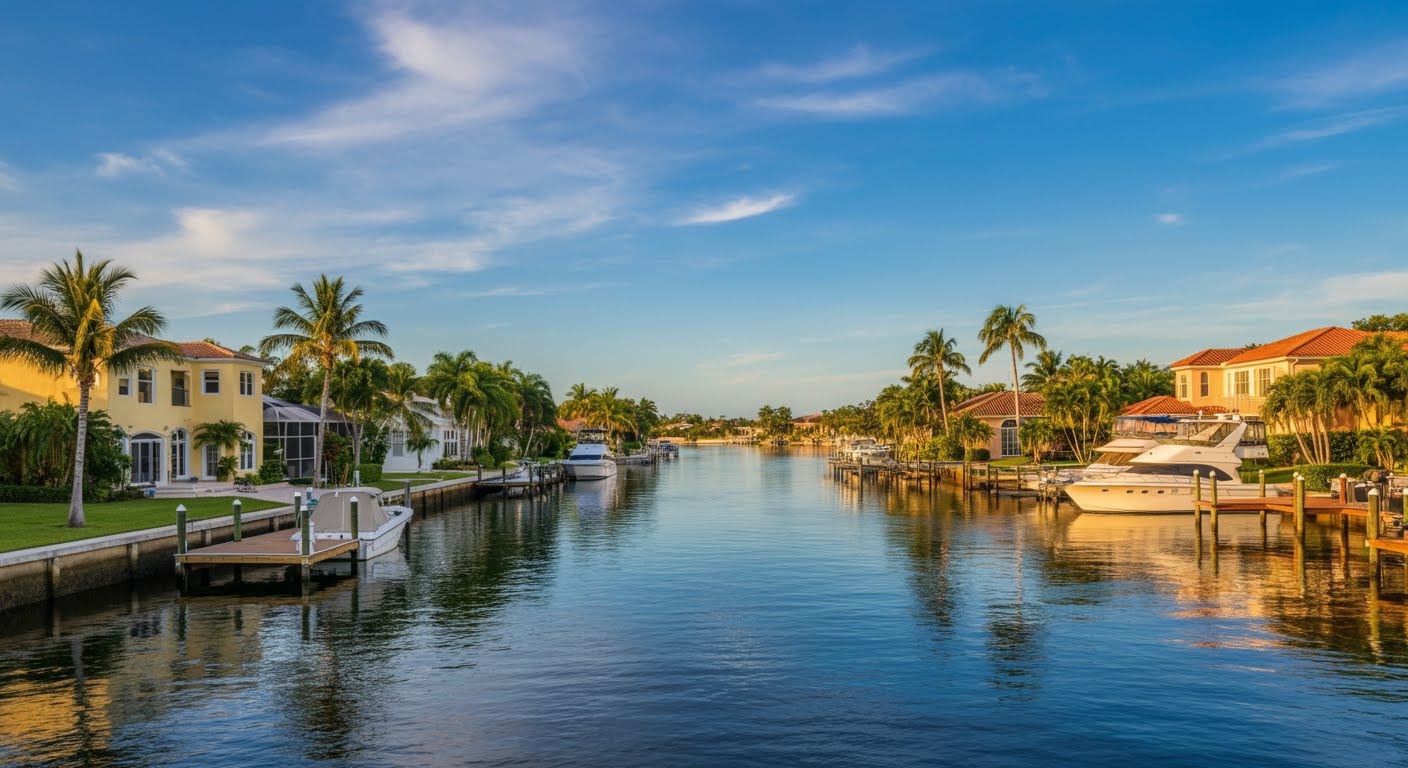
Freshwater canals in Cape Coral's managed system generally have simpler environmental review pathways — the canal system is already a managed, engineered waterway without the ecological sensitivity of natural tidal systems. This is one reason freshwater canal docks are often faster and cheaper to permit than saltwater tidal properties.
Realistic Timeline: What to Expect
The dock permitting timeline varies significantly by project complexity:
Simple freshwater canal dock (standard residential size, no environmental constraints): 8–16 weeks from application to permit.
Saltwater tidal canal dock (no mangroves or seagrass): 16–24 weeks including local building permit plus SFWMD/FDEP review. Can stretch to 6+ months.
Saltwater dock with environmental complications (mangroves, seagrass, large structure): 6–18 months or more. Some projects aren't permitted at all if environmental impacts can't be mitigated.
Construction after permit issuance typically takes 4–8 weeks for a standard residential dock.
Total Costs: Permits, Construction, and Ongoing Maintenance
Permitting costs: Building permit fees ($500–$1,500), environmental permit fees (variable, $1,000–$5,000+ for state permits), engineering drawings ($2,000–$5,000), and possibly environmental consultant fees.
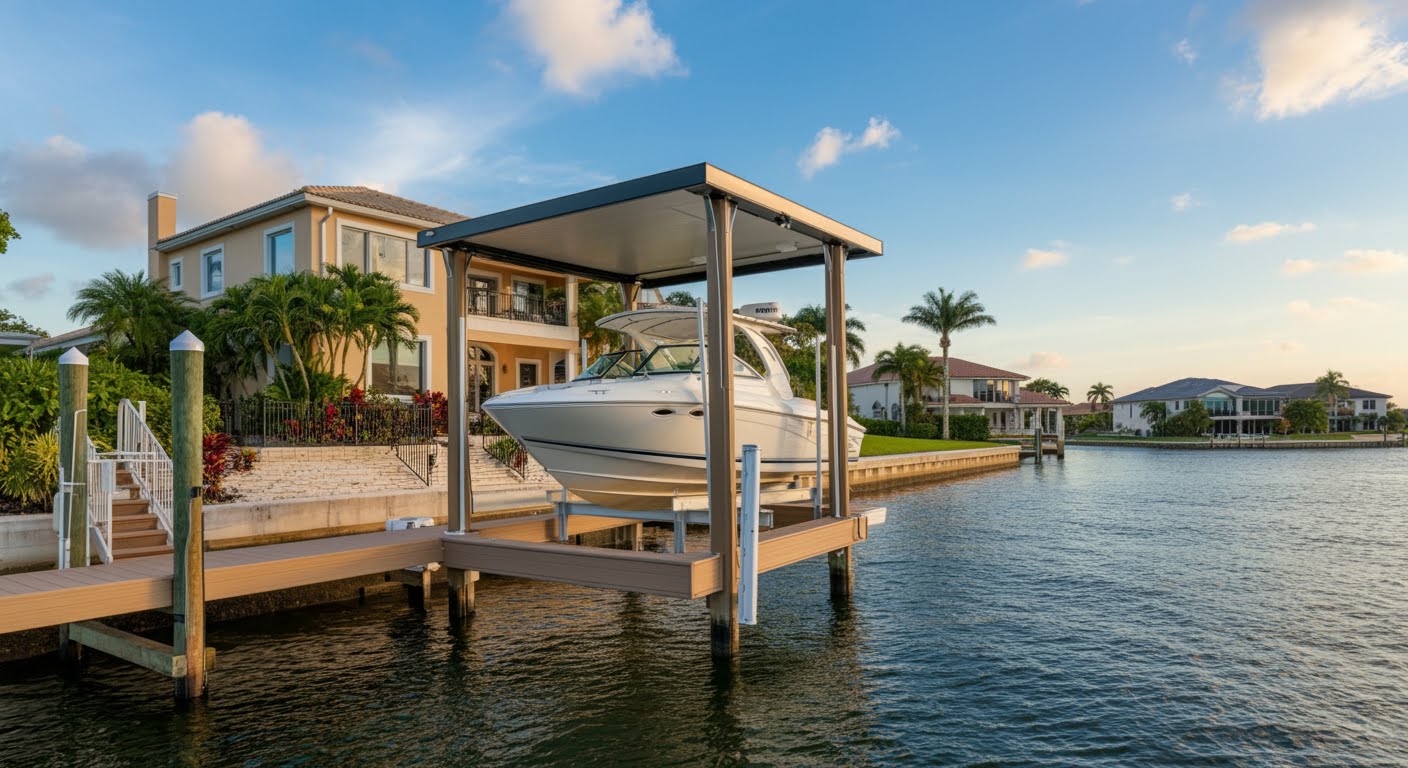
Construction costs: A basic residential dock — pressure-treated wood, 10x20 or 12x24 platform — runs $15,000–$30,000 installed. Add a boat lift: $8,000–$20,000 depending on capacity. Composite or aluminum decking runs higher. A fully equipped dock with 10,000 lb boatlift and composite decking might run $40,000–$60,000+.
Annual maintenance: Wood docks require regular inspection and board replacement — budget $500–$2,000/year. Boat lifts require annual service — $300–$800. The saltwater environment accelerates wear on both wood and hardware.
Contractor Selection: Who to Hire and What to Verify
Dock construction requires a licensed contractor — a Certified Building Contractor (CBC) or Certified General Contractor (CGC) with marine construction experience. Verify license status on the Florida DBPR website before hiring. Choose a contractor who has experience with your specific waterway type, knows the local permitting agencies, and has a track record of permitted projects. Ask for references from recent dock projects. Red flags: contractors who offer to proceed without permits or can't provide recent permitted project references.
Explore More
Ready to learn more about waterfront living in Southwest Florida? Check out these resources: