400+ Miles of Canals: Understanding the Scale
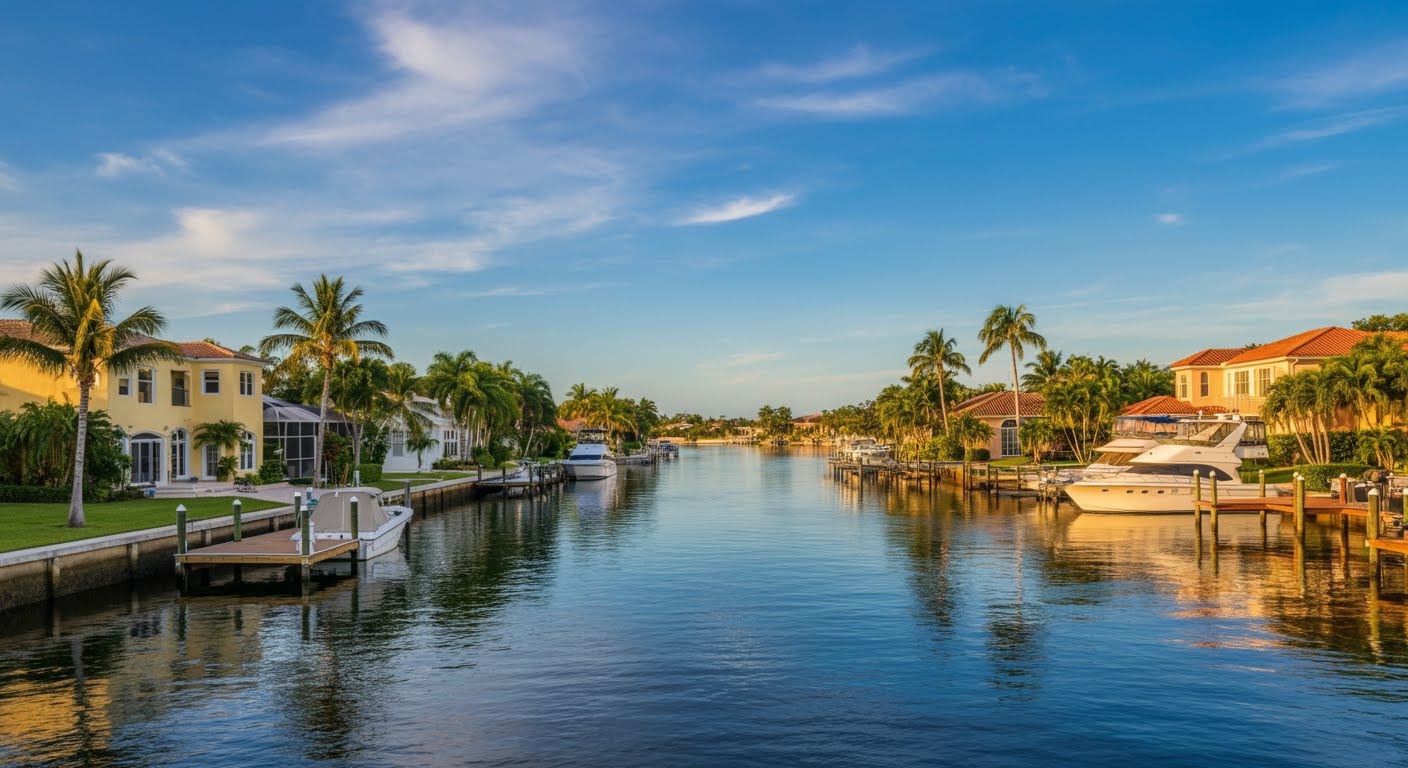
Cape Coral's canal system is one of the most remarkable pieces of civil engineering in the United States. The city contains over 400 miles of navigable canals — more than any other city in the world, a fact that's sometimes dismissed as a marketing claim but is genuinely accurate by international comparison. Venice, Italy has approximately 26 miles of canals. Cape Coral has nearly twenty times that.
These canals were dug by General Development Corporation starting in the late 1950s as part of a planned community vision. The original plan was ambitious: create a waterfront city on Florida's west coast where virtually every home could be within walking distance of water. That vision was partially realized — roughly half of Cape Coral's properties have direct canal frontage, and most of the rest are within a block or two of a canal.
Understanding the canal system is not optional knowledge for anyone buying in Cape Coral. The type of canal your property fronts — and whether it provides access to the Gulf — is one of the most significant value drivers in the city.
The Freshwater vs. Saltwater Divide
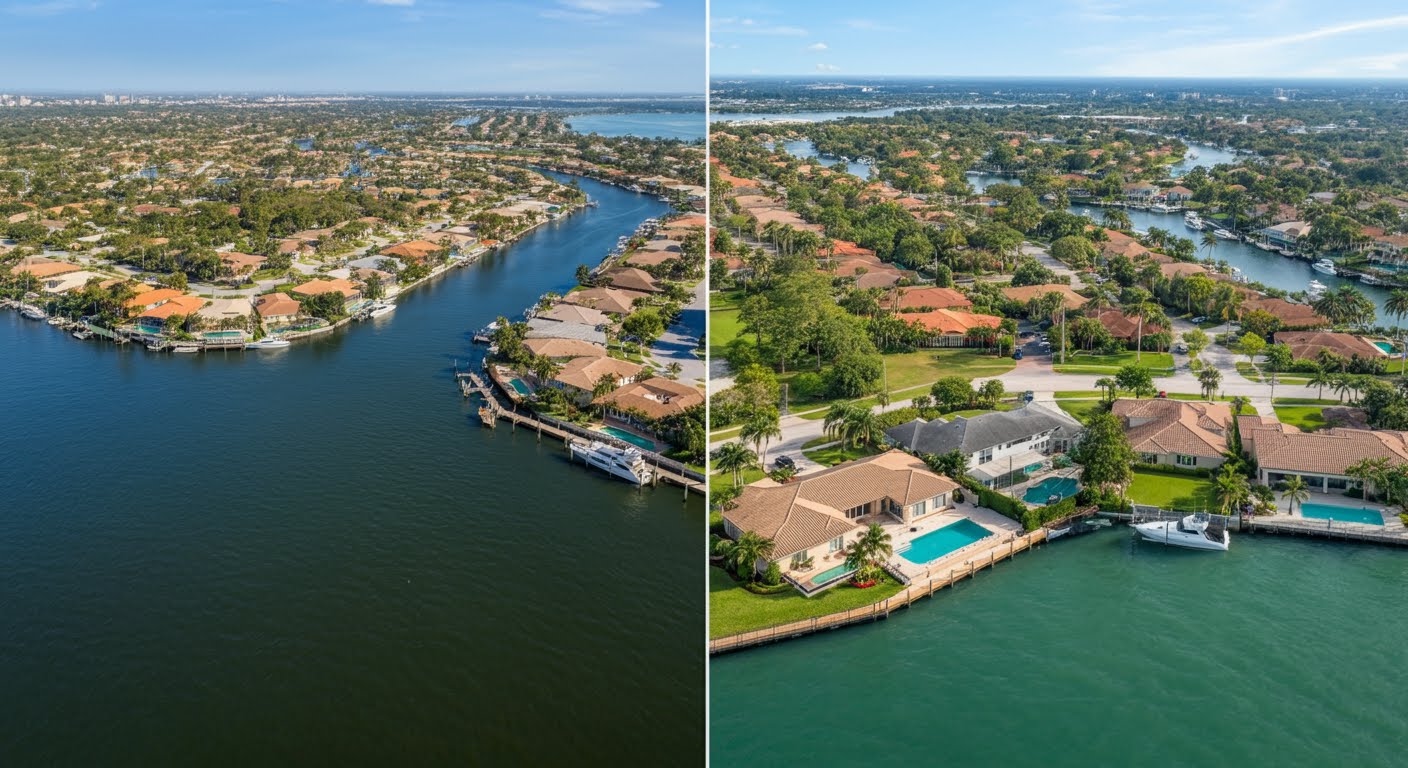
Cape Coral's canals are divided into two fundamentally different systems: freshwater canals in the interior and saltwater canals in the tidal zone near the Caloosahatchee River and its tributaries. This distinction drives most of the price and lifestyle variation in Cape Coral waterfront real estate.
Freshwater canals are the majority of Cape Coral's canal network. They were designed primarily for drainage and stormwater management, with residential aesthetic appeal as a secondary benefit. These canals are maintained by Cape Coral Utilities with controlled water levels — they don't rise and fall with the tides. The water is typically turbid (not clear) and supports freshwater fish species — bass, bluegill, catfish. You can kayak and paddleboard on freshwater canals, but they don't connect to the Gulf and don't support powerboating beyond the canal itself.
Saltwater (tidal) canals are located in Cape Coral's southern and western sections, where the canal system connects to the Caloosahatchee River estuary. These canals rise and fall with tidal cycles. The water is saltwater or brackish, supporting mangroves, snook, redfish, and the marine ecosystem associated with coastal Florida. Properties on tidal canals can connect to Gulf navigable waters — this is the Gulf-access that commands the premium pricing.
The division between freshwater and saltwater zones is not strictly geographic — it depends on the specific canal's connection to tidal water. Some canals in the same neighborhood may be freshwater; others saltwater. Verifying which type you're looking at requires either local knowledge or reviewing the Cape Coral Utilities canal maps.
Gulf Access vs. No Gulf Access: The Critical Distinction
Within the saltwater tidal canal zone, there's a further important distinction: canals that provide actual navigable Gulf access versus tidal canals that dead-end or are too shallow for practical boating.
True Gulf access requires a navigable route from your canal through the tidal system to the Caloosahatchee River to San Carlos Bay to the Gulf. Many canals in Cape Coral provide this. But the route may involve: lock systems (which operate on a schedule and add 20–30 minutes per transit), bridge clearances (fixed vertical clearances that limit vessel height), or water depth limitations at low tide that restrict larger vessels.
Properties with unrestricted Gulf access — tidal saltwater, no locks required, adequate bridge clearances for typical recreational vessels — command the highest premiums in Cape Coral. Properties with lock-required access or bridge restrictions earn a moderate premium. Freshwater canals earn a smaller premium for the view and waterfront lifestyle without the boating utility.
The Boating Lifestyle: What Cape Coral Actually Offers
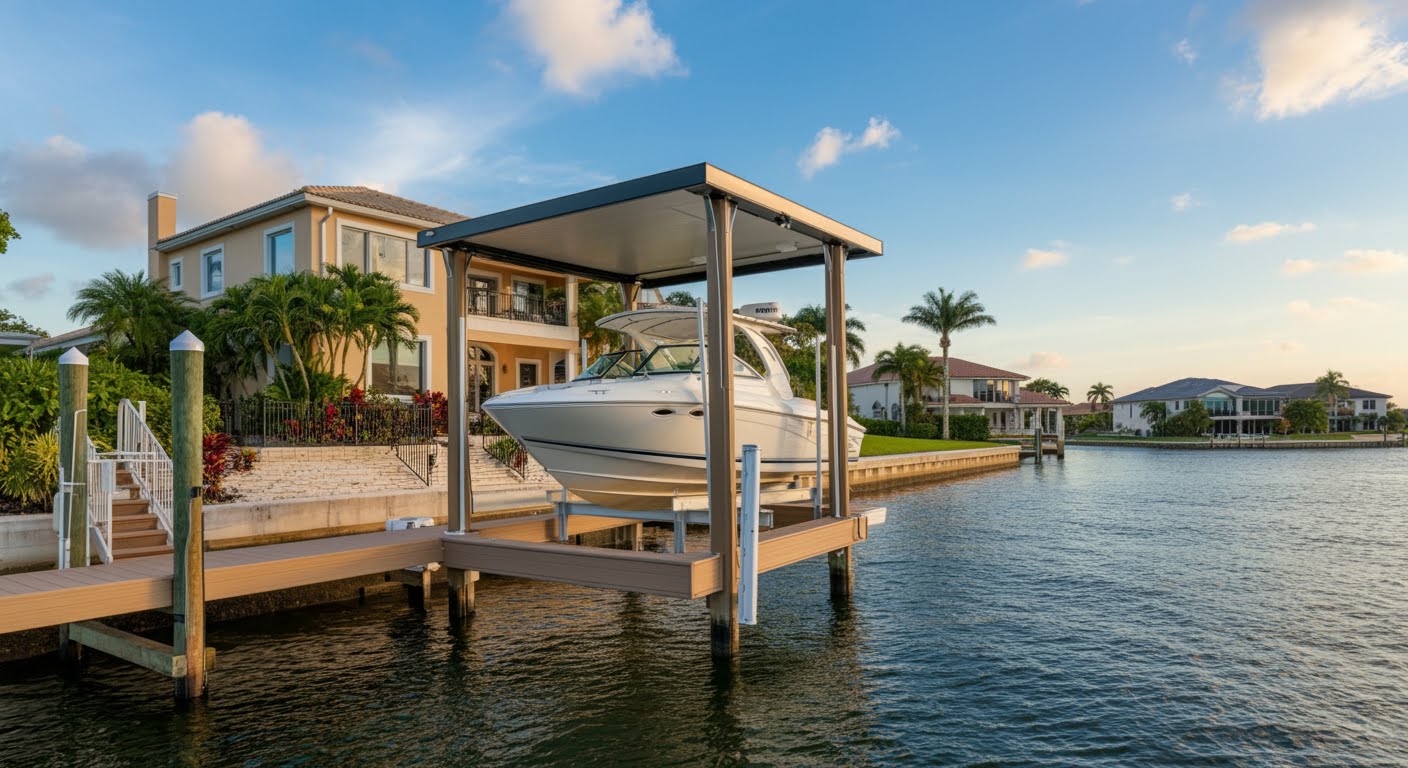
For buyers motivated by the boating lifestyle, Cape Coral is genuinely exceptional. The ability to keep a boat at your private dock, step aboard, and navigate to tidal fishing grounds, sandbars, the islands, or open Gulf water is something few other cities can offer at anything close to Cape Coral's price points.
Popular boating destinations accessible from Gulf-access Cape Coral homes include: Sanibel Island and Captiva Island (30–45 minutes depending on location), the Cape Coral shoreline and sandbars, Cayo Costa State Park, Matlacha Pass, and Pine Island Sound — one of the most productive inshore fishing areas in Southwest Florida. The fishing opportunities for snook, redfish, tarpon, and grouper are world-class and accessible from your backyard.
The practical lifestyle details worth knowing: the Caloosahatchee River has recreational boat speed limits in certain sections. The lock schedule at Cape Coral's main locks runs approximately 6am–10pm (confirm current hours with Cape Coral Utilities). The river can be rough in afternoon thunderstorm season (June–September), which experienced boaters navigate by heading out early and returning before afternoon storms build.
Canal Water Quality and Maintenance
Cape Coral's canals require ongoing maintenance to remain navigable and aesthetically pleasant. Dredging of accumulated sediment, management of aquatic vegetation (hydrilla and other species can clog canals), and water quality management are ongoing responsibilities shared between Cape Coral Utilities and individual property owners.
Water quality in freshwater canals has been a periodic concern — blue-green algae blooms occur in warmer months, particularly in canals with reduced circulation. The city has invested in aeration systems in some freshwater canals to improve circulation and reduce bloom conditions. Saltwater tidal canals generally have better water quality due to tidal flushing.
Individual property owners are responsible for maintaining their own seawall and dock structures. The canal-facing property line is typically the homeowner's responsibility to maintain. Seawall failure, dock deterioration, and overgrown bank vegetation are all owner obligations — understanding this before purchase helps you assess maintenance costs and budget appropriately.
Navigating the Canal Map When You're Shopping
When evaluating specific properties in Cape Coral, the canal map is a research tool you should use before visiting. Cape Coral Utilities publishes canal type information, and the city's GIS mapping system shows canal designations. Key things to look for on any waterfront property:
Is it freshwater or saltwater? If saltwater, does it connect to the Caloosahatchee without a lock? What is the canal width at this location — wider canals allow easier docking maneuvers and feel more open. What is the orientation of the canal lot — south-facing backyards get more sun; north-facing get more shade. What is the distance to the nearest bridge if you're concerned about clearances?
Your agent should know these answers or know how to find them quickly. If you're working with someone who can't distinguish freshwater from saltwater or who doesn't know the lock system, that's a signal that you need more local expertise on your side.
Explore More
Ready to learn more about Cape Coral? Check out these resources: