SWFL Living
Best 55+ Communities in Southwest Florida: Ranked and Compared
Florida-specific knowledge every homeowner and buyer should have.
9 min readMarch 25, 2026
SWFL Living
The closing table covered the friendly parts of Southwest Florida homeownership. The 95-degree afternoons, the storm that rolls in at 3:15 every day, and the gecko on your kitchen counter — those you figure out on your own. Here's a calmer path through your first summer.
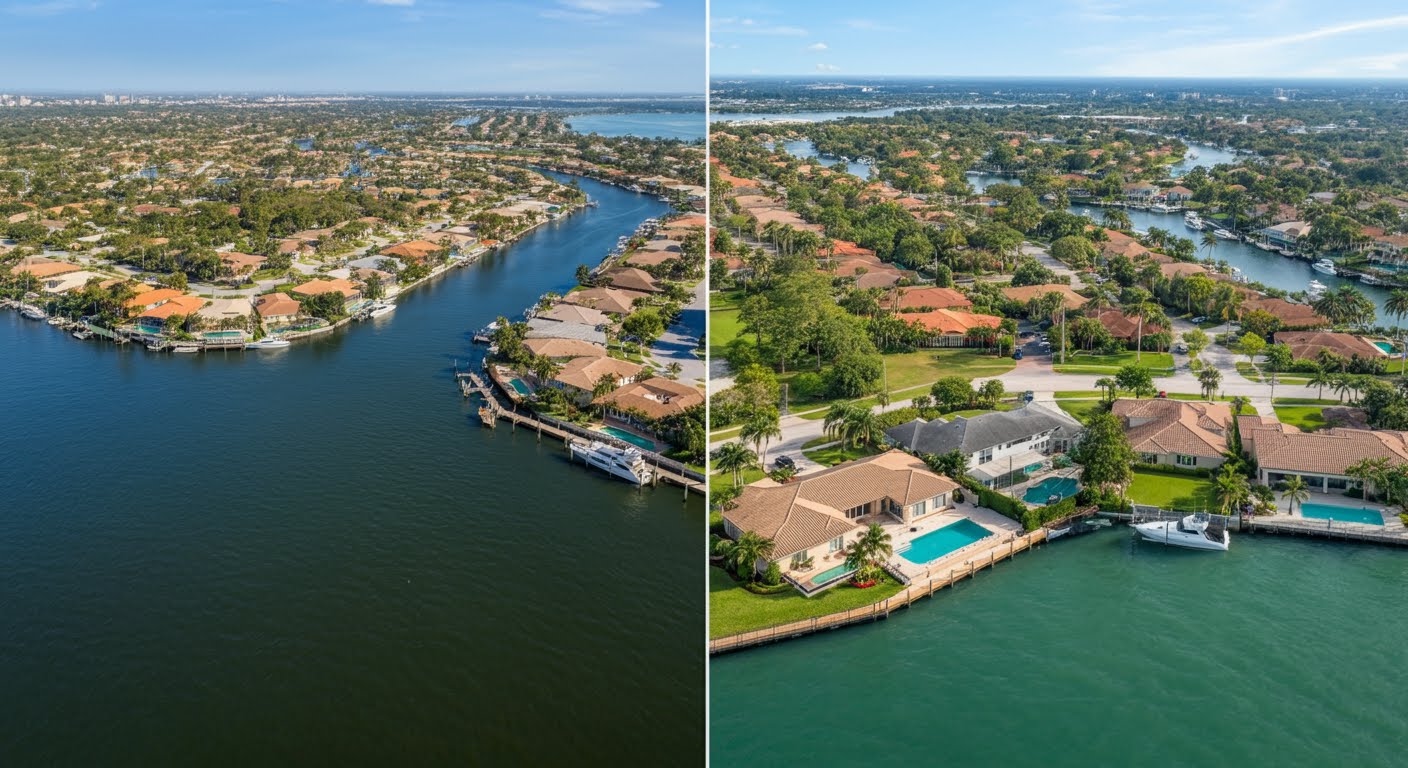
Your First Summer as a SWFL Homeowner: What Nobody Mentioned at Closing — illustrative photo
You closed in February or March, moved through a beautiful spring, and now it's late June. The thermometer reads 93 by lunchtime. There's a storm on the radar that wasn't there an hour ago. Your lawn is doing something you don't recognize. And a small lizard just made eye contact with you from the kitchen backsplash.
None of this was covered at closing. The title agent walked you through the deed and the policy. Your inspector talked about the roof and the panel. Nobody sat you down and explained what June, July, August, and September actually feel like in a Southwest Florida house — and what you should do about it versus what you should leave alone. That's what this post is for.
Summer here is its own season with its own rhythm. Highs sit in the low 90s most days, but the heat index runs 100 to 108 because the dew point sits in the mid-70s. That humidity is the actual story. It's why your AC runs more than you expected, why your lanai screens grow a film if you ignore them, why your pool eats chlorine, and why mildew shows up in places that were dry in March.
The other piece of the rhythm is the afternoon storm pattern. From roughly mid-June through mid-September, sea breezes from the Gulf and the Atlantic collide somewhere over the peninsula nearly every afternoon and produce a thunderstorm. In Cape Coral and Fort Myers, the storms tend to arrive between 2 and 5 p.m. In Naples, often a touch earlier as the Gulf breeze dominates. They are loud, fast, and frequently severe for 30 to 60 minutes, and then they're gone.
Once you accept that summer here is hot, wet, and electrical, most of the rest of this post is just calibration.
Your AC is the single most important system in the house from June through October. A few things to know before you panic about it.
A properly sized SWFL system should hold the indoor temperature within 2 to 3 degrees of the thermostat setpoint even on a 94-degree afternoon, and indoor humidity should stay between 45% and 55%. If you set the thermostat to 74 and the house is sitting at 78 at 4 p.m., something is off. If the temperature holds but the air feels clammy and the humidity reading is 60% or higher, that's a different problem — usually an oversized system that short-cycles and never runs long enough to dehumidify, or a drain or coil issue.
Things you can handle without calling anyone:
Things worth a service call:
A typical SWFL summer electric bill for a 1,800 to 2,400 square foot single-family home runs $220 to $380. If you're seeing $500-plus and the house feels fine, the system is probably working too hard for its size or condition. That's worth a tune-up, not a replacement quote on the first visit.
Most lawns in Cape Coral, Fort Myers, and Naples are St. Augustine — usually Floratam or a similar cultivar. It's a thick, blue-green grass that loves heat and water and grows fast enough in summer that you'll be cutting weekly, sometimes twice a week after a heavy rain stretch.
A few things to know:
If you don't want to deal with any of this, a residential lawn service in this market runs $140 to $260 a month for weekly mowing, edging, and blowing. Fertilization and pest treatment programs are separate, usually $400 to $700 a year on top.
Daily summer thunderstorms are different from named-storm hurricane prep. Both matter. They prep differently.
For the daily storm pattern:
For hurricane season — which technically runs June 1 through November 30 but peaks August through October — your first summer is the right time to build the boring infrastructure: a written evacuation plan, copies of your insurance declarations page somewhere not in the house, photographs of every room and the exterior taken now (before any damage) for future claims, and a quiet conversation with your insurance agent about whether your wind and flood coverage actually matches what you bought. Lee, Collier, and Charlotte counties are still working through the long tail of Hurricane Ian recovery, and insurance carrier appetite shifts every renewal cycle. If you want a refresher on what's in your area's risk profile before storm season picks up, our Cape Coral area page and Fort Myers area page have the elevation, flood zone, and post-Ian rebuild context relevant to each.
If you bought a home with a pool, summer is when pool chemistry stops being a hobby and becomes a small ongoing job. Heat, sun, rain, and swimmer load all push the water chemistry around faster in July than in February.
The numbers to keep in your head:
Pump run-time in summer should generally be 8 to 10 hours a day, ideally split so the pump runs during the hottest part of the day and again after the afternoon storm to clear debris. The old rule of thumb is one full turnover of pool volume per day, which on most SWFL screen-enclosed pools works out to about that range.
The vinegar trick people ask about: a cup of white vinegar in the skimmer basket once a month helps break down the calcium and mineral film on the basket and the pump impeller, especially on SWFL's hard water. It is not a chlorine substitute. It does not sanitize. It just keeps your equipment from getting crusty.
If managing all of that sounds like a side job, a weekly pool service in this market runs $140 to $200 a month and includes chemistry, brushing, and basic equipment checks. Worth it for many first-summer owners while you learn what your specific pool wants.
You will share your property with wildlife. Most of it is harmless. Some of it is genuinely beneficial. A short field guide for first-summer owners.
Anoles and geckos. The small green or brown lizards that show up on your screens, your stucco, and occasionally inside the house are anoles. The pale, sticky-toed ones that show up at night near porch lights are geckos. Both eat mosquitoes and other insects. Neither is dangerous. If one gets inside, gently herd it out the same door it came in. Don't spray anything.
Palmetto bugs. Large flying cockroaches. They live outside in mulch, palm trees, and storm drains. They come inside through gaps around plumbing penetrations and under garage doors, especially after heavy rain. A quarterly exterior pest service ($90 to $130 per visit) keeps the population down at the perimeter. Inside, seal gaps and don't leave pet food out. Seeing one in a SWFL home does not mean the home is dirty. It means it's June.
The first snake. You'll see one eventually, probably on the lanai screen or crossing the driveway at dusk. The vast majority of SWFL snakes are non-venomous — black racers, rat snakes, garter snakes. The four venomous species in our area (cottonmouth, eastern diamondback, pygmy rattlesnake, coral snake) are uncommon in residential neighborhoods but not impossible, especially near preserves, canals, and undeveloped lots. Rule of thumb: leave it alone, give it space, and it will leave. If it's in an enclosed area you need to use, call a local wildlife removal service rather than trying to handle it yourself. Killing snakes is both unnecessary and, for some species, illegal.
Other regulars. Ospreys nesting on light poles, gopher tortoises that are federally protected and may not be relocated without a permit, the occasional bobcat in Estero and Bonita Springs, and in canal neighborhoods, the unmistakable sight of a manatee or a small alligator. Alligators in stormwater retention ponds and freshwater canals are common throughout Lee and Collier counties. Don't feed them, don't swim in fresh water at dawn or dusk, and keep small pets leashed near water.
If you're reading this with a stack of HOA documents on the counter and a confused look at your first summer electric bill, here's a reasonable order of operations:
That's a Saturday morning. It will save you several uncomfortable phone calls later in the summer.
If you want a second set of eyes on the house itself — what to watch through your first storm season, whether your insurance setup looks right for the property you bought, or what the typical SWFL maintenance calendar looks like — you can always reach out through our contact page. No agenda. First summers are the steepest learning curve of Florida homeownership, and most of the questions have clean answers once someone walks you through them.
Equal Housing Opportunity. Freddy Baez · Florida Broker BK3274734 · The Baez Collective at eXp Realty. Information here is general guidance, not legal, tax, or investment advice — please consult a qualified professional for your specific situation.
— Freddy & Josey
Frequently Asked
Explore These Cities
The SWFL Market Letter
Market notes and neighborhood reads from Freddy & Josey — written for SWFL homeowners, buyers, and the curious. No spam, no pressure.
SWFL Living
Florida-specific knowledge every homeowner and buyer should have.
SWFL Living
Florida-specific knowledge every homeowner and buyer should have.
SWFL Living
Florida-specific knowledge every homeowner and buyer should have.
Local team. Licensed in Florida. En español también.