Florida's Property Insurance Landscape: What Changed and Why
Florida's property insurance market has been in crisis mode for several years, and Southwest Florida sits at the epicenter. Understanding what happened — and where things stand now — is essential for any buyer or homeowner in the region.
The problems accumulated over years: excessive litigation (Florida accounted for 8% of U.S. homeowners claims but 79% of homeowners insurance lawsuits at the peak), catastrophic hurricane losses in 2017 (Irma), 2022 (Ian), and successive years, and the exit of multiple private carriers from the Florida market. By 2022, more than a dozen insurers had become insolvent or voluntarily exited Florida, and Citizens Property Insurance — the state-backed insurer of last resort — had swelled to over 1.4 million policies.
Legislative reforms in 2022 and 2023 targeted the litigation environment and reinsurance structure. Several private carriers have returned to or expanded in Florida since then. The market is stabilizing, but premiums remain structurally higher than pre-Ian levels, and are unlikely to return to those levels.
For SWFL buyers and homeowners, this is not background noise. Insurance is one of the top three monthly housing costs alongside mortgage and taxes, and in some cases the most volatile of the three.
Citizens vs. Private Insurance: The Key Differences
Citizens Property Insurance Corporation is Florida's state-created insurer of last resort — intended to cover property owners who cannot obtain coverage in the private market at reasonable rates. It's backed by the state, which means it won't go insolvent, but it comes with important limitations.
Coverage limits: Citizens currently caps its coverage at $700,000 for residential structures. Homes valued above this threshold cannot be fully covered by Citizens and require private coverage or an excess policy for the gap. In SWFL's luxury market, many properties exceed this limit.
Takeout risk: Citizens has been actively seeking to return policies to the private market through its "depopulation" program. If a private carrier offers to assume your Citizens policy at a premium within a certain range, you may be moved even if you prefer Citizens. The premium offered by the takeout carrier may be higher than your current Citizens rate.
Claims experience: Citizens' claims process has improved but historically has been slower and more contentious than top private carriers. In a catastrophic storm event, Citizens' capacity to process claims efficiently across a massive policy base is an open question.
Private insurance carriers — when available — generally offer more complete coverage options, better claims service, and in some cases more competitive premiums for newer, well-constructed homes. Buyers should explore the private market before assuming Citizens is their only option, particularly for newer homes with favorable wind mitigation characteristics.
Wind Mitigation Credits: Real Money Back
Florida law requires insurers to offer discounts for homes with wind-resistant construction features, verified through a wind mitigation inspection. These credits can be substantial — often $1,000–$3,000+ per year in premium reduction — and apply to specific features:
Roof covering: FBC (Florida Building Code) compliant shingles or metal roofing. Newer roofs installed to current code qualify for credits.
Roof deck attachment: How the plywood or OSB decking is fastened to the rafters. 8d nails on 6-inch spacing provides better wind resistance than 6d nails on 12-inch spacing — and the credit difference is meaningful.
Roof-to-wall connection: The weakest link in most roof systems is how the roof trusses connect to the walls. Double wraps provide significantly better resistance than clips or toe-nails. Homes with double-wrap connections qualify for substantial discounts.
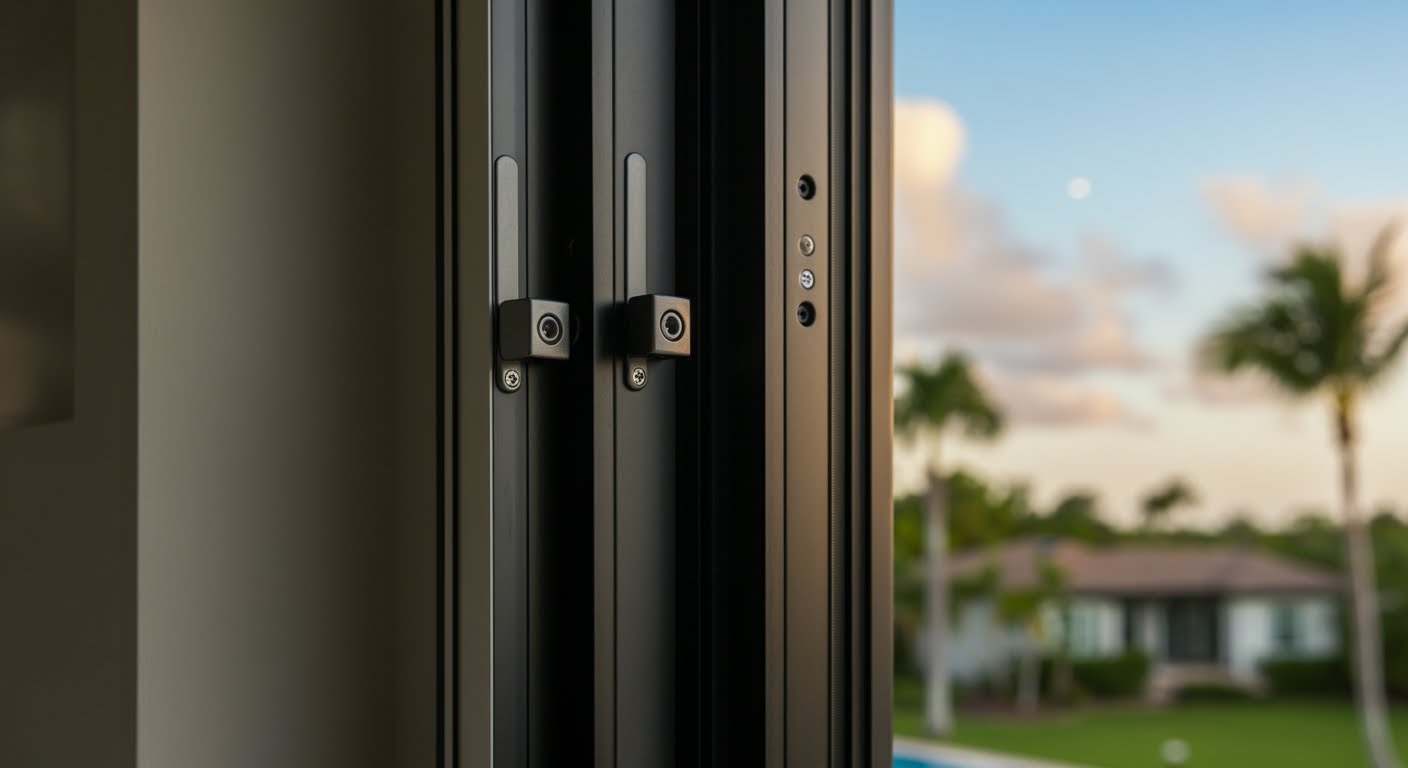
Opening protection: Impact windows and doors, or storm shutters meeting the current code, earn the largest single category of credits — sometimes 30–45% of the base wind premium. This is why impact window upgrades often pay for themselves within a few years through insurance savings alone.
A wind mitigation inspection costs $75–$150 and takes about an hour. The inspector documents all of these features and produces a standard form (OIR-B1-1802) that you submit to your insurer. If you own a home in SWFL and have not done this, it is likely costing you money every year.
Deductibles: Named Storm vs. All-Perils
Florida homeowners policies typically have two separate deductibles: an all-perils deductible (for non-hurricane claims like fire, theft, water damage) and a hurricane or named-storm deductible. These are different in structure and both require understanding.
The all-perils deductible works like a standard deductible — a flat dollar amount ($500, $1,000, $2,500) you pay before coverage kicks in for covered claims.
The hurricane/named-storm deductible is typically expressed as a percentage of insured value — 2%, 5%, or 10%. On a $400,000 home with a 2% hurricane deductible, your out-of-pocket before coverage applies is $8,000. On a $600,000 home with a 5% deductible, that's $30,000. This is not a small number, and many homeowners discover this math only when they file a claim.
Higher hurricane deductibles reduce your annual premium. Whether that trade-off makes sense depends on your financial cushion and risk tolerance. A homeowner with adequate liquid reserves might rationally choose a higher deductible in exchange for lower annual premiums. A homeowner who would struggle to fund a $20,000 deductible out of pocket should prioritize a lower deductible structure, even at higher premium cost.
Flood Insurance: Separate and Essential
Standard homeowners insurance policies do not cover flood damage. In SWFL, where storm surge and heavy rainfall create real flood risk across much of the region, flood insurance is not optional for most properties — it's either required by your lender (if you're in a Special Flood Hazard Area per FEMA mapping) or strongly advisable even when not required.
Flood insurance is available through two channels: the National Flood Insurance Program (NFIP) and private flood carriers. NFIP has been restructured under Risk Rating 2.0, which moved away from flood zone-based flat pricing to actuarially risk-based pricing. This means properties with higher actual flood risk now pay more, sometimes significantly more, than under the old system.
Private flood insurance has expanded and often offers better coverage terms than NFIP — higher building coverage limits, contents coverage, loss of use coverage — sometimes at comparable or lower premiums. Shopping both NFIP and private options is worth doing for any SWFL property in a flood zone.
Important for buyers: existing NFIP policies can be assumed by buyers at the current rate. If a seller has a grandfathered NFIP policy at a favorable rate, that policy assignment is worth investigating. The savings vs. a new-policy rate could be thousands per year.
Getting Insurance Quotes Before You Make an Offer
The single most practical piece of insurance advice for SWFL buyers: get insurance quotes on the specific property before you finalize your offer. Not after. Before.
Why this matters: a property's insurance cost is driven by factors you often can't see in a listing — roof age, roof type, construction year, building code compliance, elevation certificate data, flood zone designation, and proximity to water. Two similar homes in the same neighborhood can have insurance costs that differ by $3,000–$5,000 per year based on these factors.
Getting quotes early gives you accurate carrying cost data for your decision-making. It also gives you leverage if the insurance cost is materially higher than expected — a legitimate basis for price renegotiation or requesting seller concessions. Discovering the insurance reality after you're under contract and past contingency periods is an unpleasant surprise you can avoid with 30 minutes of upfront work.
Explore More
Ready to learn more about Southwest Florida? Check out these resources: