If you've owned a home in Southwest Florida for more than a year or two, you already know the basic hurricane checklist. Trim the trees, stock the water, photograph the rooms, fuel the generator. That part hasn't changed. What has changed — and what most of the prep articles you'll find this May aren't covering — is the insurance and contractor landscape that sits underneath your storm plan.
Three Junes after Ian, the carrier mix in Lee County looks different than it did last year, the Citizens depopulation program is reaching homeowners who weren't expecting it, and the contractors you'd want for shutters, roof tarping, or a post-storm tarp-and-dry are working on different timelines than they were even twelve months ago. Here's what's actually new for the 2026 season, and what to do about it.
The Citizens Takeout Letter and What It Actually Says
If you've been with Citizens Property Insurance for the past couple of years, there's a reasonable chance you'll get a depopulation letter — sometimes called a takeout offer — sometime before your next renewal. The letter notifies you that one or more private carriers have made an offer to assume your policy, and that under Florida law you may be required to accept the private offer if its premium is within 20% of your Citizens premium.
The letter typically lists the assuming carrier, the proposed premium, the effective date, and a deadline to opt out. The opt-out window is short — usually around 30 days. If you do nothing, the policy moves automatically.
Your real options are narrower than people assume:
- Accept the takeout. If the new premium is within 20% of Citizens, you generally cannot remain with Citizens. The takeout becomes effective.
- Opt out and stay with Citizens — only if eligible. If the takeout offer is more than 20% above your Citizens premium, you can decline and keep Citizens. Outside that band, opting out usually isn't permitted.
- Shop the open market before the deadline. Sometimes a third carrier will write you for less than both Citizens and the takeout offer. An independent agent can run quotes in a few days.
Read the letter carefully and look at the assuming carrier's financial strength rating. Not every takeout carrier has the same balance sheet, and your mortgage servicer will have its own minimum rating requirement. A policy your lender won't accept creates a force-placed insurance problem that's far more expensive than either option in front of you.
What's Triggering Non-Renewals in 2026
The non-renewal letters going out in Lee, Collier, and Charlotte counties this spring are clustering around a few specific issues. If any of these apply to your home, plan ahead — don't wait for the letter.
Roof age. Many carriers have moved to a 15-year cutoff for shingle roofs and a 25-year cutoff for tile or metal, with some carriers tightening to 12 years on shingles. A roof that was acceptable in 2023 may not be in 2026. If your roof was installed in 2010 or earlier, expect questions at renewal even if it has visible life left.
The frustrating part: "useful life remaining" assessments from a licensed roofer used to bridge that gap with most carriers. Fewer carriers are accepting them in 2026. Some will, some won't. Ask before you pay for the inspection.
4-point inspection failures. The 4-point covers roof, electrical, plumbing, and HVAC. The failures triggering non-renewal most often this year are: federal pacific or Zinsco panels, polybutylene plumbing, double-tapped breakers, and HVAC systems older than 15-18 years. Any of these will show up on a standard 4-point and can flip a renewal into a cancellation.
Prior claims, even paid ones. A claim from Ian that was paid and closed years ago is still on your CLUE report. Some carriers are now declining to renew on two prior claims in five years, even if both were weather-related and properly resolved. This is showing up most in the lower price ranges where the carrier mix is thinnest.
If you're in any of these buckets, get quotes 60 to 90 days before your renewal date. Walking into renewal with a backup option is a different conversation than scrambling after a cancellation notice.
The Contractor Reality in May 2026
The post-Ian contractor surge is over. Many of the out-of-state crews that flooded into SWFL in late 2022 and 2023 have moved on. What's left is a smaller pool of locally licensed contractors with a more normal book of business — which is good for quality and bad for lead times when everyone calls at the same time.
Practical numbers as of this spring:
- Accordion or roll-down shutters: measurement to install is running roughly 8 to 14 weeks from a reputable installer. If you order in May, you may be cutting it close for a July or August storm.
- Impact windows: 12 to 20 weeks is typical, sometimes longer for non-stock sizes. This is a winter project, not a hurricane-week project.
- Emergency tarping after a storm: the first 72 hours after a named storm are chaos. Pre-storm, you can get a roofer to walk the roof and document condition for $150 to $300. Post-storm, you're in the queue with everyone else.
- Tree trimming: book by mid-May for pre-season work. June bookings are landing in July.
One thing worth verifying before you hand over a deposit: the contractor's license status with the Florida Department of Business and Professional Regulation. The post-Ian fraud cases are still working their way through the courts, and unlicensed activity is still happening. A licensed contractor will have a CGC, CBC, or CRC number you can look up in about 90 seconds.
When a Wind Mitigation Reinspection Actually Pays Back
The OIR-B1-1802 wind mitigation form is the one that documents your roof shape, roof deck attachment, roof-to-wall connections, opening protection, and a few other features. It's good for five years. If yours is approaching expiration, or if you've made any qualifying improvements since the last one, it's worth a fresh look.
A new wind mitigation inspection runs about $100 to $175 depending on the inspector. The discount it produces on your homeowner's premium varies wildly — from a few hundred dollars a year on a 1990s home with no opening protection, to $2,000 to $4,000 a year on a properly-built post-2002 home with hip roof, secondary water resistance, and full impact protection.
Where the reinspection actually pays back:
- You installed impact windows, accordion shutters, or a garage door upgrade since your last form was filed.
- You replaced the roof, especially if the new install includes peel-and-stick underlayment that qualifies for the secondary water resistance credit.
- Your last inspection is more than five years old and has expired or is about to.
- You bought the home recently and inherited an old form that may understate the home's actual features.
Where it doesn't pay back: a 1980s home with the original roof and no opening protection. Reinspecting won't change what's there. Your money is better spent on the upgrade itself.
One quirk worth knowing: not all inspectors fill out the form the same way. Two qualified inspectors can look at the same roof-to-wall connection and check different boxes. If you've had a borderline result before, a second opinion from a different inspector is sometimes worth the second fee.
The Lee County, Cape Coral, and Sanibel Picture
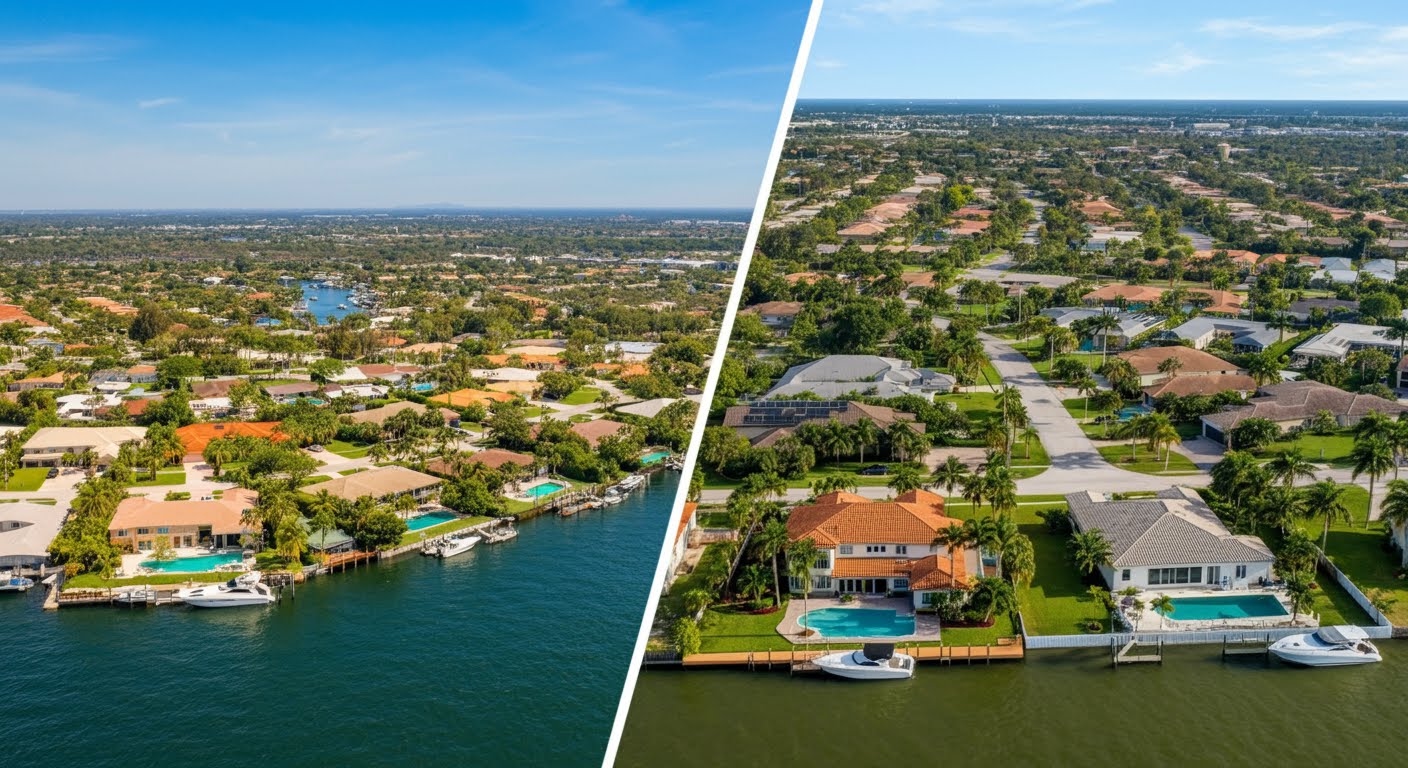
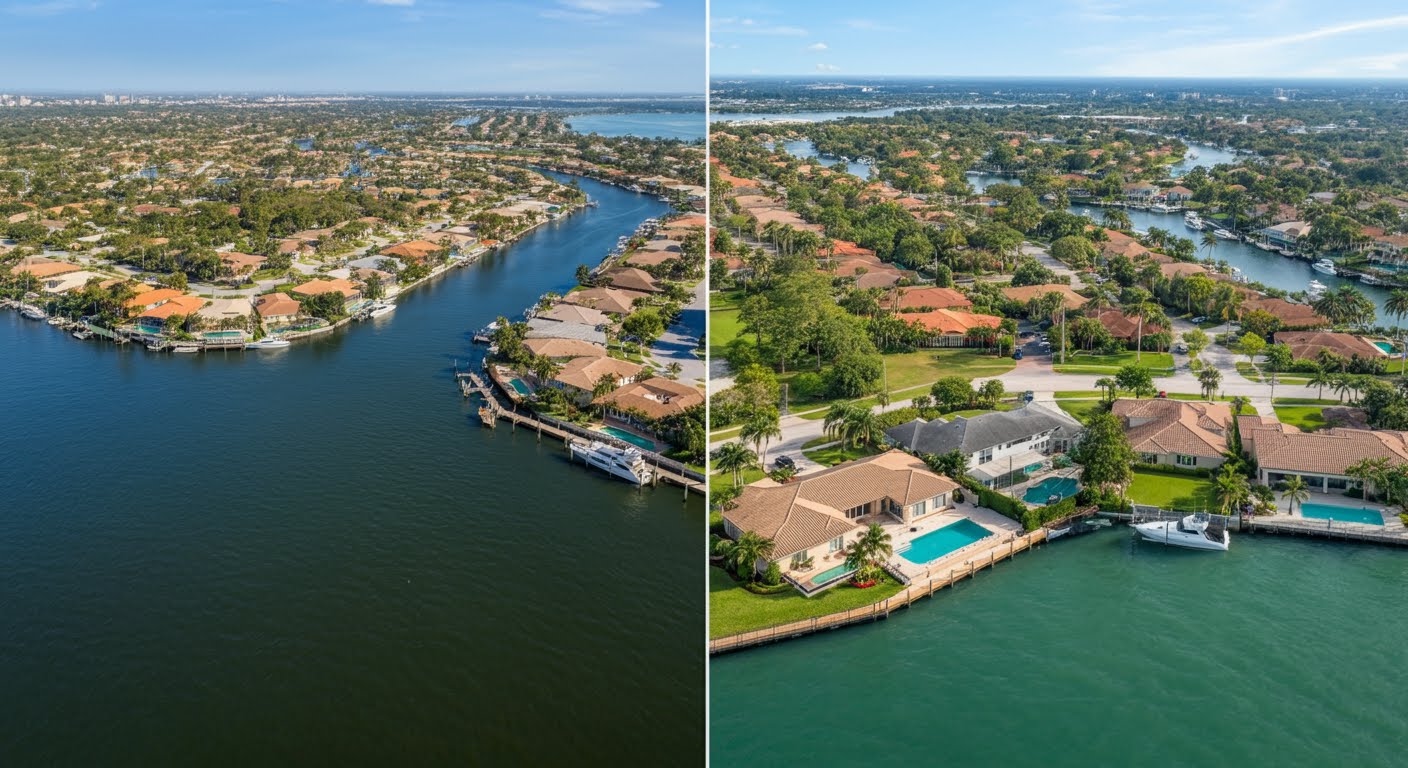
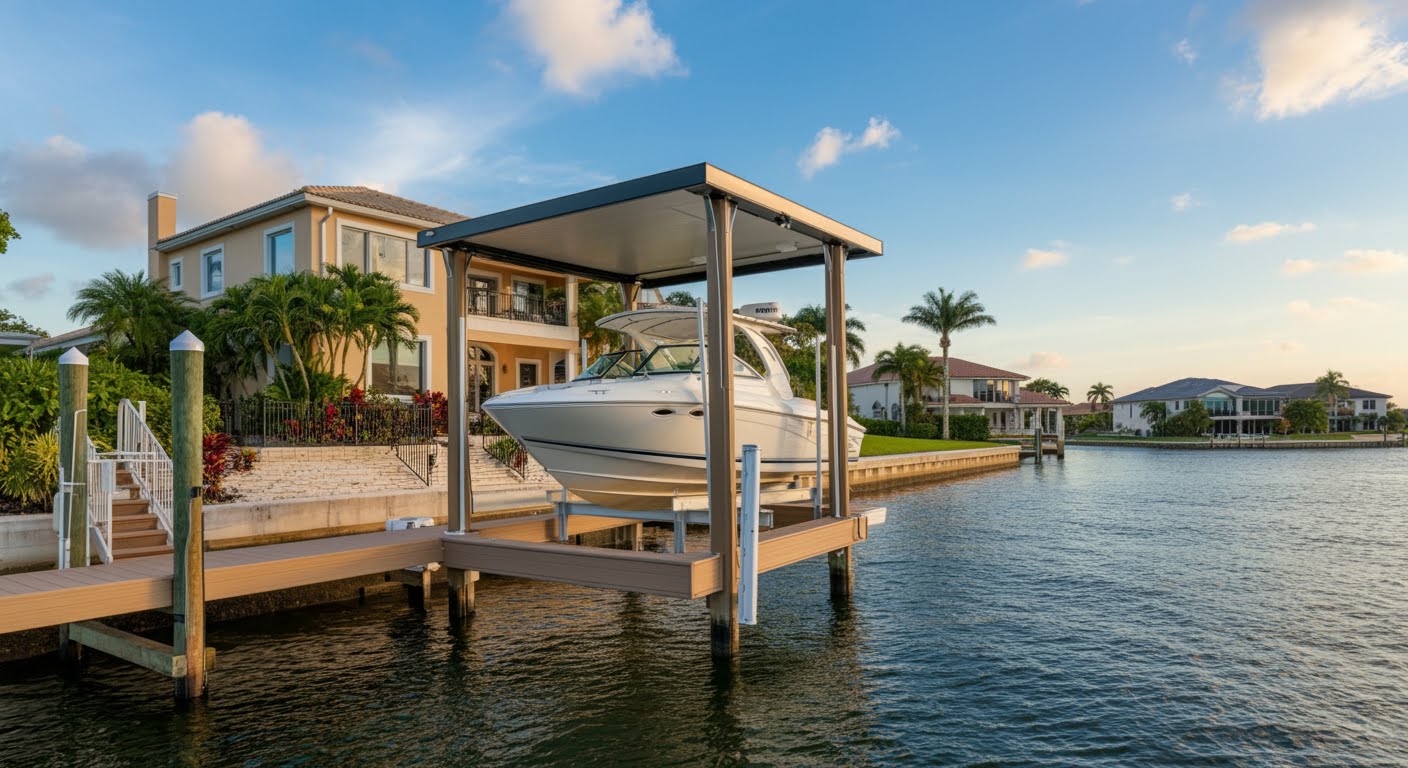
The carrier and contractor situation isn't uniform across Southwest Florida. In Cape Coral, the canal-front and gulf-access submarkets are seeing the tightest carrier mix — surplus lines and Citizens are doing the heavy lifting on a lot of waterfront homes, and the takeout offers there tend to come from carriers that have been writing in coastal Florida for less than five years. That's not automatically bad, but it's worth a look at financial strength and reinsurance backing before you accept.
Fort Myers inland — east of I-75, the Gateway and Daniels corridor neighborhoods — has more carrier options and generally lower premiums. Newer construction with current code wind mitigation features is the easiest to insure in the entire region right now.
Sanibel is its own conversation. The post-Ian rebuild is still in progress in places, building codes have tightened, and the insurance market for the island reflects all of that. If you own on Sanibel, the carrier list available to you is shorter than what's quoted to a buyer in Cape Coral, and the premium gap is real. If you're considering buying there, the property-specific quote conversation should happen before you write an offer, not after inspection. You can read more about what we see on the island on the Sanibel area page.
Across all three submarkets, the homes that are renewing cleanly tend to share a few features: roof under 10 years, full opening protection, current 4-point with no flagged systems, and no claims in the last five. The further you drift from that profile, the more important your shopping window becomes.
The Snowbird-to-Summer Handoff
If you head north for the summer, your June-through-November documentation matters more than your January-through-April photos. A few things worth doing before you leave that aren't on the standard checklist:
- Date-stamped video of every room, every exterior elevation, and the roof from a phone or drone. Save it to cloud storage, not just your phone.
- Current photos of the electrical panel, water heater, and HVAC condenser with model and serial numbers visible.
- A copy of your current declarations page, your wind mitigation form, and your last 4-point — saved somewhere you can access from out of state.
- The contact info for a local property check service or trusted neighbor who can walk the property after a named storm and send photos. The window between landfall and your insurance adjuster's visit is when documentation gets created or lost.
- A clear understanding of your policy's hurricane deductible — it's typically a percentage of dwelling coverage, not a flat dollar amount, and on a $600,000 dwelling at 2% that's $12,000 out of pocket before coverage kicks in.
If you're a seasonal owner thinking through any of this for the first time, the snowbird page walks through the broader handoff in more detail.
If Your Situation Looks Like One of These
If you got a Citizens takeout letter and you're not sure whether the assuming carrier is one your lender will accept, that's a 15-minute conversation with an independent agent and worth having before the opt-out window closes.
If your roof is between 12 and 18 years old and you haven't gotten a non-renewal letter yet, this is the spring to get a roofer's written assessment and shop quotes side by side. Walking into renewal season with options is the difference between a smooth transition and a force-placed policy.
If you've made wind mitigation improvements in the last few years and never updated the form, the math usually favors a new inspection. The $150 fee against a multi-thousand-dollar annual discount is one of the better returns available in homeownership.
And if you're newer to Southwest Florida and trying to figure out whether the home you bought is in a better or worse spot than average for all of this, I'm happy to walk through the specifics of your address, your carrier, and what you'd realistically face at renewal. You can reach me through the contact page — no obligation, just a clearer picture of where you stand.
Equal Housing Opportunity. Freddy Baez · Florida Broker BK3274734 · The Baez Collective at eXp Realty. Information here is general guidance, not legal, tax, or investment advice — please consult a qualified professional for your specific situation.