Almost every buyer conversation I've had this fall has some version of the same sentence in it: "We're going to wait for rates to come down." It's a reasonable instinct. Rates have been the single loudest number in real estate for three years, and nobody wants to lock in a payment today that looks foolish a year from now.
But "wait for rates" is a strategy, and every strategy has a cost. What this post is going to do is give you a plain way to put a dollar figure on that cost for your specific situation, so the wait-or-buy decision stops being a feeling and starts being math.
What 'Cost of Waiting' Actually Means
When people say they're waiting for rates, they're usually only picturing one side of the ledger — the lower monthly payment they'd get if rates dropped. What they're not modeling is the other side: what they pay to wait.
Cost of waiting has three real components:
- Monthly carry. If you're renting while you wait, every month of rent is money that isn't building equity or being offset by a mortgage-interest deduction. If you're in a home you plan to sell, every month of carrying costs — mortgage, insurance, taxes, maintenance — is money out the door.
- Opportunity cost on the down payment. Your down payment is sitting somewhere. If it's in a high-yield savings account earning 4%, that's real yield. If it's in a checking account earning nothing, that's a real drag. Either way, its behavior affects the math.
- Reset risk on price. If rates drop meaningfully, buyer purchasing power goes up, and price competition typically follows. The home you can buy today for $525,000 with less competition may cost $545,000 in a lower-rate environment with more bidders. This is not a market-timing claim — it's just how demand and rates have historically interacted.
The point isn't that waiting is wrong. Waiting is right for plenty of buyers. The point is that you should know what you're paying to wait before you decide it's worth it.
Buy Now, Refi Later — The Actual Math
The "marry the house, date the rate" line has been said so many times it's lost its meaning. Let's look at what it actually is.
A refinance makes financial sense when the interest savings over the time you'll keep the loan exceed the cost of doing the refinance. Closing costs on a Florida refinance typically run $3,000 to $6,000 depending on loan size, appraisal requirements, and title work. A rough rule of thumb: a rate drop of about 0.75 to 1.00 percentage point on a $400,000 loan produces enough monthly savings to recover closing costs in 24 to 36 months.
Worked example. You buy a $500,000 home today with 20% down ($400,000 loan) at 6.75%. Principal and interest: about $2,594/month. Rates drop 12 months later to 5.75% and you refinance into a new 30-year at that rate. New P&I: about $2,334/month. Monthly savings: $260. Closing costs of $4,500 recovered in about 17 months.
Break-even rate drop for a typical Florida refinance to be worth it: roughly 0.75 percentage points on loans under $400,000, and often just 0.50 points on jumbo loans where the dollar savings scale up faster.
Where the strategy doesn't work:
- Rates don't drop enough. If you buy at 6.75% and rates drift to 6.25% and sit there, the math is thinner. You may still refinance, but the payback period lengthens.
- You don't stay in the home long enough. If you sell in year two, you paid closing costs twice with limited benefit.
- Your credit or income situation weakens between purchase and refinance. Refinancing requires re-qualifying. Job change, income drop, or new debt can complicate it.
Rate Locks, Float-Downs, and What to Ask
If you decide to buy, the mortgage side has more optionality than most buyers use. Worth understanding before you commit to a lender:
- Rate lock length. Standard locks are 30, 45, or 60 days. If you're buying new construction or a home with a longer close timeline, you may need a longer lock — sometimes at additional cost.
- Float-down options. Some lenders offer a one-time float-down: if rates drop by a certain amount (often 0.25% or more) between your lock and your close, you can capture the lower rate. There's usually a fee — sometimes 0.25 to 0.5 points — and specific rules about when it can be exercised.
- Extended lock with a buy-down. On new construction, a 2-1 or 1-0 temporary buy-down (sometimes seller-paid or builder-paid) can reduce your effective rate for the first year or two while you wait to refinance.
- Lender credits vs. discount points. You can pay points to lower your rate, or accept a slightly higher rate in exchange for lender credits toward closing costs. Which makes sense depends on how long you'll keep the loan.
Questions worth asking any mortgage broker before you commit:
- What's your standard lock length, and what does an extension cost if we need one?
- Do you offer a float-down, and what are the trigger conditions?
- Can you show me the same loan at three scenarios — no points, one point, two points — with the break-even period for each?
- What are the actual closing costs for a refinance with you if I come back in 18 months?
Buying Power at $500K, $750K, and $1.5M
The rate conversation lands differently depending on where you're buying. Here's roughly what a 1 percentage point rate change does to monthly principal and interest at three common SWFL price points, assuming 20% down and a 30-year fixed loan:
- $500,000 purchase / $400,000 loan. At 7.0%: about $2,661/month. At 6.0%: about $2,398/month. Difference: $263/month, or $3,156/year.
- $750,000 purchase / $600,000 loan. At 7.0%: about $3,992/month. At 6.0%: about $3,597/month. Difference: $395/month, or $4,740/year.
- $1,500,000 purchase / $1,200,000 loan (jumbo). At 7.0%: about $7,984/month. At 6.0%: about $7,194/month. Difference: $790/month, or $9,480/year.
Two things fall out of this. First, the higher the loan balance, the more dollars a rate change moves — which is why jumbo buyers often refinance more aggressively. Second, if a home's price rises 3-5% while you wait for that 1-point rate drop, a meaningful portion of the monthly savings gets absorbed by the higher purchase price and the larger loan.
You can model this yourself: for every 1% the purchase price rises, your loan balance rises about 1% (assuming the same down payment percentage), and your monthly payment rises about 1%. If prices in your target neighborhood rise 4% while you wait and rates drop 0.75 points, you may end up close to a wash on payment — while having paid rent the whole time.
What Waiting Actually Costs — A Worked Example
Let's put a real number on it. Say you're renting a house in Fort Myers for $2,800/month while you wait to buy a $525,000 home. Your down payment of $105,000 is sitting in a high-yield account earning about 4%, or $4,200/year ($350/month).
Twelve months of waiting:
- Rent paid: $33,600
- Down-payment yield earned: $4,200
- Net carrying cost of waiting: about $29,400
Now the other side. If you'd bought the $525,000 home 12 months ago at 6.75% with 20% down ($420,000 loan), your P&I would have been about $2,723/month. Add roughly $650/month for property taxes (unhomesteaded first year), $450/month for insurance, and let's say $150/month for maintenance reserve. Total monthly ownership cost: about $3,973 — meaningfully more than the rent, but part of that payment is principal (building equity), and a portion of interest and property tax is potentially deductible depending on your tax situation.
The wait-or-buy decision comes down to: does the rate drop and any price drift over that 12 months save you more than the ~$29,400 in net rent, plus the price movement risk, plus the fact that you've spent a year not building equity? For some buyers, yes. For others, no. But you can only answer it if you actually run the numbers.
The SWFL Layer — Insurance, Homestead, and Micro-Markets
A rate calculator doesn't know you're buying in Southwest Florida. A few local realities that should be in your model:
Insurance is a moving number. Homeowner's insurance in Lee and Collier counties has been in flux since Hurricane Ian. Two identical-looking houses on the same street in Cape Coral can carry very different premiums based on roof age, wind mitigation features, elevation, and whether they're insured through the private market or Citizens. When you're modeling monthly cost, use an actual insurance quote on the specific address — not an estimate.
Homestead exemption changes the math in year two. If the home is your primary residence, you'll file for the Homestead Exemption by March 1 of the following year, which reduces taxable value and — more importantly over time — caps annual assessed value growth at 3% under Save Our Homes. Waiting a year to buy means waiting a year to start that clock. That's a real, quantifiable long-term cost that most rate-focused analyses ignore.
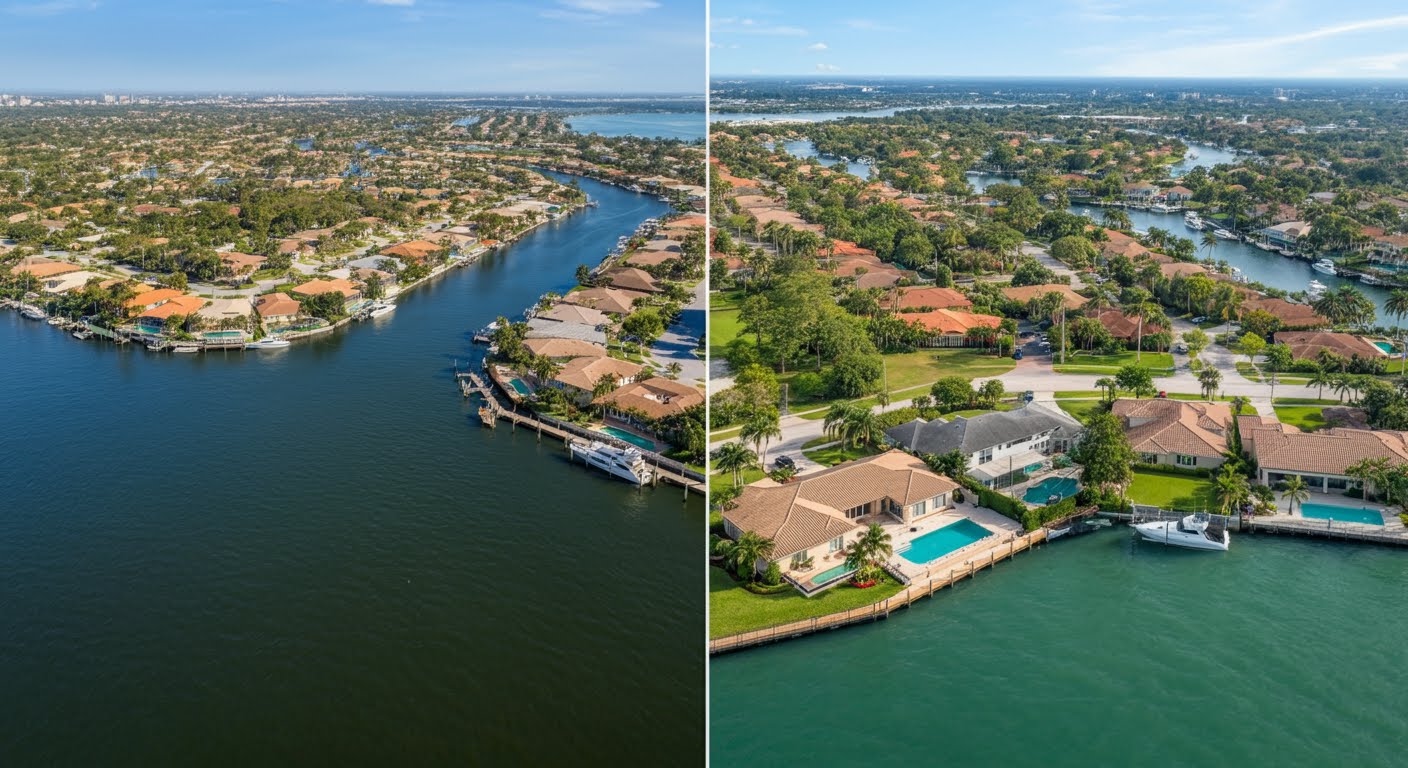
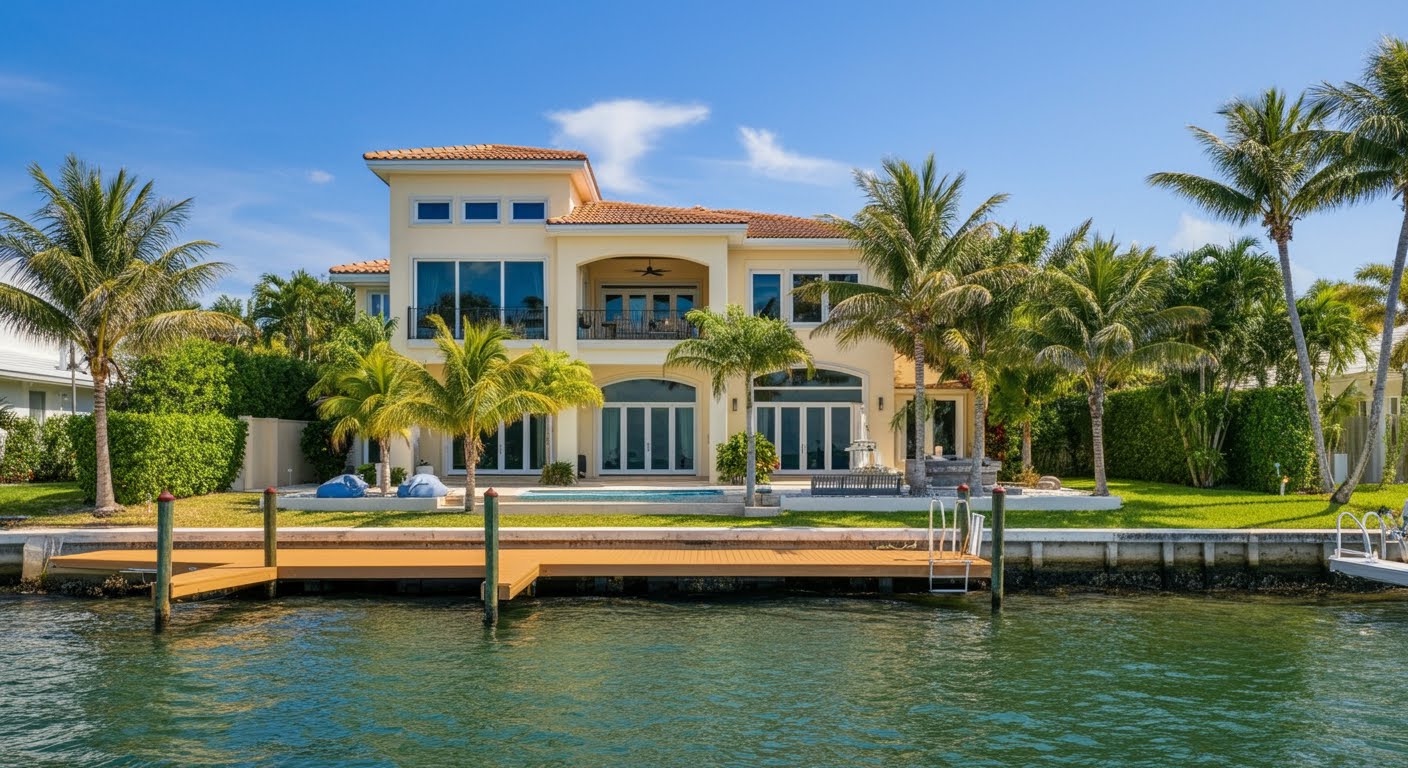
Micro-markets don't all move together. Gulf-access canal homes in southwest Cape Coral behave differently from inland new construction in south Fort Myers, which behaves differently from luxury condos in Naples. A rate-driven demand rebound tends to hit the mid-market first ($400K-$700K), where the buyer pool is largest and most rate-sensitive. Luxury and ultra-luxury above $1.5M move more on inventory and buyer psychology than on 30-year mortgage rates, since a meaningful share of those buyers pay cash or use portfolio loans. If you're shopping in one of these segments, the general "rates rule everything" narrative may not apply cleanly to you.
The Conversation to Have Next
If your situation looks like: stable income, adequate down payment, planning to stay in the home 5+ years, currently paying rent that's close to or above what a mortgage would cost — then the cost-of-waiting math often argues for buying now and refinancing later if rates cooperate. You capture homestead, you stop paying rent, and you keep the refi option open.
If your situation looks like: unstable income, tight down payment, uncertain about staying more than 2-3 years, currently in a low-cost living situation — then waiting is often the more defensible move, because the flexibility has real value and the payback period on a purchase is short.
The way to make the call is to run your specific numbers. That means an accurate estimate of the home you'd actually buy, actual insurance and tax figures for that address, an actual pre-approval from a mortgage broker showing your real rate and payment, and an honest look at what you're paying to wait. If you'd like help pulling those pieces together — I can put you in touch with lenders I trust and walk through the math with you at the contact page, or if you're specifically weighing neighborhoods, the Cape Coral area overview and Fort Myers area overview are a good place to start. If you already own a home you'd need to sell first, a current home value estimate is the first number to nail down.
Equal Housing Opportunity. Freddy Baez · Florida Broker BK3274734 · The Baez Collective at eXp Realty. Information here is general guidance, not legal, tax, or investment advice — please consult a qualified professional for your specific situation.