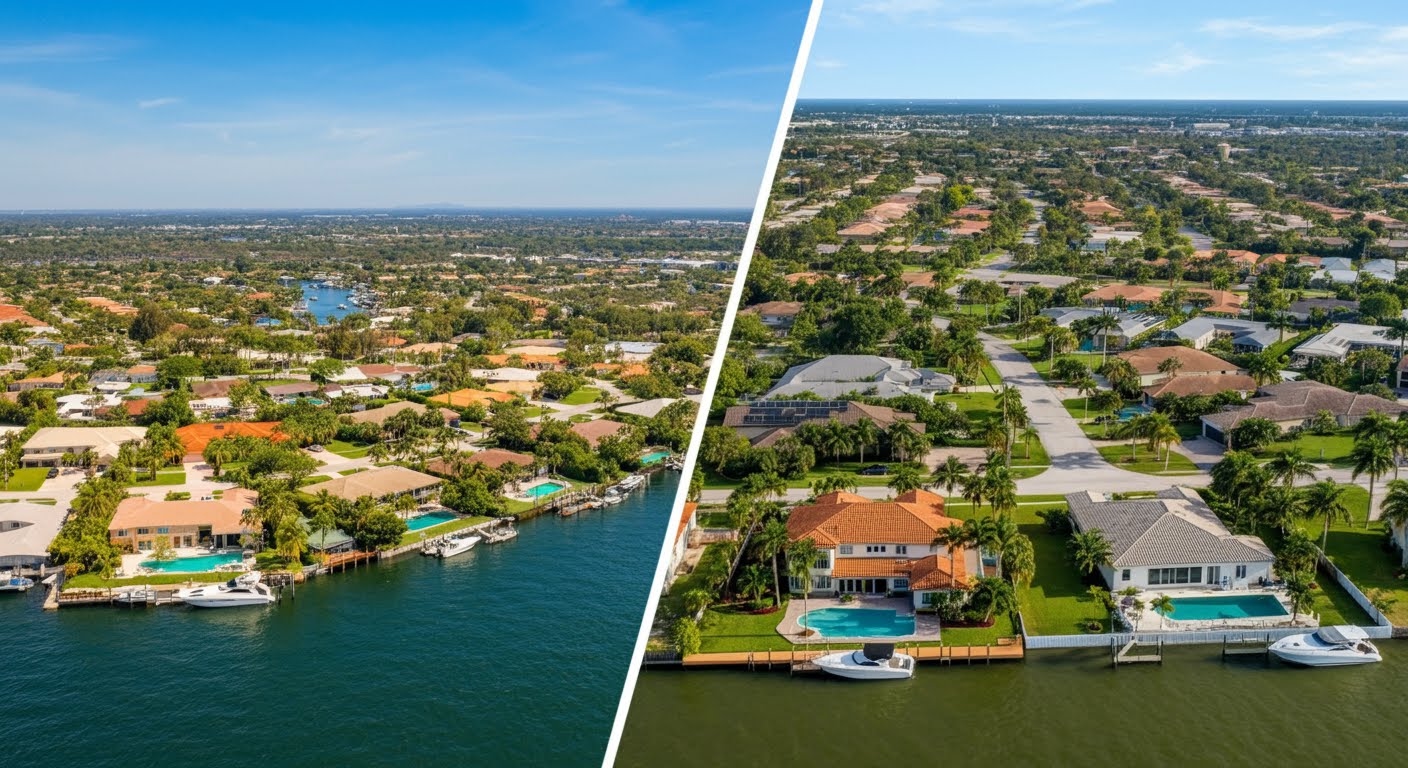
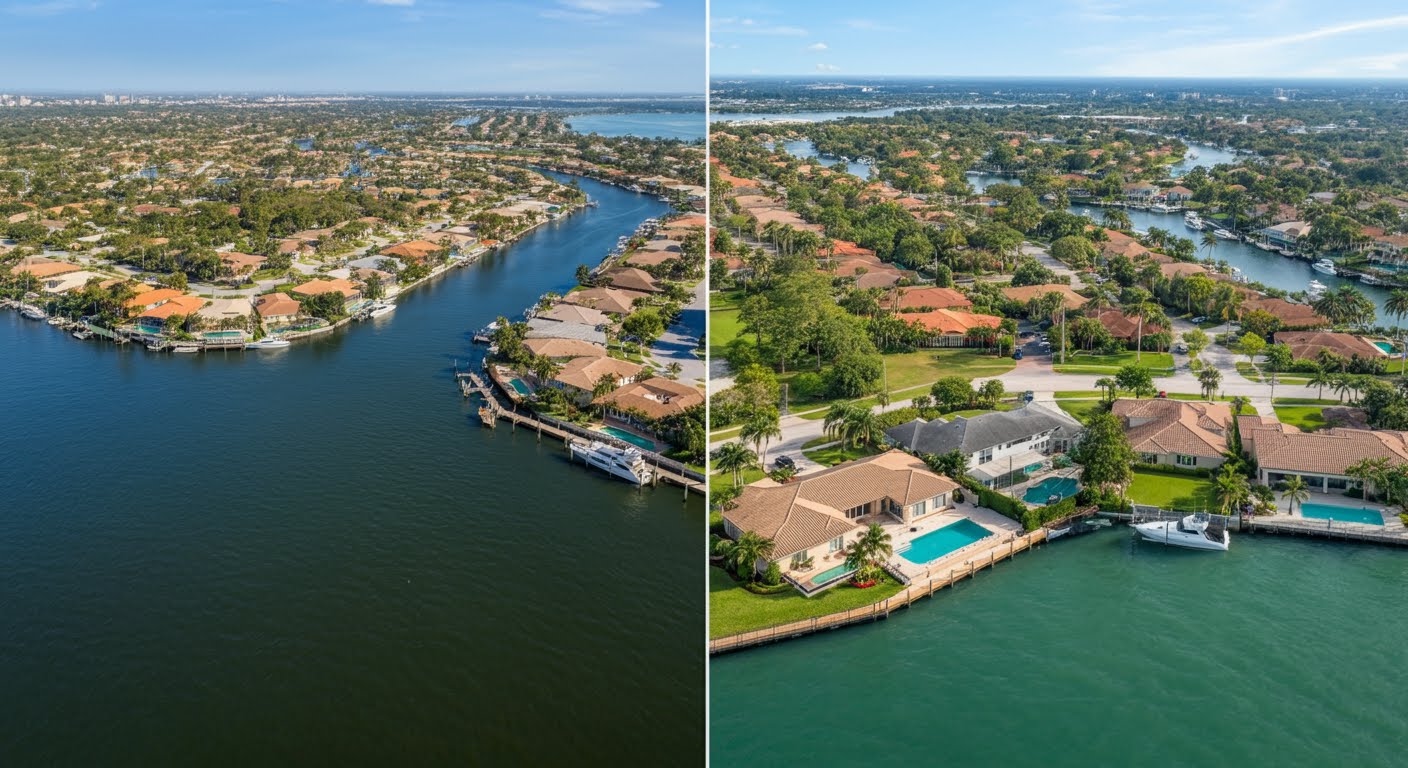
You found a home on Sanibel, or maybe in Fort Myers Beach or on Pine Island, that looks like a real opportunity. The price is workable, the photos are good, and the listing says the roof, AC, and electrical were replaced after Hurricane Ian. On paper, the storm damage looks like an old chapter that's already been closed.
The challenge is that paper and reality don't always match in the post-Ian inventory. More than three years after landfall in September 2022, a meaningful portion of homes still being listed in the hardest-hit micro-markets carry open permits, partial remediation, elevation questions, and insurance complications that don't show up in the MLS description. This post is about how to look past the fresh paint and figure out what you're actually buying.
What Post-Ian Inventory Actually Looks Like
Three buckets cover most of the storm-touched homes still trading hands in 2026.
The first is fully rebuilt — gutted to the studs, properly permitted, signed off, and often re-elevated where the substantial damage rule required it. These homes can be excellent buys. The work is new, the systems are fresh, and the paperwork tells a clean story.
The second is partially repaired — the visible parts look fine, but the work was done in pieces by different contractors, sometimes during the chaotic 2023 labor shortage, and the permit history is messy. Some inspections happened, some didn't, and the seller may not even know what's open and what's closed.
The third is cosmetically repaired — drywall replaced, new flooring, fresh paint, but the deeper questions about moisture, the slab, the wall cavities, and the mechanical systems were never really answered. These homes can pass a casual walkthrough and fail a thorough inspection badly.
Your job as a buyer is to figure out which bucket the home in front of you sits in. The rest of this post is the framework I'd use to do that.
Permits — Open vs. Closed, and Why It Stalls Closings
The first thing to pull is the permit history. In Lee County, you can search permits through the Lee County Community Development portal. The City of Sanibel, Town of Fort Myers Beach, and City of Cape Coral all have their own permit search systems. Pull every permit on the address from September 2022 forward.
You're looking for three things on each permit: what work was authorized, whether the required inspections were passed, and whether the permit was closed out with a final or certificate of completion. An open permit — one where work was started but never finaled — is a real problem.
Open permits stall closings for two reasons. First, most title companies will flag them, and many lenders won't fund on a property with significant open permits, particularly anything structural, electrical, or roof-related. Second, the open permit follows the property, not the contractor. Once you own the home, the open permit is your responsibility to close — which can mean hiring an engineer to inspect work you didn't perform, or in some cases tearing out finished work to expose what an inspector needs to see.
If the seller has open permits, the cleanest path is requiring them to be closed before closing. If that's not possible, you negotiate a credit that reflects the realistic cost — and you get an engineer's letter or contractor estimate to size that credit before signing anything.
The 50% Rule and Why Elevation May Be the Whole Story
FEMA's National Flood Insurance Program has a substantial damage rule, often called the 50% rule. If a structure in a Special Flood Hazard Area sustains damage where the cost to repair equals or exceeds 50% of the structure's market value before the damage, the rebuild must bring the home into compliance with current flood elevation requirements.
In practice, that meant a lot of homes in low-lying parts of Sanibel, Fort Myers Beach, San Carlos Island, Bonita Beach, and the canal-front portions of Cape Coral were either elevated, demolished and rebuilt elevated, or — most concerning — repaired in place when arguably they shouldn't have been.
What you need to find out:
- Was a substantial damage determination issued for the property by the local floodplain administrator?
- If yes, was the home brought into compliance, granted a variance, or did the rebuild happen another way?
- What is the current elevation certificate, and how does the lowest floor compare to the Base Flood Elevation?
This matters enormously for insurance. A home that was properly elevated post-Ian may carry flood insurance premiums in the $1,500 to $3,500 range. A home in the same neighborhood that wasn't elevated — or that had elevation questions papered over — can see flood premiums of $8,000 to $20,000 or more, and in some cases struggle to get coverage at all. The same physical address can be a workable purchase or a financial trap depending on this one question.
Roof, AC, Electrical — What 'Replaced Post-Ian' Should Mean
Listings frequently say the roof, HVAC, and electrical panel were replaced after the storm. That's a positive — newer systems mean lower insurance, fewer near-term capital expenses, and less risk in the next storm. But "replaced" needs verification.
For the roof, you want the permit, the final inspection sign-off, and the roofing contractor's documentation. Then you want a wind mitigation inspection. A properly installed post-2022 roof with hip geometry, secondary water barrier, and code-compliant straps can cut homeowner's premiums by $1,500 to $4,000 per year in waterfront SWFL. A roof that was put on without permits, or with shortcuts that don't qualify for wind mitigation credits, gives you none of those savings — and may not be insurable at all with standard carriers.
For HVAC, ask for the install invoice with the equipment serial numbers. Cross-check the serial numbers against the manufacturer date. Some homes were listed with "new AC" that turned out to be a used unit pulled from storage or a system installed without the matching air handler. A real post-Ian replacement should be a matched, permitted install with documentation.
For electrical, the question is whether the panel and service were truly replaced or just repaired. A saltwater-flooded panel that was cleaned, dried, and put back into service is a fire risk on a multi-year timeline. A permitted panel replacement with a final electrical inspection is the standard you want. If the seller can't produce the permit, assume the work was informal and price the risk accordingly.
This is the area where careful inspections matter most, and where the gap between cosmetic repair and real remediation is widest.
Proper post-flood remediation in a saltwater inundation event involves removing drywall typically to four feet above the high-water line, removing wet insulation, drying the wall cavities and slab with industrial dehumidification documented by moisture readings, treating remaining framing for mold, and only then closing the walls back up. The work should produce a paper trail — a remediation protocol, moisture logs, and a clearance test.
What too often happened in 2023, especially in homes flipped quickly by investors, was: drywall cut, fans run for a few days, new drywall installed, paint sprayed, listing photographed. Without moisture documentation and clearance testing, you genuinely don't know what's behind the wall.
The due diligence here is a moisture inspection by a qualified mold assessor — not the standard home inspector. They'll use moisture meters and infrared cameras on baseboards, behind cabinets, around door frames, and along the slab edge. They'll often pull HVAC vents and inspect the duct interiors, which can hold spores even when the walls test clean. Budget $400 to $800 for this inspection on a flood-affected home. It's the single highest-ROI piece of post-Ian due diligence I can name.
The Insurance Binder Rule — In Hand or Walk
This is the discipline that I'd hold most firmly on a post-Ian purchase: do not waive your insurance contingency, and do not close until you have an actual bound homeowner's policy and a bound flood policy with premiums you've seen in writing.
Quotes are not binders. A quote can be withdrawn or repriced when underwriting actually pulls the four-point inspection, the wind mitigation, and the elevation certificate. I've seen post-Ian transactions where a buyer had a verbal quote in the $4,000 range and the actual bound premium came back at $11,000 once the carrier reviewed the inspections. That's not a small adjustment to the monthly payment — that's a different deal entirely.
The order of operations that protects you:
- Get inspections completed — four-point, wind mitigation, elevation certificate, and any mold/moisture work — early in your inspection period.
- Submit all of that to your insurance agent and request bound policies, not quotes.
- Review the actual premium numbers and confirm they fit your budget.
- Only then release your inspection and financing contingencies.
If the home can't get a bound policy from a standard carrier or from Citizens Property Insurance at a workable rate, that's important information. It's better to learn it during the inspection period — when you can renegotiate or walk — than at the closing table.
The SWFL Micro-Markets Still Working Through It
Recovery has been uneven across Southwest Florida. Sanibel and Captiva have seen extensive rebuilding, with newer elevated construction trading at strong numbers and older, lower-elevation properties facing real questions on insurance and resale. Fort Myers Beach is further behind — large portions of the island are still rebuilding, and the inventory mix includes everything from cleanly rebuilt newer homes to vacant lots where structures were demolished. Pine Island's communities of St. James City and Bokeelia have a substantial number of older block homes where the substantial damage question, the elevation question, and the insurance question all sit on top of each other.
The canal-front sections of Cape Coral, particularly south of Cape Coral Parkway and in the SE and SW quadrants closest to the river, took meaningful surge damage and have a similar mixed inventory — beautifully rebuilt next to partially repaired next to untouched. Even on the same street, two homes can have completely different insurance, permit, and elevation pictures. This is why a market-wide rule of thumb doesn't help much in these areas. The work is property by property. If you're shopping in Sanibel, Fort Myers, or Cape Coral, the local micro-market knowledge matters as much as the broader market context.
How to Think About the Decision
None of this is a reason to avoid post-Ian inventory. Some of the best values in Southwest Florida right now are in these markets, and the buyers who do the work to vet properly are often picking up homes with brand-new systems, elevated construction, and long runways before the next major capital expense. The cosmetically rebuilt homes priced as if they were fully remediated are the ones to walk away from. The genuinely rebuilt homes priced fairly are often excellent purchases.
If your situation looks like this — out of state, evaluating a property in an Ian-impact zone, trying to figure out whether the price reflects the risk — the conversation worth having is a walk-through of the specific property's permit history, elevation, and insurance picture before you write an offer. That's the kind of work I'd rather do up front than fix later. You can reach out through the contact page if you'd like to look at a specific address together, and you can pressure-test any pricing assumptions through our home valuation tool before locking in an offer number.
Equal Housing Opportunity. Freddy Baez · Florida Broker BK3274734 · The Baez Collective at eXp Realty. Information here is general guidance, not legal, tax, or investment advice — please consult a qualified professional for your specific situation.