City Spotlights
Living in Sanibel: Everything You Need to Know in 2026
Everything you need to know about living in Sanibel — from a team that knows the area inside and out.
7 min readMarch 25, 2026
City Spotlights
The headlines moved on from Sanibel two years ago. The real estate market did not. Here's what's actually happening on the island in 2026 — by neighborhood, by property type, and by buyer profile.
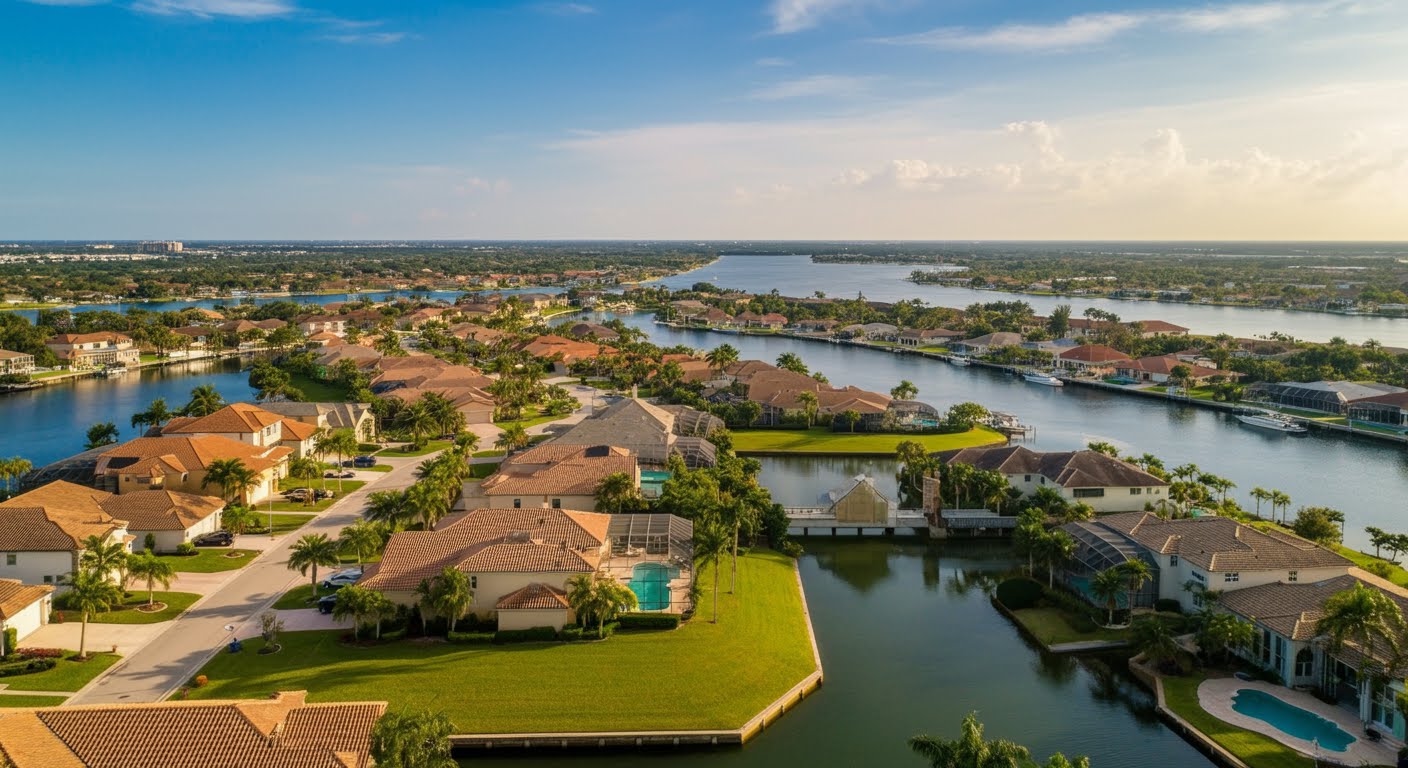
Sanibel Real Estate, Three Years After Ian: Where Recovery Stands — illustrative photo
If you've been watching Sanibel from a distance — checking in once or twice a year since Hurricane Ian made landfall in September 2022 — you've probably gotten one of two impressions. Either the island has bounced back and everything is fine, or it's still a disaster zone that buyers should avoid. Neither is accurate.
The reality, three years in, is more textured than either narrative. Some streets look like Ian never happened. Others still have foundations sitting empty next to brand-new builds. The insurance market has reshuffled. The buyer pool has changed character. And the pricing data tells a story that doesn't fit on a headline.
Sanibel is functional. The causeway is fully operational, restaurants and shops along Periwinkle are largely back, Ding Darling is open, the beaches are accessible, and the rhythm of island life — bikes, sunset, slow traffic on Tarpon Bay Road — has returned. The infrastructure recovery is real and largely complete.
The real estate recovery is more uneven. Roughly a third of the island's pre-Ian housing stock either took catastrophic damage or has been demolished and rebuilt. The remaining two-thirds split between properties that came through with manageable repairs and properties that are still working through the permit, contractor, and insurance maze. Walk any street on the East End and you can see all three states within a block of each other.
That visual reality matters for buyers. Sanibel today is not a market where you can drive comps from three years ago and trust them. Two homes a hundred feet apart can have completely different stories — and prices — depending on what happened to them between September 2022 and now.
Active inventory on Sanibel in mid-2026 sits substantially higher than the pre-Ian normal but has been gradually working down from its 2024 peak. The composition by neighborhood is worth understanding.
East End — the area closest to the causeway, including older cottage neighborhoods and the condos along Middle Gulf Drive — has the highest concentration of active listings. This is partly a function of density (more units, more potential listings) and partly a function of owner fatigue. East End condo associations that took heavy ground-floor damage have been the slowest to fully reassess, and a meaningful share of owners have opted to sell rather than continue absorbing special assessments. Expect to see a mix of fully restored units, units sold as-is with remediation incomplete, and newly rebuilt single-family homes at significantly higher price points.
The Periwinkle corridor and mid-island — including the neighborhoods off Periwinkle Way, Sanibel-Captiva Road, and the interior streets — has lower inventory and a more stable feel. Many of these homes are slightly elevated or set back from the Gulf, and damage profiles were more variable. Buyers here are often looking at homes that came through with roof and interior work but didn't require full reconstruction. Pricing is firmer than the East End.
West End — including the gulf-front estates approaching the Captiva line — has the thinnest inventory and the widest price spreads. This is the section where you'll find $4M raze-and-build projects next to $2M as-is properties with deferred work, and the negotiation gap between buyer and seller expectations is widest. Gulf-front lots without a livable structure are their own category and trade based on lot value, setbacks, and what the buyer plans to build.
One of the most important things to understand about Sanibel pricing today is that you're not really shopping one market — you're shopping three.
Fully restored or untouched properties trade at the highest dollar-per-square-foot. These are homes where the work is done, the certificates of occupancy are issued, the insurance is in place, and the buyer takes possession of a turnkey property. Premium for a clean, fully restored single-family home over a comparable as-is property runs roughly 25% to 40% in current listings.
Active rebuilds and new construction are their own category. A newly built single-family home on Sanibel — elevated to current FEMA standards, with hurricane-rated construction throughout — commands a significant premium, often 50% or more over pre-Ian comparable square footage. The buyer is getting a property that should perform better in the next storm and qualify for lower insurance rates. The trade-off is paying today's construction costs, which on Sanibel run meaningfully higher than mainland Lee County due to logistics, elevation requirements, and limited contractor availability.
Sell-as-is properties — homes still carrying unresolved damage, incomplete remediation, or known issues — trade at substantial discounts but require careful buyer due diligence. The discount can look attractive on paper. The math gets harder when you add the cost to complete work, the timeline, the financing complications, and the insurance underwriting questions that follow an unrepaired loss. I've seen as-is properties pencil out well for buyers with cash, construction experience, and patience. I've also seen them turn into projects that cost more than buying restored would have.
A useful frame: if a fully restored 2,200 square foot home is listed at $1.85M, a comparable as-is property might list at $1.25M to $1.35M. The $500K-$600K gap is approximately what the market is pricing in for repair cost, risk, time, and uncertainty. Whether that gap is real value depends entirely on the specific property and your specific resources.
This is the conversation that catches most mainland buyers off guard. Sanibel insurance in 2026 is not the same product, at the same price, from the same carriers, as it was pre-Ian.
The standard admitted homeowner's market on Sanibel has contracted significantly. Several major national carriers either fully pulled or substantially restricted new business writing on barrier islands in Lee County after 2022. What's left is a mix of Florida-domiciled carriers, surplus lines insurers, and Citizens Property Insurance — the state-backed insurer of last resort, which has become first resort for a large share of Sanibel policies.
For wind coverage specifically, expect to be quoted in the $8,000 to $20,000+ annual range for a typical single-family home, depending on construction year, elevation, roof type, wind mitigation features, and proximity to the Gulf. Newly built homes meeting current code qualify for the best available rates. Older homes — particularly those that took prior damage and weren't rebuilt to current standards — face the steepest premiums or, in some cases, struggle to find wind coverage at all.
Flood insurance is its own line. Most of Sanibel sits in Zone AE or Zone VE under FEMA's flood maps. Newly elevated homes can qualify for meaningfully lower NFIP and private flood premiums; older slab-on-grade homes pay the most. An elevation certificate is essential, not optional, and the post-Ian Substantial Damage determinations made by the city affect what coverage and rates are available on properties that crossed the 50% damage threshold.
The practical advice: never make an offer on a Sanibel property without first getting actual insurance quotes for that specific address. Estimates from a buyer's prior carrier on the mainland are not predictive. The number you need is what coverage will cost on this property, with this construction, at this elevation, with this loss history.
The Sanibel Causeway is fully open, has been since early 2023 for emergency access and since the permanent reconstruction milestones thereafter. The replacement spans are engineered to higher standards than what Ian took down. Day-to-day, the causeway functions normally — toll, two lanes each way, scenic ride.
What's worth understanding is the practical mainland commute. Sanibel is not a bedroom community for Fort Myers workers, and it wasn't before Ian either. Plan on 30 to 45 minutes from mid-island to the Fort Myers retail and medical corridors, longer in season. Healthcare access is the most common practical question — Lee Health's main facilities are mainland-based, and the island has limited urgent care capacity. For full-time residents, particularly retirees, that's a real consideration. For seasonal residents and second-home buyers, it's usually a non-issue.
If you're weighing Sanibel against mainland alternatives like Fort Myers or coastal Lee County for the same kind of lifestyle, the trade-off is what you'd expect: island living, slower pace, no through-traffic, and shelling beaches on one side; faster access to services, lower insurance, and more dining and medical options on the other.
The Sanibel buyer pool has changed character meaningfully since 2022, and that's worth naming.
Pre-Ian, the dominant buyer was a financially comfortable second-home owner or retiree — often Midwestern, often returning year after year, frequently buying a condo or modest single-family home as a long-term seasonal base. The premium was for the lifestyle, not the construction.
Today's buyer pool is narrower and more specific. The largest share is cash buyers — either pure cash or strong cash-with-financing positions — because conventional financing on as-is or partially damaged properties has been complicated. The buyers committing are people who either know island construction, have advisors who do, or are buying fully restored or new-build properties at premium prices specifically to avoid the project risk.
There's also a meaningful share of legacy owners — families who owned on Sanibel pre-Ian and are reinvesting in either a rebuild on their existing lot or a step up to a different property on the island. They know the market, they know what they want, and they're patient. They tend to set the price ceiling on the most desirable inventory.
The buyer who has largely stepped back, at least for now, is the casual second-home buyer who was choosing between Sanibel and several other Florida destinations. Many of those buyers redirected to Naples, Marco Island, or mainland Lee County waterfront after 2022. Some are starting to look back at Sanibel as the recovery picture clarifies. That gradual return is part of what will shape the next 24 months of the island's market.
Sanibel doesn't exist in isolation. The Save Our Homes assessment cap, the Florida homestead exemption, and the Lee County property appraiser's post-Ian assessment treatment all affect what owning here looks like financially over time. Properties that were Substantially Damaged and rebuilt have had to navigate the rebuild value vs. assessed value question with the property appraiser, and that picture is now more settled than it was two years ago. For full-time residents establishing homestead, the long-term tax picture on Sanibel can be reasonable — the upfront insurance and construction premium is what shapes the entry decision, not the ongoing property tax math. For seasonal owners who don't qualify for homestead, the full assessed value drives the bill, and that's worth modeling before purchase.
The most useful conversation before you make any offer on Sanibel is a property-specific one. The right questions are: what is this particular home's damage and rebuild history, what does the insurance picture look like for this specific address, what's the realistic cost to bring it to your standard if it's as-is, and how does the net carrying cost compare to a fully restored alternative you might be passing on.
That math is different on every property. Two homes that look similar on a listing site can have very different stories underneath. If you'd like a realistic walk-through of what's actually available on the island right now, what the spreads look like across rebuilds vs as-is, and what the insurance and carrying-cost reality is for the property type you're considering, that's a conversation I'm glad to have. You can reach me through the contact page, and I'll spend the time on the specifics rather than the headlines.
Sellers considering listing a Sanibel property — particularly those weighing whether to complete remediation before listing or sell as-is — have a similar property-specific math to work through. A realistic valuation of your home in both scenarios is usually the starting point.
Equal Housing Opportunity. Freddy Baez · Florida Broker BK3274734 · The Baez Collective at eXp Realty. Information here is general guidance, not legal, tax, or investment advice — please consult a qualified professional for your specific situation.
— Freddy & Josey
Frequently Asked
Explore These Cities
The SWFL Market Letter
Market notes and neighborhood reads from Freddy & Josey — written for SWFL homeowners, buyers, and the curious. No spam, no pressure.
City Spotlights
Everything you need to know about living in Sanibel — from a team that knows the area inside and out.
City Spotlights
Punta Gorda gets talked about as one market, but Punta Gorda Isles, Burnt Store Isles, and the historic downtown each have different housing stock, different insurance realities, and different buyers.
City Spotlights
Estero gets described as the place between Naples and Fort Myers with a mall. That shorthand misses most of what actually defines this community and where you'd want to live in it.
Local team. Licensed in Florida. En español también.