You're relocating to Southwest Florida with school-age kids, and you've spent the last two weeks color-coding a spreadsheet of neighborhoods by school ratings. Somewhere around the third night of this, you started to notice that the ratings don't actually agree with each other, that the reviews from parents contradict the numbers, and that the "10-rated" school in one town seems to sit next to a "4-rated" school in the next town over with what looks like the same demographics and the same test scores.
You're not confused because you're missing something obvious. You're confused because the 1-10 rating is a compressed summary of a very local, very human situation, and the compression loses most of what matters. What follows is how I'd think through school-driven neighborhood decisions in Southwest Florida — the mechanics of each district, the choice programs most relocators don't know exist, and how much (and how little) school zoning actually moves resale values here.
What the Ratings Are Really Measuring
The 1-10 scores you see on real estate portals are almost always derived from state standardized test performance, with some weighting for growth scores and graduation rates. In Florida, that means Florida Standards Assessments (FSA) results, now transitioning to the FAST progress monitoring system. Test scores correlate strongly with the income and education level of the parent population — so a school in a higher-income zip code will almost always score higher, regardless of how good the teaching actually is.
What the ratings do not measure: class sizes, teacher retention, program offerings (arts, music, IB, AP, dual enrollment, career academies), transportation reality, the quality of the principal, whether the school is over or under capacity, and what the culture is like for kids who don't fit the majority profile. Those factors matter enormously to a family's day-to-day experience, and they can vary wildly between two schools with the same numeric score.
So the ratings are useful as a first filter — they tell you where the state's official grade is, which affects funding, staffing stability, and (yes) resale. They are not useful as a final answer. The final answer requires visiting the school, talking to parents in the neighborhood, and understanding which choice programs your child is eligible for.
Lee County: Zoning, School Choice, and the Reality on the Ground
Lee County School District serves Cape Coral, Fort Myers, Estero, Bonita Springs, and Sanibel. It's the ninth-largest district in Florida with roughly 96,000 students across more than 120 schools. What most relocators don't realize is that Lee County operates a school choice model rather than pure neighborhood zoning at the elementary and middle school levels.
Here's how it works in practice: families rank their preferred schools within a geographic zone, and the district assigns based on proximity, sibling preference, and available seats. That means buying a home two blocks from a highly rated school does not guarantee your child attends that school. It improves your odds substantially, but it's not the automatic ticket that zoning provides in most states.
For high school, Lee uses a more traditional attendance zone approach, with some magnet and career academy exceptions (Cypress Lake High Center for the Arts, Dunbar High's IB program, Fort Myers High's IB program, and others). If a specific high school matters to you, verify the current attendance boundary — boundaries have shifted several times in the past decade as new schools opened and neighborhoods filled in.
Practical implications for buyers in Cape Coral and Fort Myers: southwest Cape Coral (near Pelican, Gulf Elementary, Trafalgar) has a reputation for stronger schools than northern Cape Coral, but northern Cape has newer facilities and growing programs. Estero and Bonita Springs pull from Estero High, Bonita Springs High, and several strong elementaries — these are among the most sought-after zones in the county and command a corresponding price premium.
Collier County: Magnet Schools vs. Neighborhood Schools
Collier County School District, which covers Naples, Marco Island, and Immokalee, is a smaller district — roughly 47,000 students — and it consistently ranks among Florida's top-performing districts on state metrics. But the district-wide average masks significant variation between schools.
Collier uses more traditional attendance zones than Lee, meaning where you buy generally determines where your child attends. The exceptions are the district's magnet and choice programs, which are competitive and require application. Naples High's Cambridge AICE program, Barron Collier's IB program, and Gulf Coast High's various academies draw students from across the district but have limited seats.
The elementary and middle school picture in Collier is heavily geographic. North Naples schools (Pelican Marsh, Osceola, Vineyards, Pine Ridge Middle, North Naples Middle) tend to score at the top of the state. Central and East Naples schools serve a more economically diverse population and score lower on standardized measures — but families with kids in those schools often report positive experiences that the ratings don't capture.
Marco Island has its own K-8 charter (Marco Island Academy for high school, Marco Island Charter Middle, Tommie Barfield Elementary) that many island families prefer over sending kids over the bridge. It's a self-contained ecosystem, and if you're buying on Marco with school-age kids, understanding this is important.
Charlotte County: The Smaller District Most Relocators Skip Past
Charlotte County School District — serving Punta Gorda, Port Charlotte, and the surrounding areas — is often overlooked by relocators who focus on Lee and Collier. That's a mistake worth revisiting. Charlotte is a smaller district (roughly 16,000 students) with lower student-to-teacher ratios in many schools, and it consistently earns an A grade from the state.
Punta Gorda in particular has developed a reputation among families who want good schools without Naples pricing. Sallie Jones Elementary, Punta Gorda Middle, and Charlotte High all serve the downtown Punta Gorda area and have strong parent involvement. Port Charlotte's schools serve a larger and more diverse population, with results that vary more school-by-school.
The trade-off in Charlotte County is program depth. A smaller district means fewer specialized magnet programs, fewer AP course offerings at the high school level, and less variety in extracurriculars compared to Lee or Collier. If your child is in a highly specialized track — competitive robotics, elite music, specific language immersion — Charlotte may not have the same depth. If your child is a solid student who benefits from smaller class sizes and a more community-scaled environment, Charlotte often works very well.
Private and Charter Schools: When It Makes Sense, When It Doesn't
Southwest Florida has a substantial private school landscape, particularly in Naples and Fort Myers. Community School of Naples, Seacrest Country Day, First Baptist Academy, Canterbury School in Fort Myers, and Evangelical Christian School are the largest and most established. Tuition ranges from roughly $12,000 to $35,000+ per year depending on grade level and school.
Florida also has a robust school choice landscape at the state level. The Family Empowerment Scholarship and the Florida Tax Credit Scholarship together provide tuition assistance to a large share of Florida families for private school. As of the 2023-2024 expansion, the income cap was effectively removed for many families, meaning more households qualify than most relocators realize. Whether this changes the private school math for your family depends on your specific circumstances and eligibility — a school's admissions office can walk you through it.
Charter schools are another middle path. Bonita Springs Charter, Cape Coral Charter Schools, Naples Classical Academy, and Marco Island Academy are examples with waitlists that can be long. Charters are tuition-free public schools with their own governance and curriculum, which appeals to families who want more program specificity without private-school tuition.
When private makes sense: your child needs specific program depth the district doesn't offer, class size is a priority, or you want a specific religious or philosophical framework. When it doesn't: you're stretching financially, the district school in your zone is strong for your child's needs, or the private option would require a long commute that eats into family life.
How School Zoning Affects Resale (and How Much)
This is the piece most relocators want a straight answer on, so here's the straight answer: school zone matters for resale in Southwest Florida, but less than it does in many other markets, and the effect varies significantly by submarket and price point.
In family-heavy submarkets — southwest Cape Coral, Estero, Bonita Springs, North Naples, Palmer Ranch-adjacent Sarasota edges — homes in top-rated school zones typically command a 5% to 12% premium over otherwise identical homes in lower-rated zones. That's a meaningful difference on a $600,000 home, and it holds through market cycles because the buyer pool for those homes is dominated by families making school-driven decisions.
In submarkets dominated by seasonal, snowbird, or retiree buyers — much of coastal Naples, Marco Island, Sanibel, downtown Fort Myers condos, waterfront Punta Gorda — school zone has almost no measurable effect on resale. The buyer pool doesn't have kids in the system, so the rating is not a decision factor.
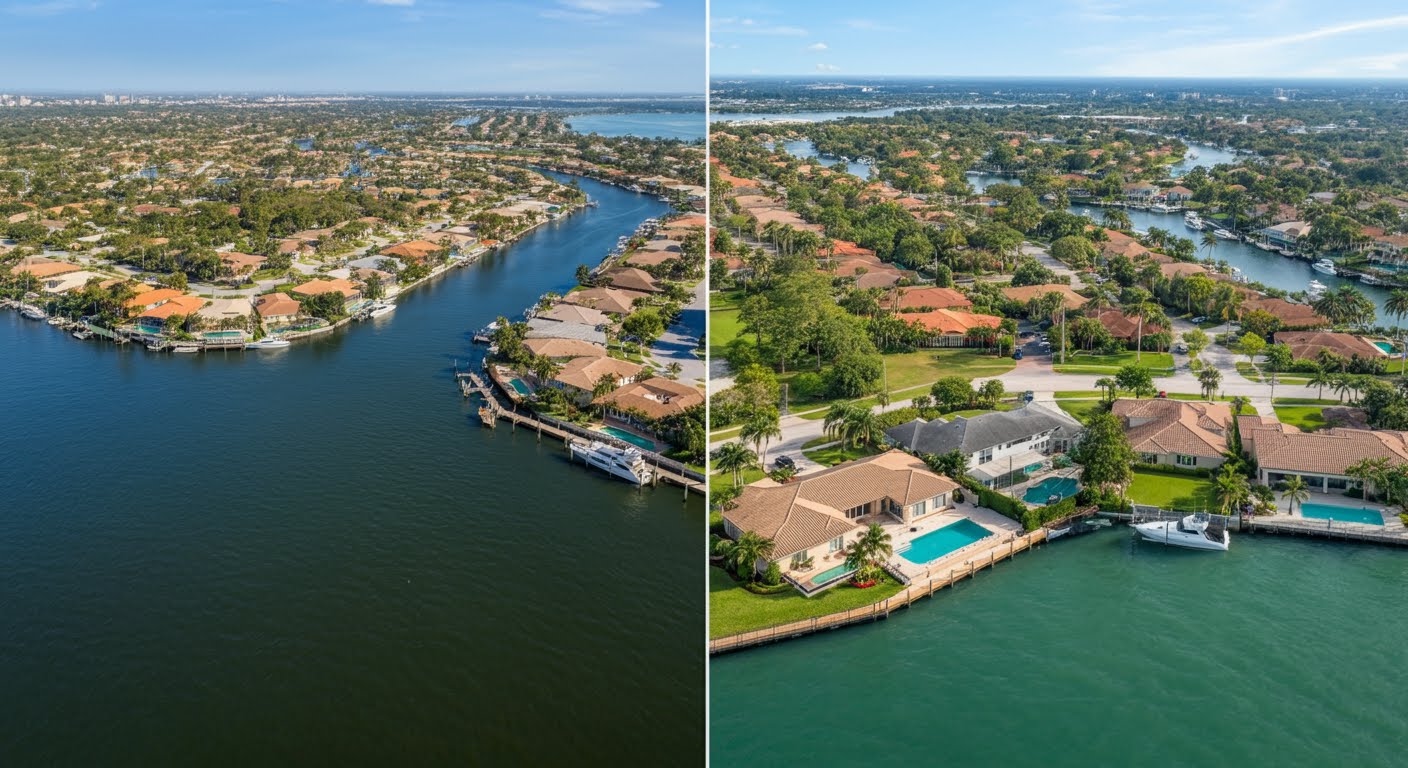
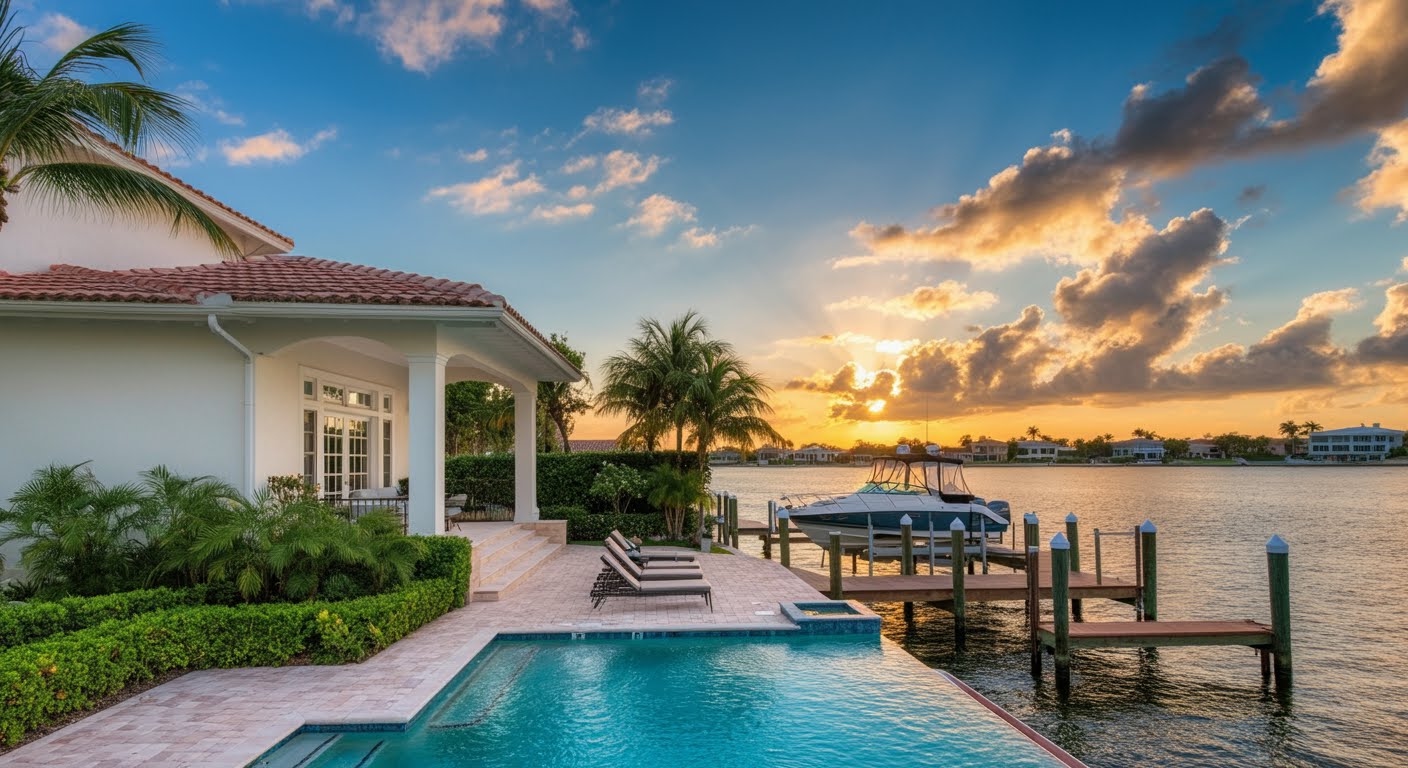
In waterfront and Gulf-access neighborhoods, the water frontage and boat access always outweigh school zoning. A gulf-access canal home in a mid-rated school zone will always outsell an identically priced non-waterfront home in a top-rated zone.
One SWFL-specific wrinkle worth mentioning: Hurricane Ian in 2022 shifted enrollment patterns in Lee County significantly. Several schools took damage, some families relocated inland, and enrollment in some coastal-adjacent schools declined temporarily. Most schools have recovered, but if you're evaluating a specific school, it's worth asking about enrollment trends over the past three years rather than relying on pre-2022 data. The Save Our Homes cap and homestead exemption also mean that long-term family owners in top school zones often pay dramatically less in property taxes than a new buyer would on the same home — something to factor into total cost of ownership.
How to Actually Decide
Here's the sequence I'd suggest for a family relocating with kids:
- Identify the three to five neighborhoods you're realistically considering based on commute, price, and lifestyle. Don't start with schools — start with where you can actually live.
- Pull the current attendance zones or choice-program details for each. Verify with the district directly, not with third-party sites, because boundaries change.
- Visit the schools. Almost every principal in SWFL will meet with a relocating family for 20 minutes if you email ahead. That single conversation tells you more than every rating website combined.
- Talk to parents. Neighborhood Facebook groups, the school's PTA/PTO Facebook page, and the parent pickup line are all honest sources.
- Ask about specific programs your child needs. Speech services, gifted programs, dual language, competitive athletics, arts depth — these vary school-to-school in ways ratings don't reveal.
- Only after all of that, weigh how school reputation might affect resale in your specific submarket.
If you're weighing two neighborhoods with different school situations and want to understand how each would affect long-term value in your specific price band, that's the kind of conversation I'm happy to have. You can also start with a general home value assessment for the areas you're considering, or reach out through the contact page if you want to walk through the trade-offs before you narrow your search.
A Final Word
Every family I've worked with who moved here for the schools eventually told me the same thing: the rating on the website was not what mattered. What mattered was whether their kid was known by name, whether the teacher returned their emails, and whether the school culture matched their family. Those things are visible only in person, only after you've been there for a semester, and they're the actual thing you're buying when you pick a school zone.
The ratings are a starting point. Do the walking-around work before you sign a contract. It's the most valuable due diligence you can do, and it's free.
Equal Housing Opportunity. Freddy Baez · Florida Broker BK3274734 · The Baez Collective at eXp Realty. Information here is general guidance, not legal, tax, or investment advice — please consult a qualified professional for your specific situation.