The Key Distinction: What "Gulf Access" Actually Means
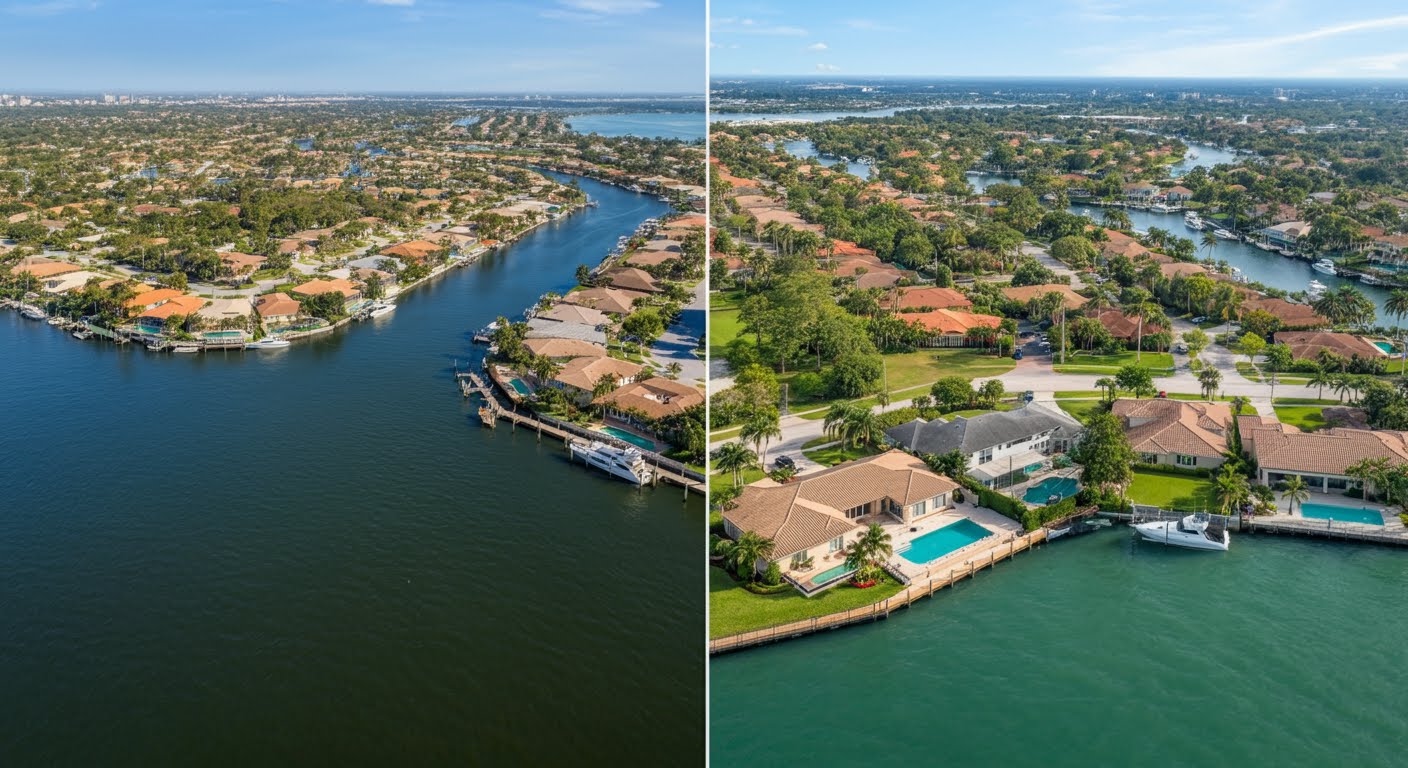
In Cape Coral real estate, "waterfront" is a broad term that encompasses properties ranging from $300,000 freshwater canal homes to $2M+ Gulf-access saltwater estates. Understanding the difference between these categories — and the real-world implications for lifestyle, costs, and value — is one of the most important decisions you'll make when buying in Cape Coral.
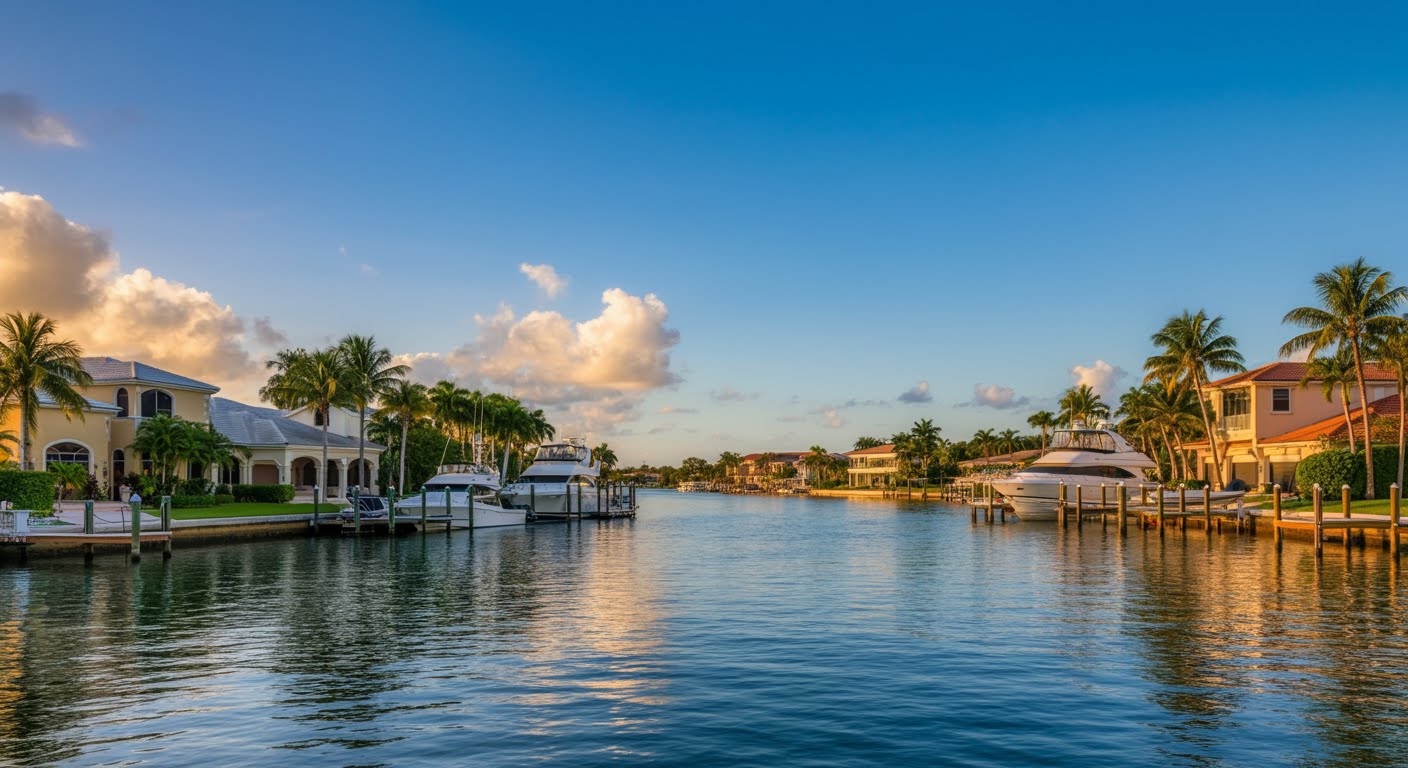
The essential distinction is whether the canal your property fronts connects to the Gulf of Mexico. Gulf-access canals are saltwater canals that provide navigable routes to the Caloosahatchee River and ultimately to the Gulf — allowing you to take a boat from your backyard dock to open water. Freshwater canals are closed systems with no Gulf access — they're great for the view and for kayaking or fishing, but they don't support boating to the Gulf.
That distinction drives most of the price difference between the two categories and determines whether a boating lifestyle is possible from your home.
The Price Difference: By the Numbers
The premium for Gulf-access canal property in Cape Coral is substantial and has been consistent over time. Here's how the tiers compare at current market conditions:
Dry lot (no canal frontage): A standard 3-bedroom, 2-bath home in Cape Coral on a dry lot trades in the $330,000–$420,000 range depending on location, age, and condition. This is the baseline.
Freshwater canal frontage: The same home type with freshwater canal frontage typically adds 10–20% to the price — roughly $350,000–$480,000. You're paying for the view and water proximity, not boating access.
Gulf-access saltwater canal (no bridge restrictions): This is where pricing jumps significantly. A comparable home with direct, unrestricted Gulf access via saltwater canal typically sells for 30–50% above the dry-lot baseline — $450,000–$650,000+ for a similar home type. Premium positioning, larger homes, and dock/lift configurations push prices higher still.
Gulf-access with bridge restrictions: Some canals provide Gulf access but with bridges that limit vessel clearance — typically to boats under 10 feet or 12 feet of vertical clearance. This limits the size and type of boat you can use, which reduces the premium relative to unrestricted access but is still meaningful waterfront value.
Seawall Costs: The Variable You Can't Ignore
Any waterfront property in Cape Coral — saltwater or freshwater — has a seawall. Seawalls are the concrete or block structures that line the canal bank and prevent erosion of your property into the water. They are load-bearing infrastructure with finite lifespans, and their condition is one of the most important due-diligence items in any waterfront purchase.
Seawall replacement costs in Southwest Florida currently run $500–$1,200 per linear foot. A standard Cape Coral lot with 80 feet of canal frontage translates to $40,000–$96,000 for replacement. A larger lot with 120 feet of frontage could run $60,000–$144,000. These are not hypothetical — poorly maintained seawalls do fail, and failure can undermine decks, docks, and in extreme cases the structure of the home itself.
Seawalls built before the mid-1980s used concrete block construction that ages differently than poured concrete. Tie-back systems anchor seawalls and can deteriorate. Sinkholes and voids behind the seawall face are warning signs. A seawall inspection by a licensed marine contractor — separate from your general home inspector — typically costs $300–$500 and is essential before purchasing any waterfront property. Do not skip this.
Lifestyle Comparison: What Each Canal Type Actually Delivers
The lifestyle implications of Gulf-access vs. freshwater canal are significant and worth thinking through honestly before you set your budget.
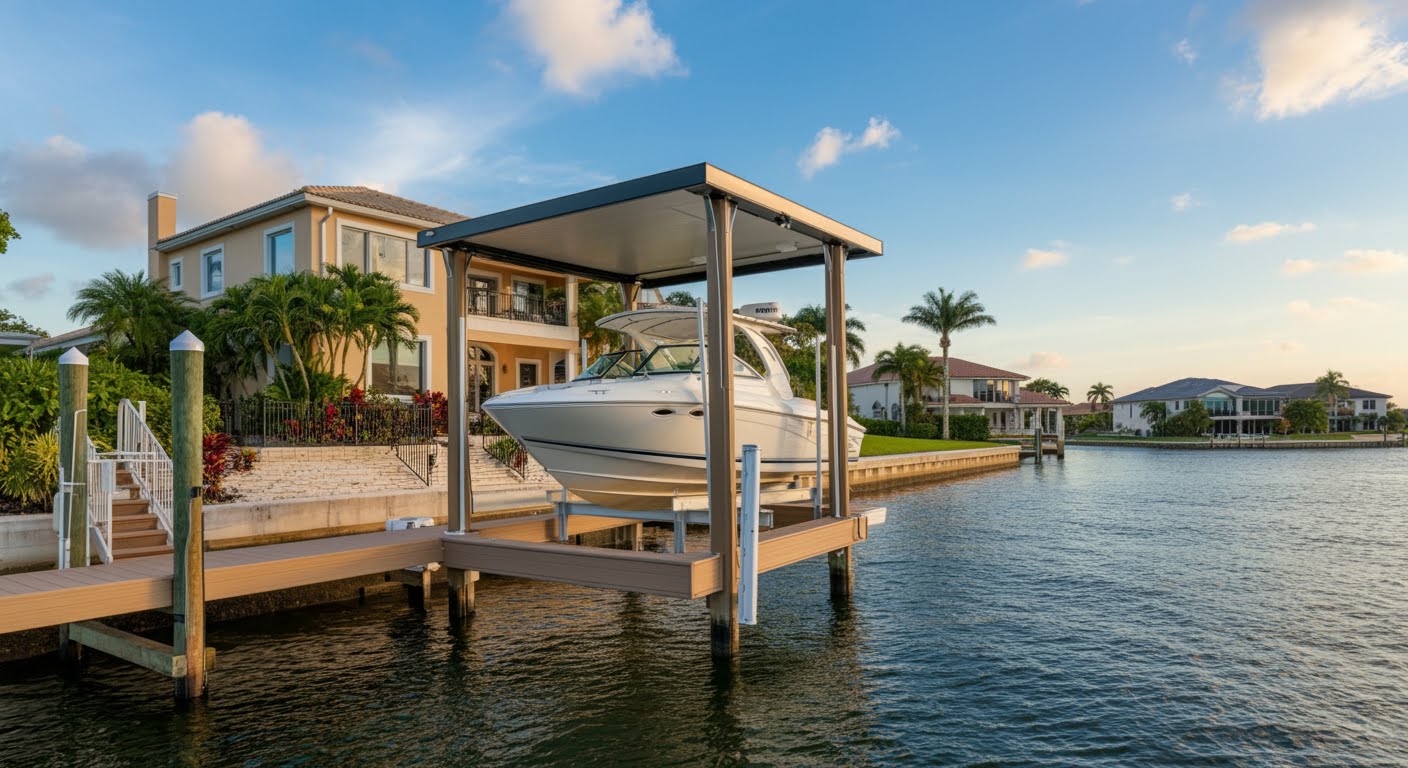
Gulf-access saltwater canal: You can keep a boat at your dock and head to the Gulf within 20–45 minutes depending on your canal location and the lock system. You can fish in the tidal estuary, watch dolphins from your dock, go offshore fishing or cruising. The saltwater environment also supports different wildlife — snook, redfish, and mangrove habitat. The trade-off: higher purchase price, higher insurance costs (saltwater corrosion is more aggressive), and potentially more complex navigation (locks, bridge schedules).
Freshwater canal: You can kayak, paddleboard, fish for bass and freshwater species, and enjoy the water view. You cannot take a powerboat to the Gulf. The freshwater environment has its own appeal — egrets, herons, and bass fishing directly from your backyard are genuinely pleasant. For buyers who value the waterfront aesthetic and are not focused on boating access, freshwater canal properties offer compelling value relative to Gulf-access equivalents.
Dry lot: No direct water access. The trade-off in price is significant — roughly 20–40% less than comparable waterfront — and in many cases represents genuine value for buyers who don't need or want water access. Dry lots in good school zones and established neighborhoods offer a strong quality of life at more accessible prices.
Insurance Differences Between Property Types
Waterfront location affects insurance in multiple ways. The most significant is flood zone designation. Gulf-access properties along saltwater canals are more likely to be in FEMA Special Flood Hazard Areas (A and V zones), which require flood insurance and often carry higher premiums than properties further from tidal water.
Saltwater exposure also affects homeowners insurance for structures and contents — corrosion, salt air, and storm surge risk all factor into underwriting. Some insurers place saltwater canal properties in higher risk tiers than freshwater canal properties at the same elevation.
Practically: get flood zone determinations and insurance quotes for any waterfront property you're seriously considering. The difference between a dry-lot insurance cost and a Gulf-access waterfront insurance cost can easily be $3,000–$6,000 per year — a meaningful factor in total housing cost.
Which Type Is Right for You?
The honest answer depends on what you're actually going to do with the water access. If you own or plan to buy a boat and want to use it regularly from your backyard, Gulf-access saltwater matters and the premium is justified. If you're drawn to the waterfront lifestyle — the views, the fishing, the kayaking — but won't be running a boat to the Gulf, freshwater canal delivers that lifestyle at a materially lower price with lower carrying costs.
A significant number of buyers purchase Gulf-access homes and discover they use the dock far less than anticipated — the lock system schedule, the need to keep a boat properly maintained, and the realities of the Florida heat limit many people's boating activity. Be honest with yourself about how you'll actually use the property before paying the Gulf-access premium.
Explore More
Ready to learn more about Cape Coral? Check out these resources: