Buyer Guides
Buying Waterfront Property in Florida: What You Need to Know
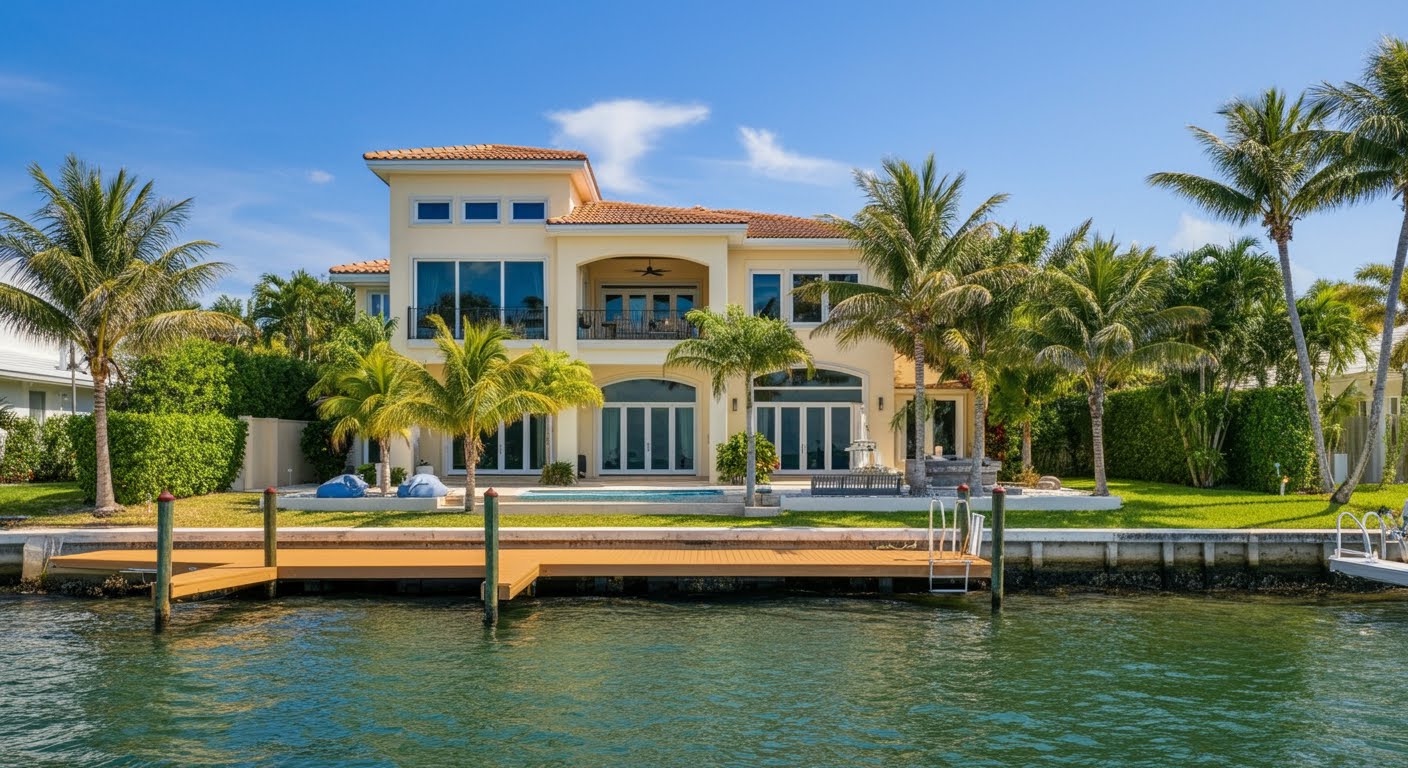
Waterfront property in Florida comes with unique considerations buyers need to understand before making an offer. This is the full picture.
7 min readMarch 25, 2026
Lifestyle & Relocation
If the boat is the reason you're moving to Southwest Florida, the right city is not always the one with the prettiest downtown. Here's how Cape Coral, Fort Myers, and Naples actually compare on the water.
Boat heading toward open water through a Southwest Florida canal at sunset
If the boat is the real reason you're looking in Southwest Florida, the usual house-hunting criteria get reshuffled. School zones, downtown walkability, HOA amenities — those still matter, but they move down the list. What moves up is how many minutes it takes you from your lift to open water, what bridges are between you and the Gulf, and whether your preferred fishing grounds are 20 minutes away or 90.
Cape Coral, Fort Myers, and Naples all sell themselves as boating towns, and all three deliver — but they deliver very differently. This post walks through how each one actually works from the water, what it costs to own the infrastructure, and where storage and dry-stack realistically fit in.
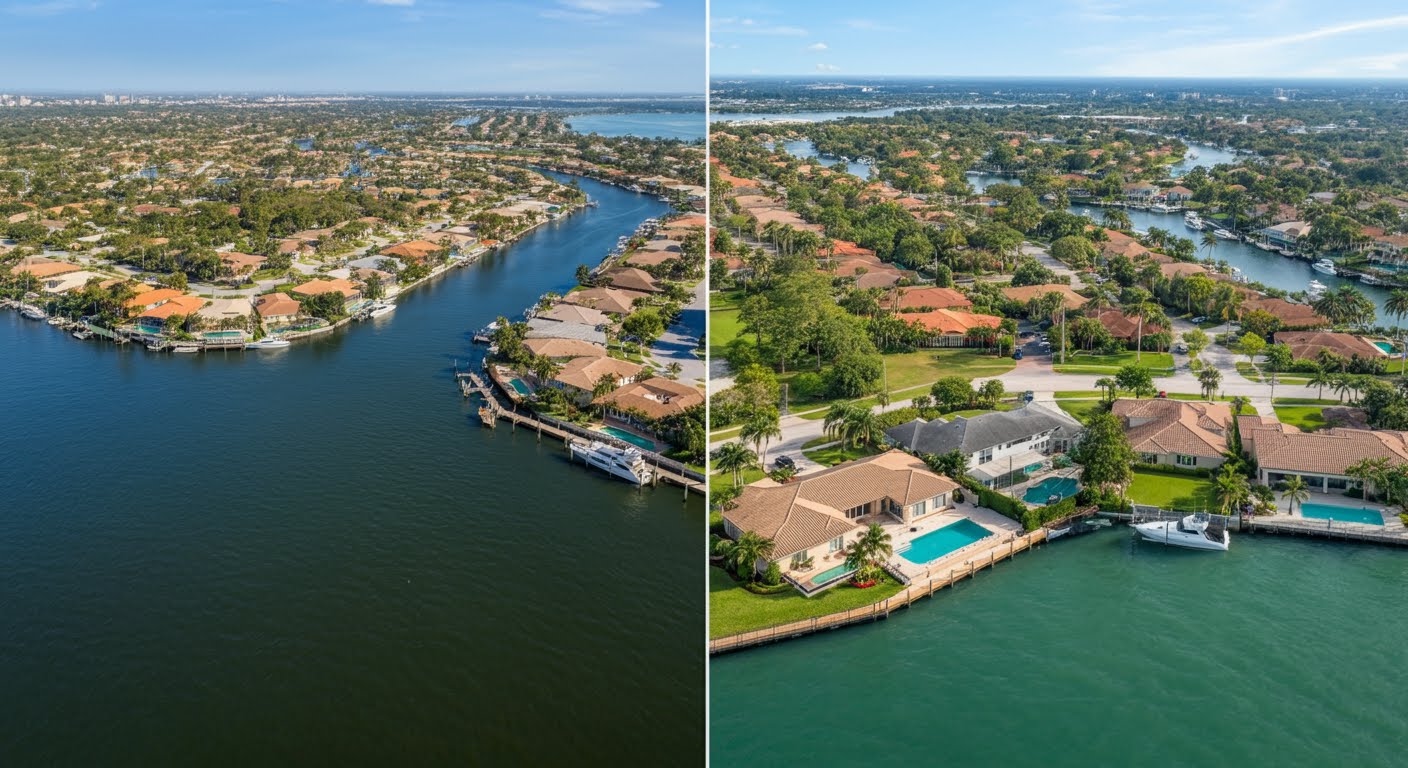
Cape Coral has more than 400 miles of canals, which is more navigable waterway than any other city in the world. That sounds like a universal boating paradise until you learn that roughly half of those canals are freshwater and never touch the Gulf of Mexico. If you buy on the wrong side of that line, your boat is a trailer boat.
The city is divided into two canal systems. The southern gulf-access network — south of Cape Coral Parkway and generally south of Veterans Parkway — drains through Redfish Point and the Caloosahatchee into open water. These are the premium boating addresses. Within that network, there are two further distinctions:
The northwest spreader system is the other saltwater network, and it reaches the Gulf through the Chiquita Lock and the Ceitus barrier area. The locks matter because they add time — typically 15 to 30 minutes of waiting and cycling — and because their operational status has been a recurring political and environmental conversation in Cape Coral for years. If your plan depends on a specific lock running on a specific schedule, verify its current status before you buy.
The freshwater canals in the central and northern parts of the city are lovely for kayaking, bass fishing, and sunset views. They are not for Gulf boating. Buyers routinely assume that "waterfront" means "boatable to the Gulf," and it does not. Confirm the navigational classification in writing before you make an offer. Our Cape Coral overview breaks the neighborhoods down further by canal system.
Fort Myers boating revolves around the Caloosahatchee River. That changes the math in a few ways.
First, bridges. The river is crossed by the Caloosahatchee Bridge, the Edison Bridge, and the Midpoint Memorial Bridge, among others, and each has a fixed vertical clearance that caps the air draft of boats that can move upstream and downstream. The Midpoint Bridge is roughly 55 feet at mean high water; the Edison is lower. If you're buying upriver of a bridge your boat can't clear, you've just made a one-way decision. Sailboat owners in particular need to map this carefully.
Second, river current and wind fetch. The Caloosahatchee is a working river with real current, especially during heavy rain releases from Lake Okeechobee through the W.P. Franklin Lock. Docking, running, and handling are different on moving water than on a protected canal. It's not harder once you're used to it, but it's different, and insurance underwriters sometimes price that difference in.
Third, access to open Gulf. From a downtown Fort Myers mooring, you're looking at roughly 45 minutes to an hour of river running before you reach the mouth at Shell Point and start seeing San Carlos Bay. From Cape Coral's southern canals, that same open water is 15 to 25 minutes. If your boating is "out and back for a half day," the river premium costs you real water time.
The upside: downtown Fort Myers moorings and the Legacy Harbour / City Yacht Basin area give you something Cape Coral doesn't — the ability to walk from your boat to restaurants, music, and a working urban core. For buyers who want the boat to be part of a walkable lifestyle rather than the whole lifestyle, that's a legitimate reason to accept the longer run. Our Fort Myers area page covers the river-adjacent neighborhoods in more depth.
Naples is more complicated than it looks on a map. There are three primary ways to reach the Gulf from a Naples address, and they shape the market more than people realize.
Gordon Pass is the southern inlet. It serves Port Royal, Aqualane Shores, Royal Harbor, and much of the Naples Bay system. It's a dredged pass with reasonable depth, and from most Naples Bay docks you're 15 to 30 minutes to open Gulf. Port Royal and Aqualane Shores combine deep-water docking with some of the most expensive residential real estate in Florida — the premium is real.
Doctors Pass is the central inlet, serving Moorings, Park Shore, and parts of the inland bay. It's shallower and more weather-sensitive than Gordon Pass. On a calm day it's a straight shot. On a hard northwest wind with an outgoing tide, it gets technical, and local knowledge matters. Boats based in Moorings Bay often choose their running days around the pass conditions.
Wiggins Pass is the northern inlet, serving north Naples, Cocohatchee, and the Vanderbilt area. It has an active dredging history and periodic shoaling, so draft and timing matter more here than at Gordon.
Then there's Naples Bay itself — a protected, no-wake-dominated system where you'll run slowly to and from your pass of choice. That's part of why a 15-minute Gordon Pass run from Port Royal is really a 25-minute door-to-open-water trip. It also means fuel burn and wear on the boat are lower than you'd think for the distances involved. Our Naples overview covers which neighborhoods feed which pass.
The waterfront house is only part of the purchase. The water-side infrastructure is the other part, and it's gotten substantially more expensive since Ian.
When you're evaluating a waterfront listing, don't just look at the house price. Ask the age of the seawall, the age and permit status of the dock, and the capacity and condition of the lift. A $750,000 home with a failing seawall and an unpermitted dock can quickly become an $850,000 project. A $800,000 home with new infrastructure may be the better buy. Insurance underwriters will also look at this, and so will your lender's appraiser.
Not every buyer wants to own the dock. Some want to own a smaller inland home and keep the boat at a marina. Here's how the three cities compare on that.
Cape Coral has the fewest commercial marina slips relative to its boating population, because the city is built around private docks. Dry-stack options exist but are limited, and wet-slip waiting lists at the public marinas can run long. If you want to live in Cape Coral but not on a gulf-access canal, your marina options are narrower than you might expect.
Fort Myers has the deepest commercial infrastructure of the three — Legacy Harbour, Marina at Edison Ford, Fort Myers Yacht Basin, and multiple full-service yards on the river. Dry-stack is available at several locations. For buyers who want to live in a downtown condo or an inland neighborhood and keep the boat elsewhere, Fort Myers has the most flexibility.
Naples has strong marina infrastructure concentrated around Naples Bay — Naples City Dock, Hamilton Harbor, Olde Naples Seaport. Dry-stack is available but demand is high, and seasonal pricing can be steep. Wet slips at the premium marinas can have multi-year waiting lists and purchase prices in the six figures for the slip itself.
Any boating-first conversation in Southwest Florida eventually comes back to Hurricane Ian and what came after. The 2022 storm damaged or destroyed a significant share of private docks and lifts in Lee County, particularly in Fort Myers Beach, Sanibel, and the southern Cape Coral canals. Rebuilding has been uneven — some properties were back in the water within a year, others are still working through permits in 2026.
Flood insurance is a separate conversation from homeowner's insurance, and both have reset meaningfully since Ian. Waterfront homes in FEMA Zone AE commonly see combined annual insurance costs of $6,000 to $15,000 or more, depending on elevation and construction. Zone VE direct-Gulf properties run higher. Boat insurance itself has also tightened, with some carriers requiring specific hurricane haul-out plans for named-storm coverage. Citizens Property Insurance has become the default option for many waterfront buyers who can't place coverage in the private market — not ideal, but functional. These are costs that need to be in the model before you fall in love with the view.
Here's the framework I'd use if the boat is driving the decision:
If you want to walk a few specific properties with these questions in mind, that's the conversation I'd rather have in person or on a call than over a listing page. You can reach me through the contact page, and if you're trying to understand what your current home might sell for before you upgrade to a bigger boat setup, the home value tool is a reasonable starting point.
Equal Housing Opportunity. Freddy Baez · Florida Broker BK3274734 · The Baez Collective at eXp Realty. Information here is general guidance, not legal, tax, or investment advice — please consult a qualified professional for your specific situation.
— Freddy & Josey
Frequently Asked
Explore These Cities
The SWFL Market Letter
Market notes and neighborhood reads from Freddy & Josey — written for SWFL homeowners, buyers, and the curious. No spam, no pressure.
Buyer Guides
Waterfront property in Florida comes with unique considerations buyers need to understand before making an offer. This is the full picture.
Lifestyle & Relocation
The first week back is usually a scramble. A little August and September prep makes your November landing in Southwest Florida much smoother.
Lifestyle & Relocation
The 1-10 ratings you see on real estate sites are a starting point, not the answer. Here's how school zoning actually works across Lee, Collier, and Charlotte counties — and how it shapes where families end up buying.
Local team. Licensed in Florida. En español también.