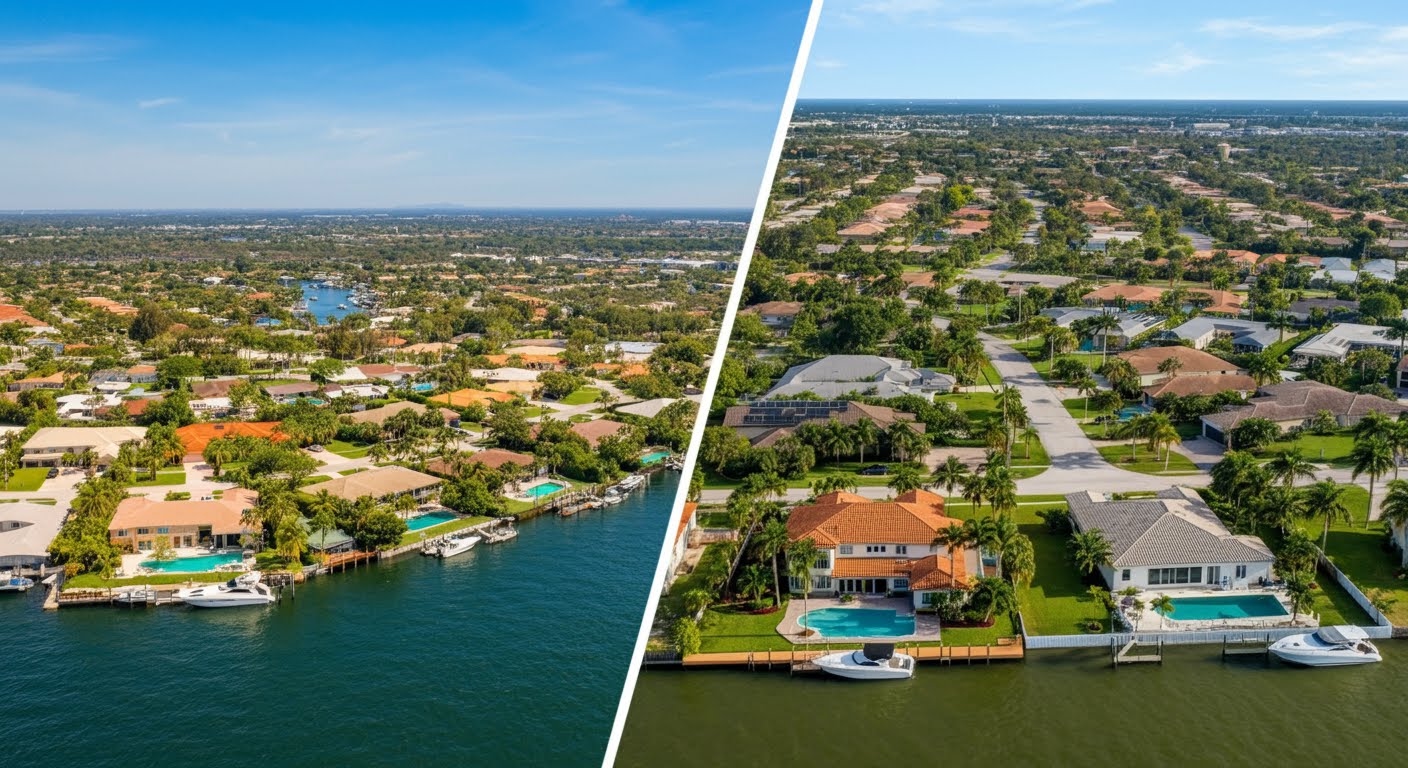
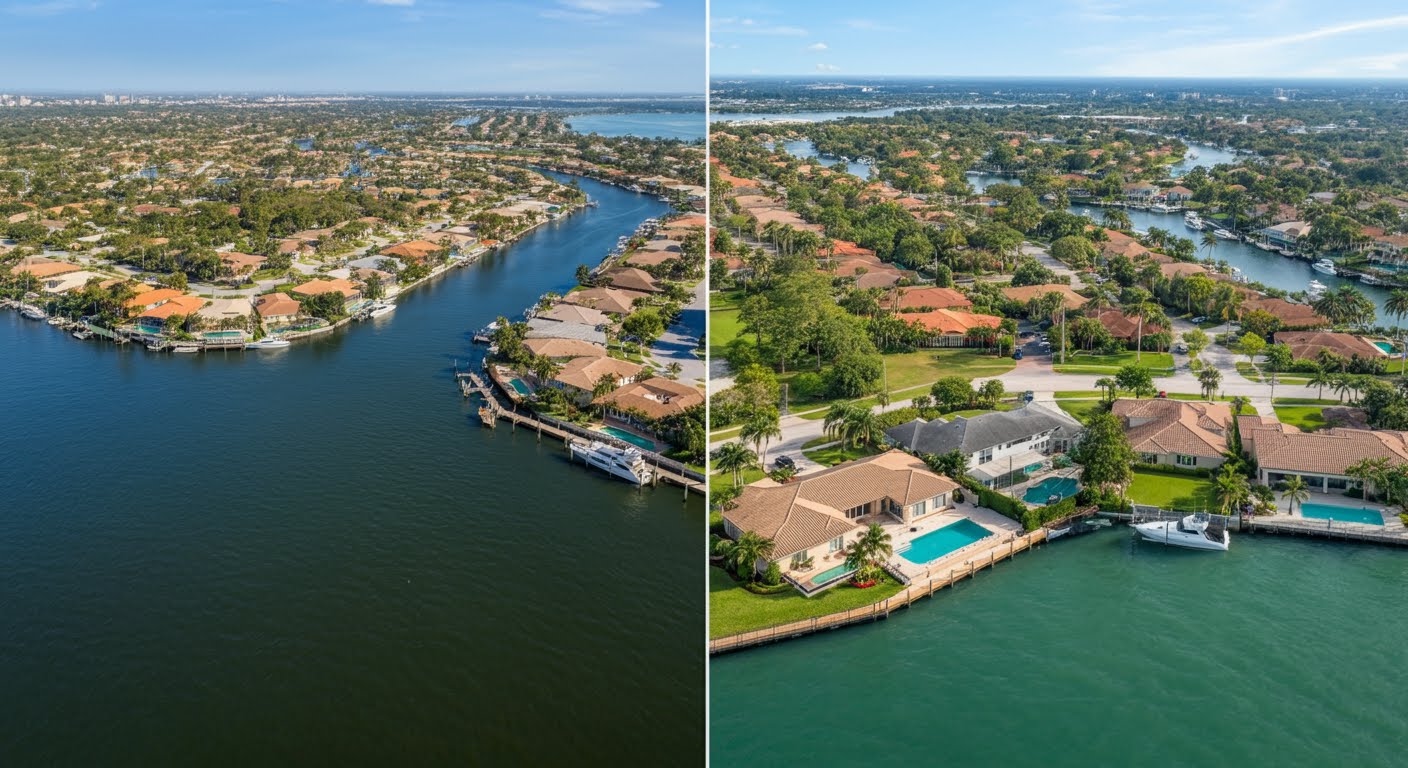
Most of the first-time buyer advice floating around Southwest Florida isn't actually written for you. It's written for the retiree moving down from Ohio with cash from a paid-off house, or for the snowbird adding a second property. If you grew up here, work here, and are currently paying $2,200 a month to rent a two-bedroom in south Fort Myers, those articles don't land. The numbers don't match your life.
This one is written for you. The local first-time buyer in 2026 — probably in your late twenties or thirties, probably with a decent income but not a huge pile of savings, probably watching friends either leave the state or keep renting indefinitely. The goal here is to lay out what the realistic path to buying actually looks like in Cape Coral, Fort Myers, and Lehigh Acres right now, and what you want to have in order before you start touring houses.
What Under $400,000 Actually Buys in SWFL Right Now
Let's start with price, because that's where expectations usually get set wrong early. The headlines about Southwest Florida real estate tend to focus on waterfront homes in Naples or Gulf-access canal homes in Cape Coral that trade for $800,000 and up. That's a real market, but it's not your market as a first-time buyer.
Your market, roughly, looks like this in late 2025 into 2026:
- Lehigh Acres: The entry point for Lee County. Single-family 3-bed, 2-bath homes on quarter-acre lots can still be found in the $240,000 to $320,000 range, with newer construction from the 2020-2023 boom sitting in the $300,000 to $380,000 band. Longer commute to Fort Myers employment centers, but the math works for a lot of first-time buyers.
- Cape Coral (non-Gulf-access): Freshwater canal and dry-lot homes in the $320,000 to $400,000 range for 3-bed, 2-bath, 2-car-garage inventory. North Cape and the newer-build pockets off Burnt Store Road and Pine Island Road are where the under-$400K inventory concentrates.
- Fort Myers (city and unincorporated): Older single-family in neighborhoods like San Carlos Park, Whiskey Creek, or parts of South Fort Myers in the $280,000 to $380,000 range. Condos and townhomes expand what's available under $300,000, with the caveat that HOA and insurance realities need serious attention.
What you won't find under $400,000 in 2026: new construction in Estero or Bonita Springs, anything on direct Gulf access, or most of the gated communities in south Lee County. That's fine. The homes that pencil for first-time buyers in SWFL have always been older, inland, and in neighborhoods that take some patience to understand.
Down Payment Assistance Programs Worth Knowing About
This is the part most local buyers don't realize is available to them. Florida has a handful of programs specifically designed to help first-time buyers and essential workers get into a home, and they stack with standard loan products.
Florida Hometown Heroes: This program, administered by Florida Housing Finance Corporation, provides down payment and closing cost assistance to full-time Florida workers earning at or below 150% of area median income. The eligibility is broad — it covers teachers, nurses, law enforcement, firefighters, and in its expanded form, most full-time Florida employees across hundreds of occupations. The assistance comes as a 0% deferred second mortgage, up to 5% of the first mortgage amount, capped at $35,000. You don't make payments on it; it's due when you sell, refinance, or pay off the first mortgage.
Florida Assist and Florida HLP: These are additional second-mortgage programs from Florida Housing that can be layered under certain first-mortgage products. Terms and availability change — your lender confirms what's currently fundable.
Lee County Housing Development Corporation: Offers down payment assistance for income-qualified buyers purchasing in Lee County. Funds are limited and come and go with the agency's budget cycles.
The important thing: these programs require a participating lender. Not every mortgage broker in Southwest Florida is set up to originate Hometown Heroes loans, and the ones who do it regularly process them much more smoothly than the ones doing their first. Ask directly before you commit to a lender: "How many Hometown Heroes loans did you close last year?" The answer tells you a lot.
Credit, Debt-to-Income, and Why Your Rent History Matters
Before you look at a single house, you want three numbers in good shape: your middle credit score, your debt-to-income ratio, and your documented income.
Credit score: For FHA, the practical floor to get competitive pricing is a 640 middle score, though the program technically allows lower. For conventional loans with 3% down, you're generally looking for 680 or higher, and pricing improves meaningfully at 720+. If you're sitting at 615 and you have six months before you want to buy, that's enough time to move the number meaningfully — paying down revolving credit card balances to below 30% of their limits is usually the fastest lever.
Debt-to-income (DTI): Lenders look at your total monthly debt payments — including the proposed new mortgage — against your gross monthly income. FHA will stretch to around 50% DTI in strong files; conventional typically wants 45% or below. Car payments are the quiet killer here. A $650-a-month truck payment on a $5,500 monthly income eats almost 12% of your DTI before anything else. If you're planning to buy, think hard before you finance a new vehicle in the 12 months prior.
Rent history as a credit signal: This is newer and underused. Fannie Mae and Freddie Mac both now allow verified rent payment history to be factored into automated underwriting decisions. If you've been paying $2,100 a month on time for three years, that's meaningful positive data that didn't used to show up anywhere. Ask your lender whether they can pull rent payment data through the services the GSEs now recognize — it can be the difference between an approval and a decline for buyers with thin credit files.
FHA vs. Conventional 3% Down — Which Fits You
The two mainstream low-down-payment paths for first-time buyers are FHA (3.5% down) and conventional 3% down programs (HomeReady from Fannie Mae, Home Possible from Freddie Mac). They're not interchangeable, and the right choice depends on your specifics.
FHA generally makes sense when: your credit score is 620 to 679, your DTI runs a little high, or the property has condition issues that would scare a conventional underwriter but that FHA will finance after required repairs. FHA mortgage insurance is permanent on most loans today — you pay it for the life of the loan unless you refinance out — but the entry bar is lower.
Conventional 3% down generally makes sense when: your credit is 700+, your income is moderate (HomeReady and Home Possible both have income caps tied to area median income), and you want the private mortgage insurance to eventually drop off automatically once you reach 78% loan-to-value. Over a 7-to-10-year holding period, the savings on mortgage insurance alone can be significant.
In the current SWFL market, where inventory has rebuilt and sellers are more willing to negotiate repair credits and concessions, FHA offers are not the deal-killer they were in 2021 and 2022. Sellers care about certainty of close more than loan type, and a well-prepared FHA buyer with a strong preapproval beats a sloppy cash buyer most of the time.
The SWFL-Specific Reality: Insurance, Age of Roof, and Why Older Homes Pencil
Here's where buying in Southwest Florida diverges from buying anywhere else, and where first-time local buyers need to pay extra attention.
Homeowner's insurance in Lee County is expensive and often non-negotiable. For a 3-bed, 2-bath single-family home in Cape Coral or Fort Myers, you should budget $3,500 to $7,000 annually for wind-included coverage, and more if you're in a Zone AE flood area and need separate flood insurance. The insurability of a specific home depends heavily on roof age — most carriers won't write a new policy on a roof older than 15 years, and some draw the line at 10. Post-Hurricane Ian, Citizens Property Insurance has been the backstop for many SWFL homes that private carriers won't touch, but Citizens has its own eligibility rules and depopulation efforts that keep moving.
This changes how you read inventory. A 1998 Cape Coral home at $310,000 with an original 2005 roof looks like a great deal until you realize no carrier will write a policy on it, which means no lender will fund the loan, which means you either negotiate a new roof as part of the deal or walk away. A 2015 Lehigh Acres home at $340,000 with a newer roof and impact windows might cost more upfront but will insure for half the premium and close without drama. The home that pencils isn't always the cheapest one on the search results. Our Cape Coral area page and Fort Myers area page have more on how the micro-markets differ.
One more SWFL-specific piece: the Homestead Exemption and Save Our Homes cap. The day you close on a primary residence here, you're setting up a long-term tax benefit that compounds over the years you own the home. File for homestead by the following March 1, and your assessed value growth gets capped at 3% per year regardless of what the market does. For a first-time buyer planning to stay in the home 7 to 15 years, this is real money — thousands of dollars in cumulative savings — and it's one of the biggest financial advantages of owning versus continuing to rent.
If You're 6 to 12 Months Out, Here's the Conversation to Have
The best time to start the first-time buyer process in SWFL is well before you're ready to make an offer. Six to twelve months of runway lets you:
- Pull your three credit reports, dispute any errors, and work on balances if your score needs a bump.
- Talk to two or three lenders — ideally one who does Hometown Heroes volume — and get a real preapproval, not just a quick online estimate.
- Model what your actual monthly payment would look like at today's rates, with real insurance quotes for a sample home in your target area, not generic estimates.
- Decide what you can genuinely afford without stretching to the top of what the lender will approve. The lender's maximum and your comfortable payment are rarely the same number.
- Start watching inventory in two or three target neighborhoods so you develop a feel for what things actually trade for versus what they list for.
If you want to walk through your specific situation — what your income supports, which neighborhoods make sense for your work commute, how the insurance math changes between a 2001 home and a 2017 home — that's the kind of conversation we have all the time with first-time local buyers. No pressure to be ready tomorrow. Reach out through the contact page whenever the timing feels right. If you're also curious what a home you might eventually sell down the road would be worth today, the home value tool is a starting point, though a real conversation beats any automated estimate.
Buying your first home in Southwest Florida in 2026 is harder than it was in 2015, but it's genuinely more achievable than it was in 2022. Inventory is better, sellers are more flexible on concessions and repairs, and the down payment assistance landscape is the strongest it has been in years. The buyers who do well are the ones who prepare quietly for six months before they start touring. That can be you.
Equal Housing Opportunity. Freddy Baez · Florida Broker BK3274734 · The Baez Collective at eXp Realty. Information here is general guidance, not legal, tax, or investment advice — please consult a qualified professional for your specific situation.